
Georgia HOA law gets its first statewide registration requirement on January 1, 2027, following Governor Brian Kemp’s May 12, 2026 signing of SB 406, the Georgia Property Owners' Bill of Rights Act, as Act 715.
Its attorney-fee limits already apply to actions filed on or after July 1, 2026, while the rest of the Act arrives at the start of 2027. If you own or manage rentals inside a Georgia association, the board's power to fine and collect through liens or foreclosure is about to change; which version of the rules reaches you depends on a paragraph buried in your community's recorded declaration.
HOA laws in Georgia: the short answer
HOA laws in Georgia come from four stacked layers, and the layer that matters most is the one your community's declaration chose. No single Georgia statute governs every association: there is no Georgia Homeowners Association Act and no statute called the Georgia HOA Act, so the HOA statutes that actually apply are the Property Owners' Association Act and the Georgia Condominium Act. A subdivision that never opted into the Property Owners' Association Act runs on its recorded covenants and contract law; the subdivision next door that did opt in gets automatic liens and covenants that never expire; a condominium runs under a different article of the code entirely.
The four layers, in the order you should check them:
- The Georgia Property Owners' Association Act (POAA), O.C.G.A. Title 44, Chapter 3, Article 6, enacted in 1994. It is elective. It applies only to communities whose recorded declaration contains an affirmative election to be governed by it (§ 44-3-222).
- The Georgia Condominium Act, Article 3 of the same chapter. It governs condominiums, and its lien and late-charge rules in § 44-3-109 track the POAA closely. SB 406 amends both.
- The Georgia Nonprofit Corporation Code, Title 14, Chapter 3. Many POAA associations incorporate under it, although § 44-3-227 also permits incorporation as a business corporation under Title 14, Chapter 2. Chapter 3 supplies the records-inspection rights most owners in nonprofit associations end up using.
- Common-law covenants, read alongside O.C.G.A. § 44-5-60. Communities outside the POAA enforce their covenants as contracts, subject to that statute's duration limits and its rule that new, stricter restrictions bind only owners who agree in writing.
SB 406 sits on top of all four. The 2026 Legislative Counsel summary identifies a new O.C.G.A. Title 43, Chapter 17A (§§ 43-17A-1 through 43-17A-9) and amendments to §§ 44-3-222, 44-3-226, 44-3-232, 44-3-235, and 44-7-50. The new chapter defines an 'owners' association' broadly enough to reach POAA subdivisions, condominiums, and common-law covenant communities alike, so registration and the owner bill of rights apply regardless of which layer your community sits in.
The Georgia Property Owners' Association Act and why it is optional
The POAA does nothing for a community until that community elects, in a recorded instrument, to be governed by it. The statute is blunt about this: 'Any declaration or amendment intending to bring or avail a development of the benefits and provisions of this article shall state an affirmative election to be so governed' (§ 44-3-222).
A developer can write that election into the original declaration, but all owners of the submitted property, or someone acting on their behalf, must execute it. An existing community can add it later by amendment. Under § 44-3-226, that amendment requires agreement of lot owners holding two-thirds of the votes, or a larger majority if the instrument says so, and takes effect on recording.
From January 1, 2027, SB 406 adds a second route: an 80% vote of the association plus a recorded certifying instrument under amended § 44-3-235.
Communities opt in because the Act hands the board collection tools that a common-law covenant community has to litigate for:
- An automatic statutory lien. Under § 44-3-232, every lawfully assessed sum becomes both a personal obligation of the owner and a lien on the lot the moment it is due. Recording the declaration is record notice of the lien; the association never has to file a separate claim of lien.
- Statutory authority to collect late charges and interest, along with collection costs and reasonable attorney's fees the association incurs, if the declaration provides for them.
- Judicial foreclosure of that lien once the arrearage clears a statutory floor (the numbers are in the dues section below).
- Power to fine and to suspend voting rights and common-area use for violations, under § 44-3-223, so long as the suspension never denies an owner or occupant access to the lot.
- Perpetual covenants. § 44-3-234 exempts POAA instruments from the 20-year covenant limit and the automatic-renewal-and-termination scheme in § 44-5-60. Nowack Howard's POAA guide puts it plainly: covenants 'may run perpetually without the possibility of the covenants for the community expiring or being terminated by the owners.'
- Amendments that bind dissenters. A properly adopted two-thirds amendment binds an owner who voted no. In Pasha v. Battle Creek Homeowners Association (Ga. Ct. App. 2019), the court upheld such an amendment against a dissenting owner, holding that 'Pasha no longer has an unfettered right to lease his property.'
For a landlord, that last point is the one to watch. In a common-law community, an amendment imposing a new leasing restriction cannot be enforced against you unless you agreed to it in writing. In a POAA community, two-thirds of your neighbors can restrict your rental rights without your signature, with one statutory exception covered in the unenforceable-rules table below.
How to check which law governs your community
You can identify your community's governing layer in about ten minutes with the county deed records and the Secretary of State's business search. Work through these steps in order:
- Pull the recorded declaration of covenants from the deed records of the county where the property sits. Recording the declaration is what puts the POAA lien on record notice, so this document is the legal source of truth, and the association is obliged to hand you copies of its articles and bylaws on request for a reasonable charge under § 44-3-227(c).
- Search the declaration for the words 'affirmative election,' 'Georgia Property Owners' Association Act,' or 'Article 6 of Chapter 3 of Title 44.' If you find that language, you are in a POAA community.
- If the declaration instead submits the property to the Georgia Condominium Act and describes units, common elements, and limited common elements, you are in a condominium governed by Article 3.
- If the declaration does neither, you are in a common-law covenant community. Note the recording date. Covenants recorded before July 1, 1993 in a zoned area follow different expiration rules than later ones (worked example in the fences section).
- Check for recorded amendments. A community that started as common-law may have submitted to the POAA later by two-thirds vote, and from 2027 may do so by the new 80% route. The amendment is effective on recording, so the deed index is where it shows up.
- Run the association's name through the Secretary of State search. POAA associations must incorporate before they submit, so an unincorporated 'association' is a warning sign. The division already lists 'Owners' Associations' as a search category, and from January 1, 2027 that registration status determines whether the association may fine you at all.
Metro Atlanta owners can also work from the city-level guide to HOA laws and regulations in Atlanta. Keep a copy of whatever you find. Mark Buckland of Thrift Legal cautions that condominium associations and communities not submitted to the POAA 'should review their governing documents and applicable statutes with counsel before applying those rules wholesale,' and the same warning runs in the owner's direction: several SB 406 dollar protections are written into the POAA and Condominium Act lien statutes, and a common-law community has no equivalent statutory floor to begin with.
What changed under SB 406, the Property Owners' Bill of Rights Act
SB 406 does five things: it forces every owners' association to register with the Secretary of State, strips unregistered associations of the power to fine or lien, rewrites the foreclosure and attorney-fee rules in the POAA and Condominium Act, creates a state hearing-officer system for owner complaints, and lets courts seal dispossessory (eviction) records. The enrolled text splits those changes across two effective dates:
- Provision | Where it lands | Effective date
- Attorney's fees: certified-mail notice, 30-day cure period, itemized fee list, judicial reasonableness review | Section 7, amending § 44-3-232 and § 44-3-109 | July 1, 2026, for actions filed on or after that date
- Secretary of State registration and owner bill of rights | Sections 1–2, new Title 43, Chapter 17A | January 1, 2027
- Payment priority, ban on refusing payment and on accelerated assessments | Title 43, Chapter 17A | January 1, 2027
- 80% cap on declaration-amendment thresholds | Section 4, amending § 44-3-226 | January 1, 2027
- Foreclosure floor, 60-day notice, six-year lien life | Section 5, amending § 44-3-232 | January 1, 2027
- 80% vote route to submit to the POAA | Section 6, amending § 44-3-235 | January 1, 2027
- Hearing officers, complaints, automatic stay, appeals | §§ 43-17A-4 through 43-17A-6 | January 1, 2027
- Court-ordered sealing of dispossessory records | Section 8, amending § 44-7-50 | January 1, 2027
Registration works like this. Each association files a copy of its governing documents and a registration statement on a Secretary of State form. An authorized officer must sign the statement and list the association's name and address, plus its officers. The filing must also include a financial statement dated no more than one year before filing (enrolled text).
The fee is $100.00 at initial registration and $100.00 at each annual renewal; registrations expire December 31. Material changes to name, address, officers, or control require an amended statement within 30 days. The Act also requires associations to keep all records relating to assessments, fines, fees, liens, and foreclosures for at least ten years.
The penalty for not registering is the part that matters to you. The enrolled Act states: 'No nonregistered owners' association or its agent shall assess or collect fines or fees or accelerated assessments against any owner.' An unregistered association also may not file or record liens or initiate foreclosure. The Secretary of State may deny, suspend, or revoke a registration, limit an association's fines or fees, or bar its officers where that serves the public interest.
Two points get misreported. First, SB 406 sets no per-violation fine cap, no cumulative cap, and no daily limit; it conditions the power to fine on registration and leaves the amounts to the governing documents. Second, the Act does not override existing late-charge and interest caps in the POAA and Condominium Act, which stay in place (details below).
The Community Associations Institute's Georgia Legislative Action Committee objects that this creates a 'duplicate registration system,' since associations already file a nonprofit annual registration with the Secretary of State for $40.00 by April 1, and SB 406 adds a second filing 'at the cost of $100.' Expect boards to pass that cost through in the 2027 budget.
One gap remains. As of September 21, 2026, the Secretary of State had not published an HOA-specific registration form, fee schedule, implementation notice, or dated guidance for the new chapter, even though the Act directs the office to adopt implementing rules. Whether a working filing portal exists before January 1, 2027 is not confirmed by any available source. If your association has not registered by early 2027, its fines and liens against you are unenforceable under the Act's own terms until it does.
Dues, late fees, liens and when a Georgia HOA can foreclose
A Georgia POAA or condominium association can foreclose on your rental for unpaid dues alone, but only through a superior court action, and only once the arrearage crosses a statutory floor that rises on January 1, 2027. The lien attaches automatically; the foreclosure never does.
Late charges and interest are capped by statute in both POAA and condominium communities, where the governing instrument authorizes them: a late charge no greater than the greater of $10.00 or 10% of each unpaid assessment or installment, and interest no greater than 10% per year from the date first due (§ 44-3-232; § 44-3-109). The association may add collection costs to the lien, including court costs and reasonable attorney's fees it incurs.
The Court of Appeals reminded associations in Ellington Homeowners Association, Inc. v. Ibrahim (2025) that 'it is a 'well settled principle that actual attorney fees must be proved,'' so a flat fee line item on a ledger does not survive a challenge in court. Since July 1, 2026, the association must also send you the SB 406 certified-mail notice and 30-day cure window before it can collect attorney's fees at all, and the judge must enter an express reasonableness finding before awarding them.
Foreclosure is judicial only. The POAA lien 'may be foreclosed by the association by an action, judgment, and court order for foreclosure in the same manner as other liens for the improvement of real property.' The floor and the process change at the new year:
- Element | Through December 31, 2026 | From January 1, 2027
- Minimum lien amount to foreclose | $2,000.00 | Lesser of $4,000.00 or 12 months of regular assessments in arrears, but never less than $2,000.00
- Fines, fees, and specific assessments counted toward the floor? | Not separately addressed | Excluded from the calculation
- Pre-foreclosure notice by certified mail or statutory overnight delivery | At least 30 days | At least 60 days, and the notice must state that paying before the sixtieth day eliminates the right to foreclose
- Time before the lien lapses | 4 years after the assessment first came due | 6 years
Two more SB 406 rules reshape collections from January 1, 2027. The association must apply every payment in a fixed order: regular assessments until current, then special assessments, then specific assessments, and only then other fees and fines. And it may not refuse a payment 'in any amount for any assessment' or accelerate future assessments. Together those rules end the practice of routing a partial payment to fines first so that the dues balance keeps growing toward the foreclosure floor.
The lien is also junior to the debts that matter most. Under § 44-3-232 it sits behind ad valorem tax liens and the first-priority mortgage, as well as any mortgage recorded before the declaration and certain secondary purchase-money mortgages. In condominiums, § 44-3-76 lets the association cut off association-provided utilities to a unit only after it holds final judgments exceeding $750.00.
None of the statutory machinery above exists in a common-law covenant community. There, the lien must come from the recorded covenants themselves, there is no statutory minimum before a foreclosure action, and attorney fees are recoverable only if the declaration says so and the association proves them. Foreclosure still requires a superior court order.
Homeowner rights in Georgia: records, voting, meetings and notice
If your association is incorporated as a nonprofit under Title 14, Chapter 3, your right to see its books comes from the Nonprofit Corporation Code. That right splits into two tiers depending on what you ask for.
POAA associations may instead incorporate as business corporations under Title 14, Chapter 2, so confirm the association's corporate form before relying on § 14-3-1602. § 44-3-227 separately requires POAA associations to provide copies of their articles and bylaws on request for a reasonable charge.
With written notice delivered at least five business days before the date you want to inspect, a member of a nonprofit association may inspect and copy the articles and bylaws with current amendments. The member may also inspect resolutions on director numbers and member rights and obligations, plus three years of member-meeting minutes and consents.
The same tier covers three years of communications sent to members generally, including the financial statements required by § 14-3-1620. It also includes the names and addresses of current directors and officers and the most recent annual registration filed with the Secretary of State. The five days is notice before the inspection date, not a production deadline the association can stretch.
Board minutes and committee records sit in the second tier, along with the accounting records and membership list. For those, the same five-day notice applies.
Your written demand must also satisfy all four conditions in § 14-3-1602(d): '(1) The member's demand is made in good faith and for a proper purpose that is reasonably relevant to the member's legitimate interest as a member; (2) The member describes with reasonable particularity the purpose and the records the member desires to inspect; (3) The records are directly connected with this purpose; and (4) The records are to be used only for the stated purpose.'
Lueder, Larkin & Hunter's practice note is that accounting records mean balance sheets, general ledgers, and income statements. Underlying contracts and invoices are not accounting records, and the statutory membership list does not include email addresses.
The association may impose reasonable copying charges, but those charges may not exceed the estimated cost of production. On written request, the association must convert records to written form without charge (§ 14-3-1603).
If the board refuses first-tier records, the superior court may summarily order inspection at the corporation's expense. If the court orders inspection of any records, it 'shall also order the corporation to pay costs including reasonable attorney's fees,' unless the corporation proves it refused in good faith with a reasonable basis to doubt your right (§ 14-3-1604).
SB 406 layers a second set of owner rights on top from January 1, 2027, in new § 43-17A-7. Owners get the right to inspect and copy association records, including accounting records defined as 'the finalized balance sheet, budget, profit and loss statements, and bank statements for the past three years.' They also gain access to insurance certificates, notice of and attendance at meetings, access to common areas, ingress and egress, the right to challenge discriminatory practices, and notice of foreclosure.
The insurance-certificate right is worth using the week it becomes available. Review the certificate to see what the association's own policy covers and what it leaves to you as the unit or lot owner.
If you rent the property out, anything the association's policy leaves uncovered is yours to insure. A standard homeowners' policy on a tenant-occupied property is the gap most owners discover at claim time. Georgia rental property insurance written on a DP3 form covers the structure on an open-peril basis and your liability as a landlord. It also covers loss of rental income during covered repairs. Steadily writes landlord insurance statewide, including landlord insurance in Atlanta. Get a quote in minutes through the online quote tool, no phone call required.
Voting rights follow the declaration. In POAA communities, amendments need lot owners holding two-thirds of the votes, and the instrument may require more, up to a ceiling: no amendment may require more than 80% of the association vote plus 80% of the voting interest of mortgagees of mortgaged lots (§ 44-3-226). From 2027, SB 406 caps any declaration-amendment threshold that exceeds 80% at 80%. Owners may evidence agreement with their signatures. Once declarant control has ended, the president, vice president, or secretary may instead provide a sworn statement that the required majority agreed and all notices went out.
HOA meeting notice, quorum and board of directors duties in Georgia
Where the numbers come from. Georgia's Property Owners' Association Act does not set a meeting-notice period or a quorum percentage. Those figures live in the recorded declaration and bylaws, read alongside the corporate code the association incorporated under: Title 14, Chapter 3 for a nonprofit membership corporation, or Title 14, Chapter 2 for a business corporation, both permitted before POAA submission under § 44-3-227. Pull your association's bylaws and read them: the notice period and the quorum figure exist only there.
What becomes statutory on January 1, 2027. New § 43-17A-7 gives owners a standalone right to notice of and attendance at association meetings, plus access to common areas and ingress and egress. From that date, a board cannot use silence in the bylaws as a reason to keep you out of a meeting.
Voting mechanics that matter at a meeting. Amendments in a POAA community need lot owners holding two-thirds of the votes; agreement can be evidenced by signatures or, once declarant control has ended, by a sworn statement from the president, vice president, or secretary that the required majority agreed and all notices went out. In Vaughn v. Windfield Homeowners Association (Ga. Ct. App. 2025), the court applied O.C.G.A. § 44-3-233 and held that substantial compliance with the amendment requirements is sufficient, so a small notice defect is unlikely on its own to void an amendment you dislike.
Board duties you can hold the board to. Fines and suspensions of voting rights or common-area use are available only 'if and to the extent provided in the instrument' under § 44-3-223, and no suspension may deny you access to your lot. Architectural approval decisions run through the § 44-3-231 review process. From January 1, 2027, the board must also:
- Register annually with the Secretary of State and file an amended registration statement within 30 days of any change in name, address, officers, or control
- Keep assessment, fine, fee, lien, and foreclosure records for at least ten years
- Apply every payment in statutory priority order: regular assessments first, then special assessments, then specific assessments, then other fees and fines
Common HOA violations and how the fine process works
A Georgia violation case runs from written notice, through architectural review or a cure period, to fines and suspended privileges, and finally to collection through the lien, with each stage now carrying its own statutory guardrail. Unapproved exterior changes drive many reported cases. In Kinnaird v. Morningview HOA (2025), an architectural review committee denied 33 solar panels.
Leasing outside the covenants is another common trigger. Vaughn v. Windfield Homeowners Association (2025) involved a home used as a short-term rental after a two-thirds amendment. Satellite dishes and fences also generate disputes because § 44-3-231(a) gives a POAA association authority to 'grant or withhold approval of any action by one or more lot owners' that 'would change the exterior appearance of any lot.'
The process, stage by stage:
- Written notice. Nolo guidance explains that House Bill 220 has required every Georgia community association to notify an owner in writing of any covenant violation since July 1, 2024. Because the notice goes to the owner of record, a tenant's violation lands in your mailbox, not theirs.
- Cure or approval. The declaration sets the cure period. If the issue is an exterior change, the fix is usually an after-the-fact application to the architectural review committee under § 44-3-231.
- Hearing, if the governing documents provide one. Georgia law creates no general statutory pre-fine hearing requirement for every association. Any right to appear before the board or a committee before the association imposes a fine must come from the declaration, bylaws, or adopted enforcement procedures.
- Fines and suspension. A POAA association may fine and may 'suspend temporarily voting rights and the right of use of certain of the common areas and services paid for as a common expense,' but only 'if and to the extent provided in the instrument,' and never in a way that denies 'any lot owner or occupants access to the lot' (§ 44-3-223). Georgia sets no statutory dollar cap on fines. From January 1, 2027, an association that has not registered with the Secretary of State may not assess or collect fines at all.
- Collection. Fines join the lien in POAA and condominium communities, but from 2027 they are paid last under the payment-priority order and do not count toward the foreclosure floor, so a fine-only balance cannot by itself put your property into a foreclosure action. Attorney's fees for pursuing fines require the SB 406 notice and cure steps described above.
- Dispute. Under the OTARD rule, described below, the association must suspend all enforcement while an antenna dispute is pending. From 2027, filing a complaint with the Secretary of State's hearing officer stays collection of the disputed fines (steps in the complaint section).
A ledger showing a fine balance in the thousands is not the same as a lien the association can act on. Ask which stage the association is at, and whether the fine is authorized by the instrument, before you pay it to make the letters stop.
Rules a Georgia HOA cannot enforce
Georgia gives homeowners fewer statutory carve-outs from HOA control than Florida HOA laws or Texas allow, and the protections that do exist are mostly federal. The table below covers the five restrictions owners ask about most:
- Restriction | What protects you in Georgia | Where Georgia differs from Florida and Texas
- Satellite dishes and antennas | The FCC's OTARD rule, 47 C.F.R. § 1.4000, preempts any 'homeowners' association rule or similar restriction' that unreasonably delays, prevents, or raises the cost of installing a DBS dish one meter or less in diameter, a wireless-cable antenna of the same size, or a TV broadcast antenna of any size, on property in your exclusive use or control. Common areas such as a shared roof or exterior wall are not protected. The HOA bears the burden of justifying any restriction, which survives only if necessary for a clearly defined safety objective or historic preservation and no more burdensome than necessary. Petitions go to OTARD@fcc.gov; no special form is required. | Federal rule, identical in every state.
- U.S. flag display | The federal Freedom to Display the American Flag Act of 2005 (Pub. L. 109–243) bars an HOA from banning the U.S. flag, though the association may set time, place, and manner limits that promote a substantial interest. Georgia has no state flag-display statute; HB 1271 passed the House on February 28, 2022 and died, and no flag bill appeared in the 2023 through 2026 sessions. The Georgia state flag and POW/MIA flag have no identified protection. | Georgia relies on federal law only.
- Solar panels | Georgia has no enacted HOA solar-rights statute. The Solar Easements Act (§§ 44-9-20 through 44-9-23) lets you negotiate a recorded easement with a neighbor for sunlight; it does not override a covenant or require the association to approve an installation. HB 355, HB 522, and HB 389 all proposed limiting HOA solar bans and none passed. One 2026 analysis by HOATranslate claims O.C.G.A. § 44-5-60.1 voids covenants prohibiting solar devices; the CAI 2023 state chart classifies Georgia as an easement-only state with no express solar rights. Treat that claim as unverified because official sources did not confirm the primary text of § 44-5-60.1. | Florida's § 163.04(2) voids any deed restriction 'prohibiting or having the effect of prohibiting' solar; Texas's Prop. Code § 202.010(b) bars HOAs from prohibiting solar devices.
- EV chargers | No Georgia right-to-charge statute exists as of September 21, 2026. Title 44, Chapter 3 contains no EV provision. Nowack Howard explains that a private charger in a limited common element or assigned parking space 'is considered an exterior modification' requiring architectural approval. The CAI's September 2025 brief lists 13 states with association EV-charging laws; Georgia is not among them. | Florida's § 718.113(8) bars condominium declarations from prohibiting a unit owner's charger in a limited common element. The often-cited Texas § 202.024 covers rent-payment method, not EV charging; Texas has no HOA EV statute either.
- Short-term rental caps | No Georgia statute stops an HOA from banning or capping short-term rentals, and an HOA can block them even where local zoning allows them. In POAA communities the only statutory protection is § 44-3-226: no amendment may stop a nonowner-occupied lot 'from continuing to be leased or rented for an initial term of six months or longer' under the pre-amendment rules, and since January 1, 2021 all owners leasing at the time an amendment is filed must be grandfathered. Nightly and weekly rentals get no such protection; Vaughn upheld a two-thirds amendment barring them. Where a covenant is ambiguous, courts construe it against restriction, as in Grave de Peralta v. Blackberry Mountain Ass'n (2012). | Florida preempts local STR ordinances under § 509.032(7). The Texas Supreme Court in Tarr v. Timberwood Park (2018) and JBrice Holdings (2022) read specific covenants and Property Code § 204.010 against HOA short-term rental restrictions; Georgia has no parallel statute or holding.
Fair housing is the other body of law the association cannot amend around. The federal Fair Housing Act (42 U.S.C. § 3604(f)(3)(B)) and the Georgia Fair Housing Law (O.C.G.A. §§ 8-3-200 through 8-3-223) both make it unlawful to refuse a reasonable accommodation in rules, policies, practices, or services. Georgia's protected classes are race, color, religion, sex, disability or handicap, familial status, and national origin; age is not among them.
Under HUD's FHEO-2020-01 notice, an association or landlord may not require a specific form or a notarized statement for an assistance animal. It also may not demand diagnostic detail.
The association or landlord may not charge a pet deposit, fee, or surcharge for an assistance animal. Breed and size limits also do not apply to one.
An association may deny the request only for undue burden, fundamental alteration, direct threat, or significant physical damage. Georgia's own § 30-4-2(b)(1) adds a training-and-identification requirement for guide and service dogs that the federal framework lacks.
The 2026 HB 668 also makes misrepresenting yourself as a service-dog user or trainer a misdemeanor of a high and aggravated nature. The penalty includes a fine up to $2,000 and confinement up to 30 days.
Complaints go to the Georgia Commission on Equal Opportunity, which HUD certified as an interim Fair Housing Assistance Program agency in September 2020. File within one year (365 calendar days) of the discrimination through the Fair Housing Intake line at (404) 463-4706 or the main office at (404) 656-1736.
You must file a private civil action within two years. The deadline pauses while the administrative case remains pending (GCEO complaint guidance). Civil penalties run up to $10,000 for a first violation, $25,000 with one prior violation within five years, and $50,000 with two or more within seven years.
Fences, boundary lines and the seven year rule
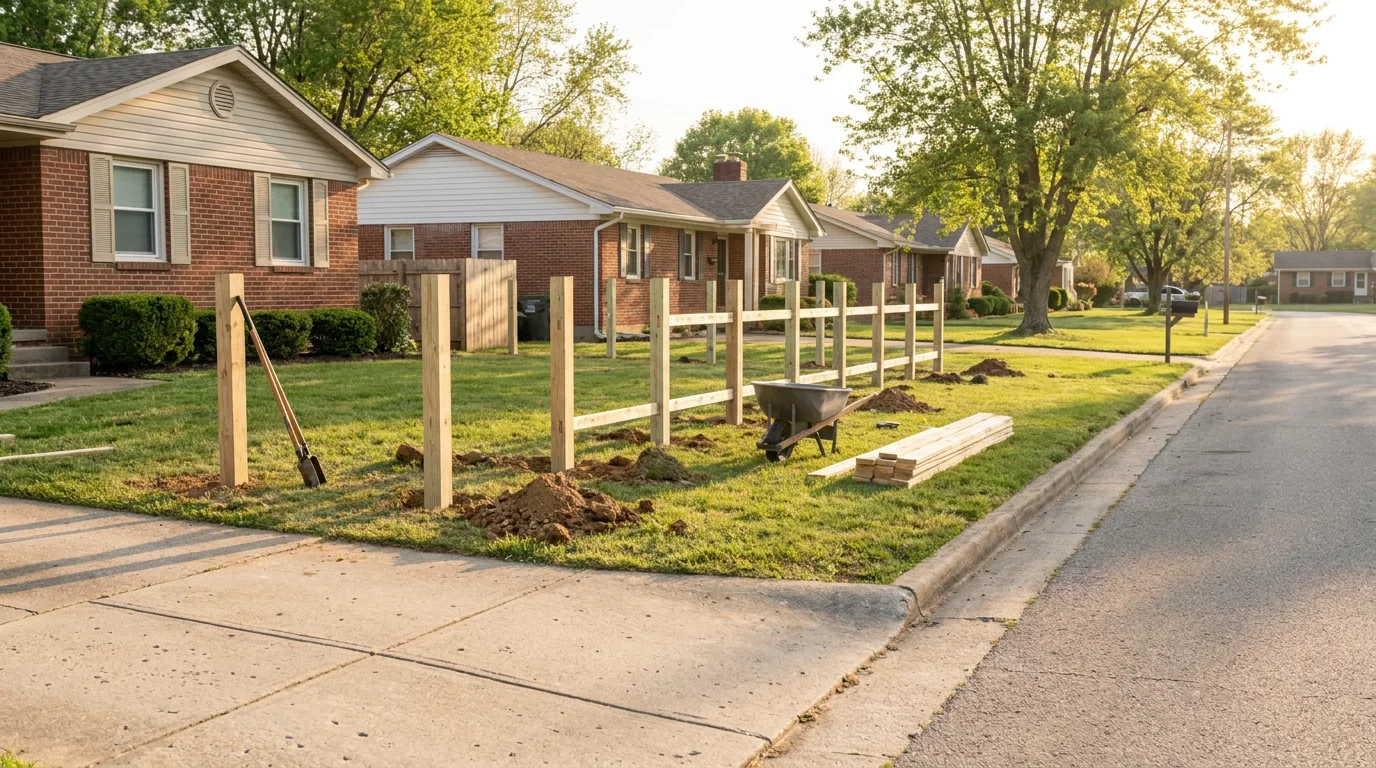
The seven-year fence rule is real Georgia law, but it lives in O.C.G.A. § 44-4-6, § 44-4-7, and § 44-5-164, not in § 44-5-60, which governs how long covenants last. Both statutes matter to an HOA owner, for different reasons.
§ 44-4-6 states that 'Acquiescence for seven years by acts or declarations of adjoining landowners shall establish a dividing line.' § 44-4-7 adds that actual possession under a claim of right for more than seven years 'shall be respected.' And § 44-5-164 grants title by prescription after seven years of adverse possession under written evidence of title; without a writing, § 44-5-163 requires 20 years.
Georgia courts have narrowed all of them. In Cothran v. Burk, 234 Ga. 460 (1975), the Supreme Court held that 'Failure to dispute the location of a fence is not necessarily acquiescence in a boundary since a fence may be placed for purposes other than fixing the boundary.' The court also held that a line cannot be established by acquiescence 'unless there is some contention between the landowners over the location of the line.' Passive silence is not enough.
In Henson v. Tucker, 278 Ga. App. 859 (2006), the Court of Appeals held that § 44-4-6 'will not establish a divisional line, in disregard of definite boundaries fixed by deeds.' Where the rule does work, it works on old fences: the fence in Sledge v. Peach County (2005) had been treated as the boundary for over 30 years.
None of that overrides an HOA architectural rule. Acquiescence settles where the line runs between you and your neighbor; the covenant requiring architectural approval for a fence is a separate contractual obligation that § 44-5-60(d)(6) lets the association enforce by injunction without exhausting other remedies.
Nor can you acquire a piece of common area by fencing it in. In Campbell v. Landings Association, Inc., 713 S.E.2d 860 (Ga. 2011), owners who claimed prescriptive title to HOA common property lost because the association 'never permitted the Campbells to take over the common property for their own personal use' and they could not show 20-year adverse possession. The same permissive-use logic sank the soccer-field easement claim in De Castro v. Durrell (2008). The seven-year rule can move a boundary. It cannot approve a fence.
The 20-year rule in § 44-5-60 is the one that can end a covenant outright, and it works differently depending on when the covenants were recorded. Under subsection (b), covenants restricting land use 'shall not run for more than 20 years' in municipalities and county areas that have adopted zoning.
Subsection (d)(1), added effective July 1, 1993, applies to covenants for planned subdivisions with no fewer than 15 lots. Those covenants 'shall automatically be renewed' for successive 20-year periods, without limit.
Owners can stop a renewal only if at least 51% of affected owners execute and record a termination document within the two years before a period expires.
A worked example shows where the traps are. Take a 40-lot, non-POAA subdivision in a zoned county:
- Covenants recorded in 1998. The first 20-year term ran to 2018. Because the subdivision has more than 15 lots and the covenants postdate July 1, 1993, they renewed automatically in 2018 and will renew again in 2038, unless 51% of owners recorded a termination between 2036 and 2038. Stricter amendments along the way bind only owners who agreed in writing.
- Covenants recorded in 1985. The automatic-renewal amendment does not reach them. In Bickford v. Yancey Development Co., 276 Ga. 814 (2003), and Appalachee Enterprises, Inc. v. Walker, 266 Ga. 35 (1995), the Supreme Court held the 1993 revision applies only to covenants created after July 1, 1993. Under Canterbury Forest Association v. Collins, 243 Ga. App. 425 (2000), a pre-1993 covenant expired as a matter of law 20 years after zoning adoption, so the 1985 covenants lapsed in 2005 unless the instrument itself provided for renewal, which Sweeney v. Landings Association, Inc., 277 Ga. 761 (2004), holds is enforceable as contract.
- Covenants recorded in 1985 in a county that adopted zoning in 1992. Under Turtle Cove Property Owners Association, Inc. v. Jasper County, 255 Ga. App. 560 (2002), the clock runs from the zoning ordinance, so the covenants expired in 2012.
If the same subdivision had submitted to the POAA, none of these dates would matter; § 44-3-234 exempts POAA covenants from subsection (b) and paragraphs (1), (2), and (4) of subsection (d). SB 406 did not touch § 44-5-60.
Filing a complaint or resolving a dispute with your HOA
From January 1, 2027, any resident of an owners' development who claims damage from the association's 'action or inaction' can file a complaint with the Georgia Secretary of State under new § 43-17A-5, and the filing itself freezes collection of the disputed fines. Until that date, your routes are the superior court for covenant and records disputes, the GCEO for discrimination, and the FCC for antenna restrictions.
The SB 406 complaint path, step by step:
- File within 180 days of the action or inaction you are challenging. The enacted text prescribes no form and lists no required contents beyond identifying the association's conduct and your claimed damage; attach the notice, the ledger, and the covenant provision at issue so the hearing officer can investigate without a back-and-forth.
- The filing 'shall act as an automatic stay prohibiting the respondent from collecting or attempting to collect from the complainant any fines or fees that are the subject of the complaint or related to the subject of the complaint.' The stay lasts until the hearing officer issues conclusions, and the officer may extend it 15 days beyond that.
- The Secretary of State appoints a hearing officer, who investigates. A hearing is discretionary, and the statute sets no deadline for finishing the investigation or holding one. The enacted text also states no qualifications for the officer: no attorney requirement, no independence requirement.
- The hearing officer reports findings and conclusions immediately when the hearing concludes, and the losing side has 15 days to comply.
- The nonprevailing party pays a $100.00 administrative service fee to the Secretary of State. There is no separate upfront filing fee in the enacted text.
- Either side may appeal for de novo review under § 43-17A-6. If the amount falls within the magistrate court jurisdictional threshold cross-referenced at O.C.G.A. § 15-10-2(a)(5), the appeal goes to magistrate court; otherwise it goes to the superior court of the county holding the largest portion of the development. The appellant must serve the Secretary of State within 20 days after entry of the order. The Secretary must deliver the transcript to the court within 10 days of receiving the petition, and the appellant pays the transcript cost. The nonprevailing party on appeal pays the prevailing party's court costs, and a further appeal from magistrate court proceeds by petition for review under Chapter 3 of Title 5.
A second track under § 43-17A-4 lets the Secretary of State move against an association for enforcement. The association may request a hearing within 10 days of notice, and the Secretary must hold it between 5 and 30 days after the request.
Unless the association prevails, it pays the $100.00 fee. The Secretary may appoint a referee with the same powers, and again the statute sets no qualifications.
Freeman Mathis & Gary's analysis treats the 180-day deadline and automatic stay as the provisions boards are most concerned about, because a well-timed complaint stops a collection file cold. That works both ways for an investor: if you sit on the board of one association and own units in three others, the same stay that protects your lot in one community will stall your board's collections in another.
FAQ
These answers summarize the deadlines, owner protections, and foreclosure rules that matter most under Georgia HOA law. Your declaration and the association's POAA, condominium, or common-law status still determine which rules apply.
What is the new HOA law in Georgia?
SB 406, the Georgia Property Owners' Bill of Rights Act, signed May 12, 2026 as Act 715. Its attorney-fee protections (certified-mail notice, a 30-day chance to pay, an itemized fee list, and a judge's reasonableness finding) apply to actions filed on or after July 1, 2026. Everything else takes effect January 1, 2027: mandatory Secretary of State registration with an annual $100 fee, a ban on unregistered associations fining or liening anyone, a statutory owner bill of rights, mandatory payment priority, a higher foreclosure floor with a 60-day notice, a six-year lien life, and a hearing-officer complaint system with an automatic stay on disputed fines.
What rights does a homeowner have against an HOA in Georgia?
If the association is incorporated as a nonprofit under Title 14, Chapter 3, you can inspect its governing documents, minutes, and member communications with five business days' written notice, and its accounting records and board minutes with a proper-purpose demand. A court that orders inspection generally must award attorney's fees unless the corporation proves it refused in good faith with a reasonable basis to doubt your right. Federal law stops the association from banning a U.S. flag or a one-meter satellite dish on your own lot, and fair housing law bars pet fees or breed limits on assistance animals. From 2027, you also get statutory rights to insurance certificates, meeting notice and attendance, common-area access, and a state complaint process. Georgia gives you no statutory right to solar panels, an EV charger, or short-term rentals.
What are the most common HOA violations in Georgia?
Exterior changes made without architectural approval, including fences, solar arrays, and antennas beyond what OTARD protects, and leasing outside the covenants, particularly short-term rentals after a community amends its declaration to prohibit them. Unpaid assessments round out the list. Fines may join a POAA or condominium lien, and through December 31, 2026, the foreclosure threshold does not separately exclude them. From January 1, 2027, fines and fees no longer count toward the statutory foreclosure floor, so a fine-only balance cannot satisfy it.
How much do I have to owe before a Georgia HOA can foreclose?
Through December 31, 2026, a POAA or condominium association needs a lien of at least $2,000 and a superior court order. From January 1, 2027, the floor becomes the lesser of $4,000 or 12 months of regular assessments, never below $2,000, and fines and fees no longer count toward it. The association must also give 60 days' notice, and paying before day 60 kills the foreclosure right. Common-law covenant communities have no statutory floor and rely on their recorded covenants.
How do I find out whether my HOA opted into the POAA or is a common-law association?
Read the recorded declaration in the county deed records and look for an 'affirmative election' to be governed by Article 6 of Chapter 3 of Title 44, then check the recorded amendments for a later submission by two-thirds vote (or, from 2027, by 80% vote with a certifying instrument). If neither appears and the document does not submit the property to the Georgia Condominium Act, you are in a common-law community. Confirm the association's incorporation and, from 2027, its registration through the Secretary of State's Corporations Division search.
Does a Georgia HOA have to give notice of meetings, and what is the quorum?
Georgia's Property Owners' Association Act sets no statewide meeting-notice period and no quorum percentage, so both come from the recorded declaration and bylaws, read alongside the corporate code the association incorporated under: Title 14, Chapter 3 for a nonprofit membership corporation or Title 14, Chapter 2 for a business corporation, either of which is permitted before POAA submission under § 44-3-227. From January 1, 2027, new § 43-17A-7 gives owners a statutory right to notice of and attendance at association meetings regardless of what the bylaws say. For amendment votes, agreement can be shown by owner signatures or, once declarant control has ended, by a sworn statement from the president, vice president, or secretary that the required majority agreed and all notices went out. Under Vaughn v. Windfield Homeowners Association (2025), substantial compliance with those requirements is enough, so a minor notice defect will not by itself void an amendment.




.jpg)




.png)