

When fire hits your rental property
A fire at your rental property is one of the worst calls you can get as a landlord. Whether it starts in the kitchen, spreads from a neighboring unit, or ignites from a spark on the back deck, the aftermath is overwhelming. Smoke damage, structural loss, displaced tenants, and a property that can't generate rent. Knowing what the restoration process actually looks like, week by week, helps you stay in control when everything feels chaotic.
This guide walks through the full fire damage restoration timeline, from the first 24 hours after the fire is out to the day you re-lease the unit. At each stage, we'll cover what your landlord insurance should be doing for you.
Day 1: Secure the property and notify your insurer
The fire is out. Now what? Your first priority is safety, not paperwork. Don't enter the property until the fire department clears it. Once they do, you'll likely find a structure that's been soaked by fire hoses, has compromised walls or ceilings, and may have broken windows or an open roof. Securing it immediately matters, because an unsecured property invites theft, further weather damage, and potential liability if someone gets hurt on the premises.
Call a 24-hour emergency board-up service. These contractors cover broken windows, open doors, and exposed rooflines with plywood and tarps. The cost is almost always covered under your dwelling coverage as an emergency mitigation expense. Keep every receipt.
Then call your insurance company. Most carriers have a 24/7 claims line. When you report the fire, they'll give you a claim number and assign an adjuster. The sooner you report, the sooner the clock starts on your claim, which matters when you're also losing rental income every day the unit sits empty.
While you're waiting for the adjuster, document everything. Take photos and video of every room, every damaged surface, every piece of structural damage you can safely access. Don't throw anything away, even debris. Your adjuster needs to see the full scope of what the fire destroyed.
What landlord insurance covers on day 1
Your landlord insurance fire coverage kicks in immediately once you file the claim. Emergency board-up and tarping costs are typically covered as part of your dwelling coverage because they prevent further damage to the insured structure. Some policies include a separate "emergency protection" line item; others roll it into the dwelling claim. Either way, don't skip this step thinking it's an out-of-pocket cost. Because the unit sits empty during fire restoration, vacant property insurance covers the vacancy period standard landlord policies exclude.
Loss of rents coverage also activates on day 1 if the property is uninhabitable. This is one of the most undervalued parts of a landlord policy. If your tenant is displaced because the unit can't legally be occupied, your policy should cover the fair rental value during the restoration period, up to the policy limit. Check your policy for the waiting period, since some policies have a 72-hour deductible before loss-of-rent payments begin.
Week 1: The adjuster visit and initial mitigation
Within the first week, your assigned adjuster will inspect the property. This visit is critical. The adjuster's job is to assess the cause of the fire, document the damage, and begin estimating what the repair will cost. Be present for this visit. Walk every room with the adjuster, point out damage that might not be obvious (smoke inside wall cavities, water-damaged subfloors, compromised electrical panels), and ask questions about what's included in the estimate.
You have the right to disagree with the adjuster's assessment. If you feel the estimate is low or incomplete, you can hire a public adjuster, an independent professional who negotiates with the insurance company on your behalf. Public adjusters typically charge 10 to 15 percent of the final settlement, so it's worth weighing the cost against the potential increase in your payout.
At the same time the adjuster is working, a remediation crew should begin initial mitigation. After a fire, firefighting water soaks into floors, walls, and ceilings. If that moisture sits for more than 24 to 48 hours, mold starts. Mitigation companies bring in industrial dehumidifiers, extract standing water, and begin removing smoke-saturated materials that can't be restored. This isn't the same as reconstruction. It's about stopping the damage from getting worse.
Smoke and soot cleaning also begins in week 1 for surfaces that can be saved. Soot is acidic and keeps damaging materials long after the fire is out. Professional cleaning crews use chemical sponges and HEPA vacuums to clean walls, ceilings, and HVAC systems. If the HVAC system circulated smoke through the property, duct cleaning is usually required before the structure is safe to occupy again.
Tenant displacement and temporary housing
If your tenants were living in the unit, they're now displaced. Tenant belongings are not covered under your landlord policy. Their furniture, clothing, electronics, and personal items are their responsibility to insure. If your tenants didn't carry renters insurance, that's a difficult situation but it's not your policy's problem to solve.
Your loss-of-rents coverage handles the income side. You're not collecting rent from a tenant who can't live there, and the policy compensates you for that lost income during the restoration period. Make sure your policy limits are set high enough to cover several months of rent, not just a few weeks. Restoration timelines, as you'll see below, often run longer than landlords expect.
For more on how fire-related claims play out, see does landlord insurance cover fire damage.
Weeks 2 through 4: Detailed estimates and contractor selection
Once mitigation is complete and the structure is stabilized, the focus shifts to planning the actual rebuild. Your adjuster will produce a detailed scope of work, often using estimating software that prices out every line item, from the number of sheets of drywall to the square footage of flooring. Review this estimate carefully before you agree to it.
This is also when you select your general contractor. You don't have to use whoever the insurance company recommends, though some insurers have preferred contractor networks that simplify the payment process. If you choose your own contractor, make sure they're licensed, carry their own liability and workers' compensation insurance, and have experience with fire restoration specifically. Fire-damaged structures have unique challenges that general remodeling contractors don't always encounter.
Get at least two bids. If a contractor's estimate is significantly higher than the adjuster's scope, ask the contractor to provide a line-by-line comparison. Sometimes the adjuster's estimate misses items, like replacing smoke-damaged insulation inside walls or bringing electrical systems up to current code. That code-upgrade issue is worth paying attention to.
Here's something many landlords discover too late: standard dwelling coverage pays to restore the property to its pre-fire condition, not to bring it up to current building codes. If your property is older and local codes now require upgraded wiring, wider doorways, or improved fire suppression systems, the cost of those upgrades may not be covered without an ordinance and law rider. If you don't have that rider, you could face thousands of dollars in out-of-pocket code compliance costs.
Days 30 to 60: Active restoration work
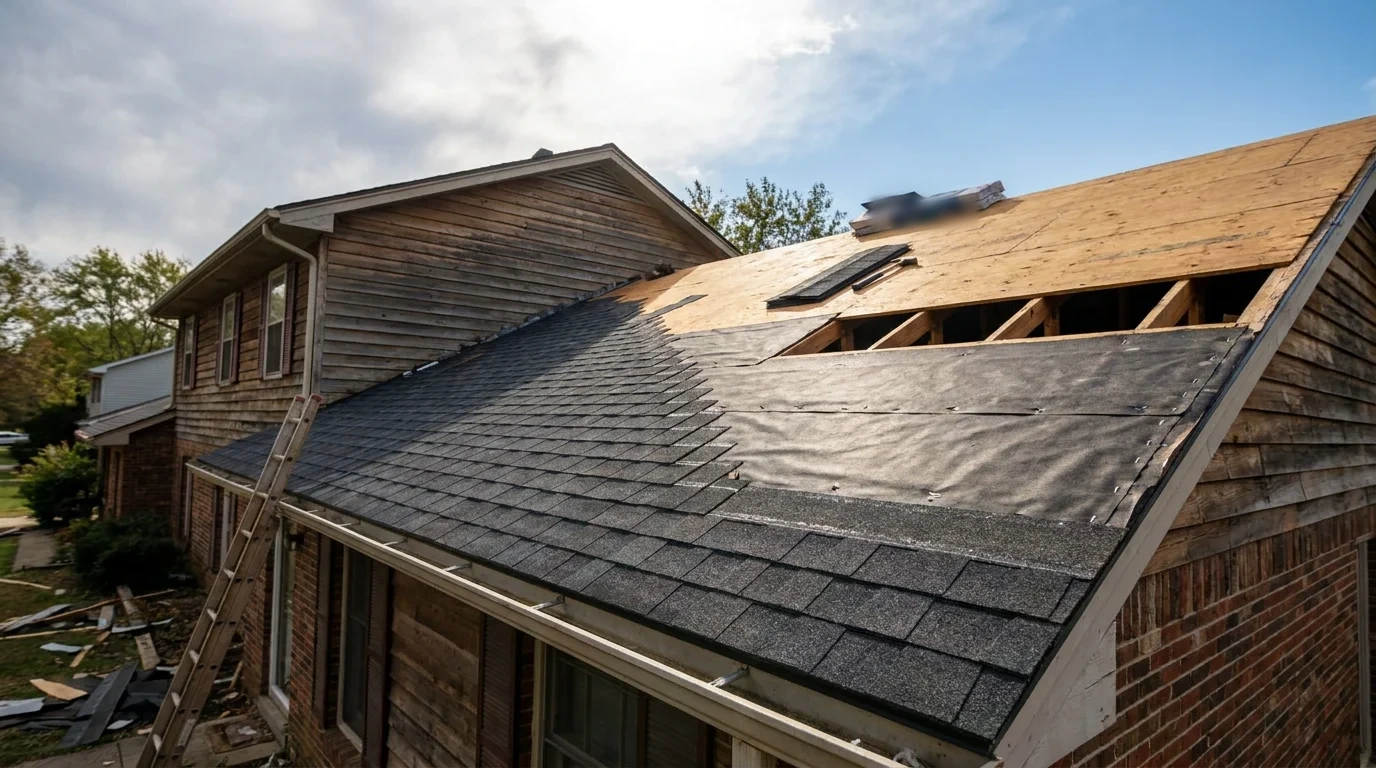
This is the longest phase of the timeline and the one that tests landlords' patience the most. Once permits are pulled and the contractor mobilizes, the actual rebuilding begins. Depending on the severity of the fire, this phase includes framing replacement, new drywall installation, rough-in electrical and plumbing work, insulation, and subfloor repairs.
A few realities to set expectations. Permit timelines vary significantly by municipality. In some markets, permits turn around in a week; in others, it can take three to four weeks just to get approval to start. Material supply chain delays, especially for specialty items like custom windows or specific flooring, can push timelines further. Contractor scheduling gaps between subcontractors (framing crew finishes, electrical crew starts two weeks later) are common.
Stay in regular communication with your contractor. Weekly check-ins at minimum. Ask for a schedule with milestones so you know when rough-in inspections are expected, when drywall is going up, and when finish work begins. Insurance payments are often released in draws tied to construction milestones, so delays in the work can also delay your insurance payouts.
Your adjuster should also be monitoring progress during this phase. Some insurers send a field representative for mid-construction inspections. Others rely on contractor updates and photos. Keep your own photo documentation throughout the build, not just at the beginning and end.
Days 60 to 90: Finishes, inspections, and Certificate of Occupancy
The final stretch of restoration covers finish work: painting, trim, flooring, cabinet installation, fixture installation, appliances, and exterior finishing if applicable. This phase also includes final inspections from the city or county building department.
You'll need a Certificate of Occupancy (or a re-occupancy inspection, depending on your jurisdiction) before tenants can legally move back in. Don't skip this step. If a future tenant is injured and the property lacked a valid certificate of occupancy, your liability exposure increases significantly. Make sure your contractor pulls all required final inspections and that you receive documentation.
Fire restoration projects that seemed like they'd take 60 days often stretch to 90 or even 120 days when inspections, punch list work, and contractor scheduling gaps are factored in. Your loss-of-rents coverage should continue paying through this entire period, up to your policy limit. This is why having adequate policy limits matters so much. A $10,000 loss-of-rents cap won't cover four months of lost income on a $2,000-per-month unit.
A realistic example: Single-family rental fire
Consider a landlord who owns a single-family rental in a mid-sized city. A fire starts on the back porch and spreads into the kitchen and adjacent living room before the fire department arrives. The tenants escape safely. The fire damages roughly 40 percent of the structure, with significant smoke damage throughout the rest of the home.
- Day 1: The landlord calls the insurer, files the claim, and arranges emergency board-up. A remediation company begins water extraction the same day.
- Days 3 to 5: The adjuster visits, walks the property, and begins the damage estimate. Mitigation crews are already removing smoke-damaged drywall and insulation.
- Week 2: The landlord gets the adjuster's estimate, finds it undervalues the kitchen cabinetry and doesn't account for the HVAC duct cleaning. The landlord requests a supplemental review and the adjuster revises the estimate upward.
- Weeks 3 and 4: Contractor selected, permits applied for. Permits arrive at the end of week 4.
- Days 35 to 65: Framing, electrical rough-in, plumbing, drywall. Mid-construction inspection passes.
- Days 66 to 85: Paint, flooring, fixtures, appliances, exterior deck rebuild. Final inspection scheduled.
- Day 91: Certificate of Occupancy issued. The landlord re-advertises the unit.
Throughout the 91 days, loss-of-rents coverage paid the fair rental value of the property each month. The landlord's out-of-pocket costs were limited to the deductible and a small code upgrade expense for a required bathroom exhaust fan that wasn't covered without an ordinance rider.
For situations involving smaller fires, like a cooking incident, the process is often faster. See kitchen fire coverage for rental properties for more on that scenario.
What landlord insurance does not cover
Knowing the gaps is just as important as knowing the coverage. Tenant belongings are never covered under a landlord policy. Tenants need their own renters insurance for personal property. Code upgrades are typically excluded without an ordinance and law endorsement. If your property is fully destroyed and needs to be rebuilt to current codes, the gap between "restore to original condition" and "rebuild to current code" can be substantial.
Negligent maintenance that contributed to the fire may also affect coverage. If you ignored a known hazard that the insurance company argues caused the loss, expect a more complicated claims process. Vacancy clauses matter too. If the property was vacant for more than 30 to 60 days before the fire (the threshold varies by policy), you may be operating under a modified vacancy policy that limits coverage.
Key takeaways for landlords
- File your claim on day 1. Loss-of-rents coverage often has a waiting period, and every day you delay is a day you're not on the clock for recovery.
- Document everything. Photos, receipts, contractor bids, adjuster correspondence. Keep a dedicated folder for every piece of communication related to the claim.
- Be present for the adjuster visit. Don't let the adjuster walk the property alone. Point out damage and ask about every line item in the estimate.
- Know your policy limits. Check your loss-of-rents cap against your actual monthly rent and a realistic restoration timeline. Underinsurance is a real problem in extended claims.
- Ask about an ordinance and law rider. If your property is more than 20 years old, the cost of bringing it up to current code after a significant loss can be significant. This rider is relatively inexpensive and can save thousands.
- Don't rush re-occupancy. Make sure you have a valid Certificate of Occupancy before any tenant moves back in. The liability risk of an uninspected property is not worth it.
- Tenant belongings aren't your problem to solve, but communication matters. Be upfront with your tenants about what your policy does and doesn't cover. Encourage them to carry renters insurance from the start of any tenancy.
- Restoration takes longer than you expect. Budget mentally for 90 to 120 days on a significant fire claim. Planning for that timeline reduces stress and helps you make better decisions about contractor selection and re-leasing timelines.


.jpg)




.png)