

Start hosting your property on Airbnb
Receive a $115 bonus if you list your property within 180 days!
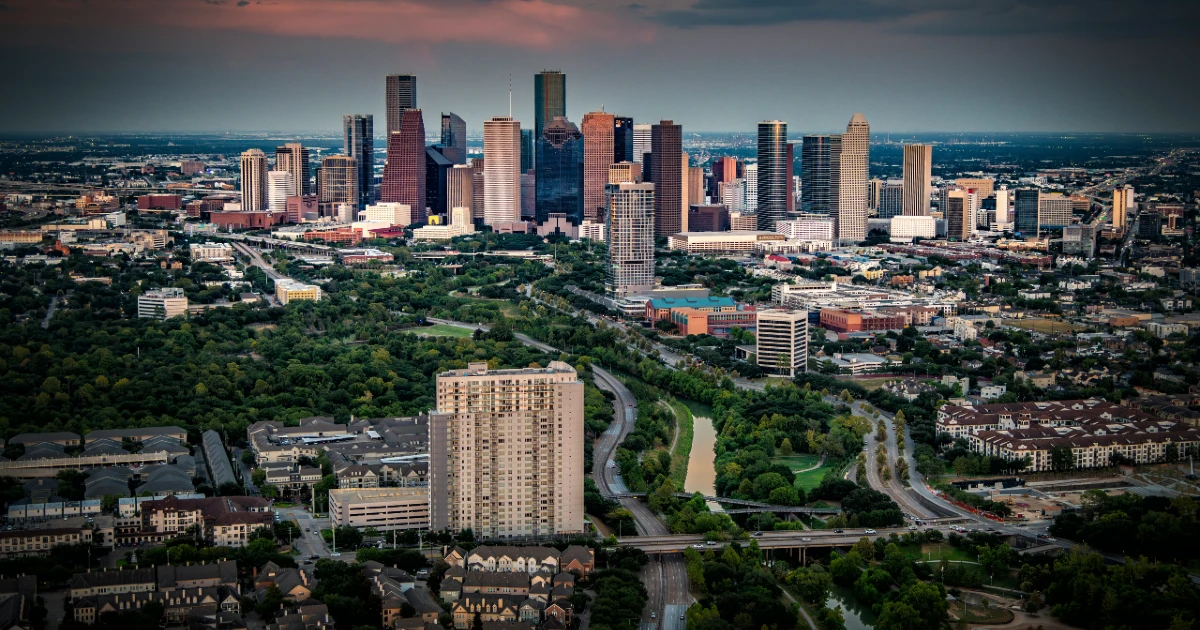
Houston isn't just hosting the World Cup. It is the World Cup in ways most US cities can't claim. The most ethnically diverse city in America (more than 145 countries represented in its population) will watch the world's sport come to its doorstep at NRG Stadium this June.
The U.S. hasn't hosted the World Cup since 1994, which is well before the short-term rental industry really existed. With the whole world headed to America to watch the biggest sporting event in the universe, we may never see a greater jump in demand for short-term rentals. For real estate investors who've been eyeing STR, this isn't a coincidence. It's a catalyst. If you've been doing the mental math on renting your house for the World Cup 2026, Houston is an extraordinarily strong case for pulling the trigger and launching your STR operation now.
Deloitte projects Houston hosts will average around $3,000 for the tournament period. That's the average. Properties near NRG, in walkable neighborhoods, or near transit connections to the stadium can clear that number by a wide margin. And unlike cities where tourism demand disappears after the event, Houston has the STR fundamentals to keep a property earning well after the final whistle: corporate travel, medical tourism, year-round event traffic at NRG.
NRG Stadium match schedule
Six group stage matches, a Round of 32, and a Round of 16. That's the Houston draw, and the fanbases attached to it are serious.
- June 14: Germany v Curaçao
- June 17: Portugal v winner (Congo / Jamaica / New Caledonia)
- June 20: Netherlands v winner (Albania / Poland / Sweden / Ukraine)
- June 23: Portugal v Uzbekistan
- June 26: Cape Verde v Saudi Arabia
- June 29: Round of 32
- July 4: Round of 16
Germany, Portugal, and the Netherlands are three of the most organized and financially committed traveling fanbases in world football. Portugal gets two appearances, June 17 and June 23, which means Houston's considerable Portuguese-speaking community gets double the reason to stay local and bring family in from out of town. The German fanbase is methodical and books early. By the time most landlords think about listing, German fans have already locked down the good properties. That's not a warning; that's your competitive advantage if you list now.
The Round of 16 falls on July 4. Think about it: you've got international soccer tourists who want to see a knockout match AND domestic fans traveling for Independence Day weekend. That demand layering is unusual. Minimum stays of 5-7 nights for that block are completely defensible, and you'll find guests who take them without negotiating.
Deloitte's projected average of $3,000 is a floor for well-positioned properties, not a ceiling. The Germany match alone draws the kind of advance-booking fanbase that pays premium rates without flinching.
Houston's sprawl and the landlord strategy
Houston is not a walkable city. That's not a criticism, at least not here; it's a strategic fact that shapes how you position and price your listing. Location relative to NRG Stadium matters more here than in transit-heavy cities like New York or Boston.
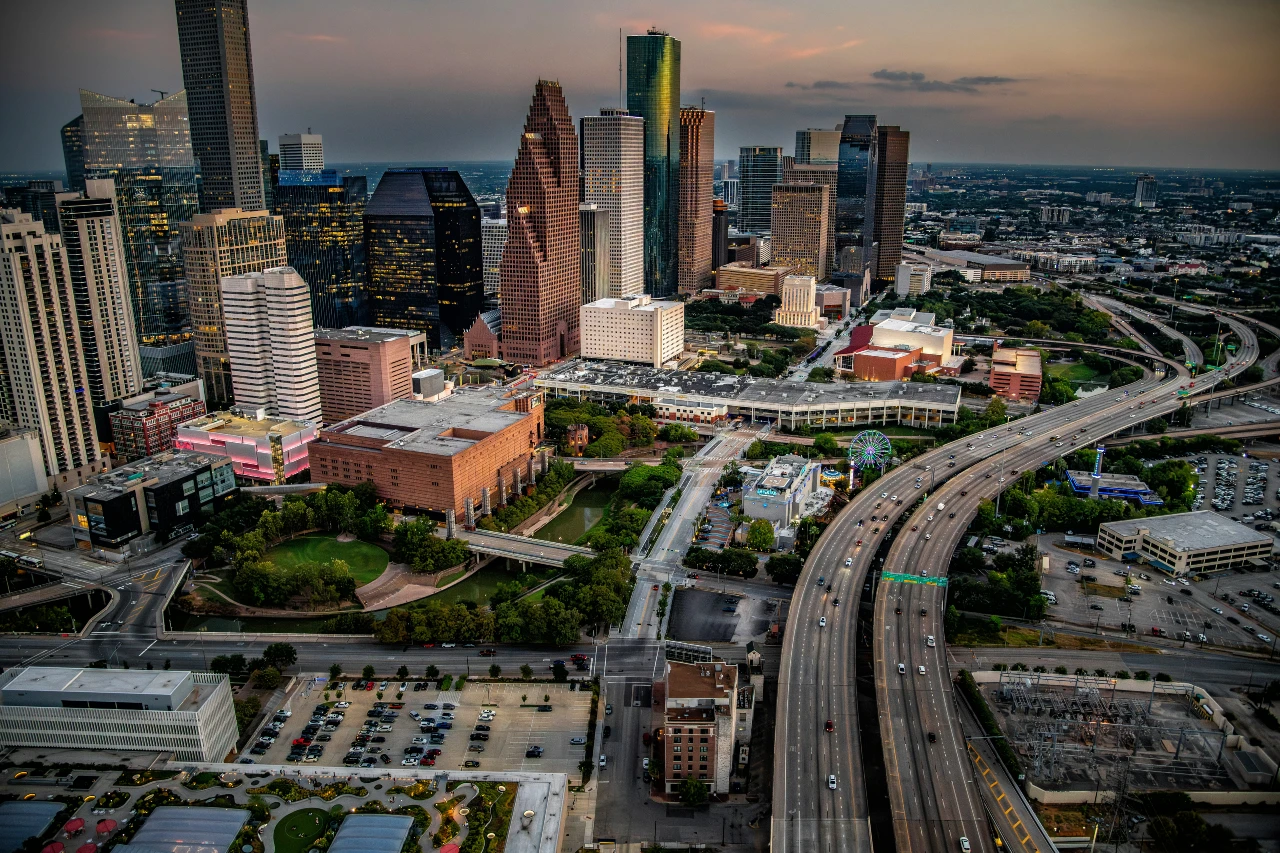
NRG Stadium sits in South Houston, next to the Texas Medical Center. The zones that make the most sense for STR investors targeting World Cup traffic: Medical Center area, Museum District, Midtown, and Downtown Houston. These aren't just geographically convenient. They're neighborhoods with restaurants, bars, and the kind of activity that international tourists expect from a game-day trip.
The METRORail Red Line runs through the Texas Medical Center and connects to the stadium via shuttle service. If your property is near a Red Line stop, say so explicitly in your listing. International travelers unfamiliar with Houston's car-dependent layout will gravitate toward listings that offer a transit path to the venue.
Now, parking. In most US cities it's an afterthought. In Houston it's a genuine listing differentiator. Properties with dedicated off-street parking should advertise that prominently — it justifies a 15-20% rate premium over comparable properties without it. Groups of German and Portuguese fans arriving via rental car from IAH or Hobby Airport will specifically filter for parking availability. Don't bury it in the listing; put it in the headline.
One underappreciated angle: Dallas is hosting four hours away. Houston's Latin American community, particularly Honduran, Salvadoran, and Mexican fans whose national teams may be playing in Dallas, creates genuine crossover interest. Some will want to attend matches in both cities across a single trip. Flexible check-in and check-out policies could capture that extended-stay segment.
Houston Airbnb regulations
Standard landlord insurance in Texas almost always excludes short-term rental activity outright, and homeowner policies exclude any commercial rental use of the property. Houston STR operators renting during the World Cup window typically need either a specialty short-term rental policy or a home-sharing endorsement, plus landlord liability insurance for guest injuries and alcohol-related incidents.
Houston has been rolling out STR registration requirements that take effect in 2026. The new ordinance requires annual registration with the city, fire and safety code compliance, and collection and remittance of a 13% combined state and city hotel occupancy tax. That tax doesn't come out of your pocket (it's passed through to guests), but you need the registration before you collect a dollar, and the compliance process takes time.
Get ahead of the registration deadline now. Platforms like Airbnb handle tax collection automatically once your property is registered, but the registration itself requires action from you. Don't assume you can list in May and sort the paperwork after the bookings come in.
Review the current Houston short-term rental regulations carefully before listing. And if you're still evaluating whether the Houston market makes sense as a long-term play, the Houston real estate market overview is worth reading to understand fundamentals beyond the World Cup spike.
The fanbases coming and what they'll pay
Germany brings one of the most organized traveling fanbases in world football. These are not impulsive bookers. They research, compare, and lock in accommodations months before departure, and they pay for quality. A clean, well-equipped property with clear pricing and good reviews will get booked by German fans faster than almost any other group.
Portugal's fanbase has grown dramatically in the Ronaldo era into a genuinely global following. Houston's Portuguese-speaking community, predominantly Brazilian, will add local engagement that amplifies demand even for visitors staying with family who want overflow accommodation for relatives coming in from out of town.
The Dutch show up in orange. Groups of 6-10, coordinated, loud in the best possible way, and used to paying European hotel rates that make US STR pricing look reasonable by comparison.
On pricing: group stage matches should run at 2.5-3.5x your normal nightly rate. Germany and Portugal matches warrant the upper end of that range given advance demand. The Round of 32 on June 29 moves to 3.5-4x; the July 4 Round of 16 should be 4-5x with aggressive minimum stays. If you've done the listing work correctly, you won't need to negotiate — you'll be choosing between offers.
Preparing your Houston property
Groups are the unit of measure here. Individual traveler demand exists, but the economics of a World Cup trip favor group travel, and most of the fanbases coming to Houston organize in groups of 4-8. A property sleeping 6 or more will outperform a one- or two-bedroom listing in both occupancy rate and nightly yield.
Strong WiFi matters, not for work, but because international fans will be watching group stage matches from their home countries on their phones and laptops while they're in town. A smart TV with easy access to streaming apps is a real amenity, not a nice-to-have.
Security deposits in the $500-$1,000 range are standard and expected by international guests used to booking larger properties. Document the property's condition thoroughly with photos and video before each stay. Texas landlord-tenant law is generally investor-friendly, but your documentation is your first line of defense if a damage claim arises.
One thing Houston gets you that northern cities don't: July heat. The trade-off is that your central air conditioning needs to work perfectly. Not "adequately." Not "usually fine." It needs to be serviced, functional, and capable of handling a full house in 95-degree summer heat. An AC failure mid-stay during a major tournament could generate the kind of reviews that follow a property for years.
Airbnb promotions for the World Cup
Before the insurance section — which has some Houston-specific details worth knowing — there's a separate incentive layer to cover first.
Airbnb has launched the largest new host incentive program in the company's history ahead of the World Cup. New hosts across all 16 host cities can earn $750 if they complete their first guest stay before July 31, 2026. Houston qualifies, and the deadline carries past the end of the tournament — so new hosts have room to get set up properly, not just rush to get something live.
For existing Houston hosts: referring a new host to the platform before the event pays $185 to $1,160 depending on the city. After the new host completes their first booking, you can collect an additional reward of up to $290 if they're in a qualifying zip code. The zip code list and full terms are on Airbnb's website.
Airbnb knows what the Germany and Portugal fanbases are worth to a host in this market. So do you.
Insurance before your first guest checks in
This is the piece most new STR investors get wrong. Your existing homeowner's policy almost certainly doesn't cover short-term rental activity. The moment you take a paid guest, you've created a coverage gap that a standard policy explicitly excludes.
Before you accept a single booking, get Houston short-term rental insurance in place. If you're building out a Texas portfolio beyond a single property, Texas short-term rental insurance covers you at the state level across multiple assets.
Steadily's short-term rental insurance is built for STR investors, not retrofitted homeowner coverage. It covers property damage, liability, and loss of rental income if a claim forces a booking cancellation. That last one matters more than most investors realize; a burst pipe during a tournament week could wipe out weeks of premium revenue if you're uninsured against income loss. Also review your landlord insurance coverage options to understand how they layer with STR-specific policies.
The long-term case for Houston STR
The World Cup demand is real and it's coming fast. We're roughly three months out as of March 2026. But the more important question is whether Houston makes sense as a long-term STR market, because that's the decision you're actually making. The World Cup is the first booking; what comes after is the real investment thesis.
Houston has year-round STR fundamentals that most investors outside Texas underestimate. Corporate relocations and business travel tied to the energy sector provide consistent weekday demand. Medical tourism at the Texas Medical Center, one of the largest medical complexes in the world, generates a steady, recession-resistant traveler segment that books in advance and stays for extended periods. NRG Stadium hosts concerts, rodeos, and NFL games throughout the year.
Texas's regulatory environment is among the more landlord-friendly in the country. If you're comparing markets, the short-term vs. long-term rental analysis is worth doing carefully; in Houston, the STR premium over long-term is real and measurable. And before you dismiss the opportunity as too complex, the STR loophole for landlords is worth understanding from a tax perspective.
The expert analysis on STR surge markets makes the broader case for why major event demand creates long-term traction for listings, not just one-time windfalls.
Bottom line: Houston is a city built for this moment in ways that go beyond hosting a few matches. The diversity of its fanbase demand, the year-round STR drivers, and the Texas regulatory climate all point the same direction. Get the 2026 registration sorted now. Lock in your insurance. Get on the platforms while German fans are still planning. They book early and they book thoroughly, and you want to be listed when they come looking.




.jpg)


.png)