


Start hosting your property on Airbnb
Receive a $115 bonus if you list your property within 180 days!
The 2026 World Cup is coming to the United States, Mexico and Canada – and one of the 11 U.S. host cities is Boston. Well, sort of.
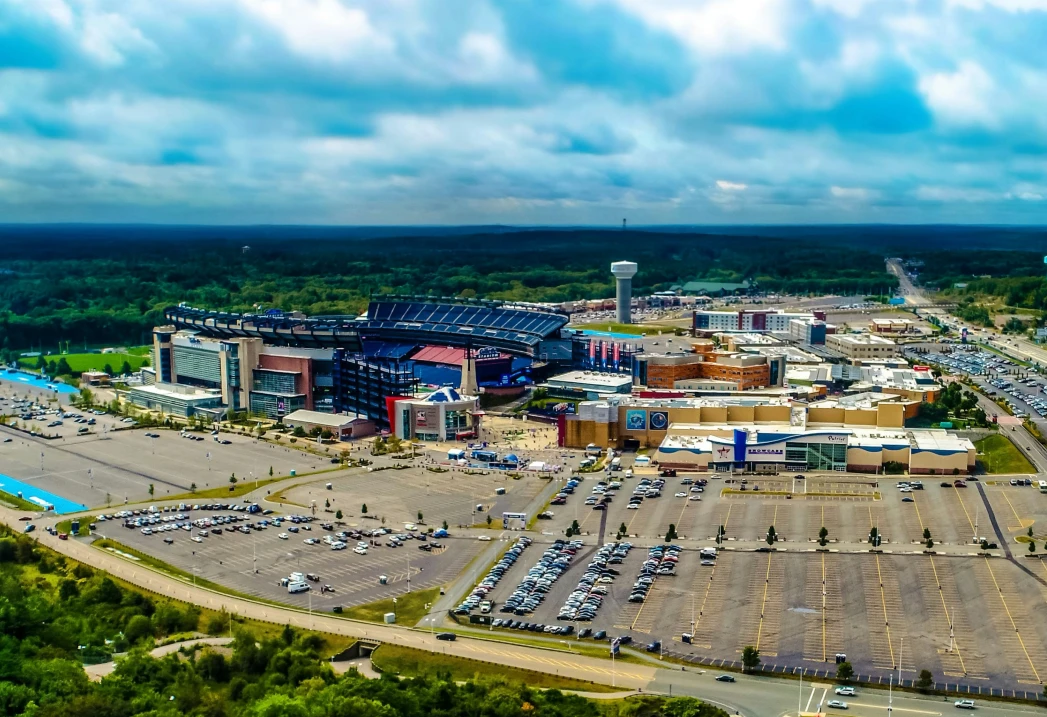
Gillette Stadium, which is the home of the NFL's New England Patriots, will host seven World Cup matches this summer. And while it's certainly within the city's metropolitan area, the stadium is 25 miles south of Boston in Foxborough. We know the World Cup is going to create a generational demand opportunity for short-term rentals, but the stadium's distance from Boston proper creates a slightly different equation for property owners in the area – and more opportunity throughout the suburbs and state of Massachusetts.
Suburbs along I-95 and I-495 that normally price well below downtown Boston can suddenly command premium rates from fans who'd rather pay less and drive 10 minutes to the venue than fight Boston traffic and pay four-figure nightly rates. If you're a landlord in Foxborough, Walpole, Mansfield, or Attleboro, or anywhere along that corridor, you're sitting on a pricing advantage that most investors haven't identified yet.
That's not to say Boston landlords can't make a huge profit, too. Deloitte did a study analyzing projected earnings for landlords in all North American host cities for the World Cup, and they project Boston-area hosts to average around $5,200 for the tournament — second highest among all US host cities, behind only New York. For context, that's a $2,200 advantage over Houston and more than double Philadelphia.
A quarterfinal date that could bring some of the world's most passionate fanbases to one place, combined with strong existing STR demand and a tight supply market driven by strict city regulations, makes this one of the more serious STR opportunities in the country this summer.
Gillette Stadium match schedule
Seven matches at Gillette, including a quarterfinal. The fanbase draw here is exceptional.
- June 13: Haiti v Scotland
- June 16: Norway v winner (Bolivia / Iraq / Suriname)
- June 19: Scotland v Morocco
- June 23: England v Ghana
- June 26: Norway v France
- June 29: Round of 32
- July 9: Quarterfinal
Scotland appears twice, June 13 and June 19. The Tartan Army is legendary. They're culturally known as one of the most enthusiastic, genuinely good-natured traveling fanbases in international football; they arrive in numbers, they stay long, they spend freely, and they leave properties in good shape. If you're new to STR and want a first guest experience that goes smoothly, a group of Scottish fans is not a bad place to start.
England v Ghana on June 23 is the anchor match of the group stage. England's traveling support is enormous — and they pay. English fans are used to European hotel pricing; US STR rates at even 3-4x normal will look reasonable by comparison. Norway v France on June 26 adds another heavyweight: the French-speaking community in New England is real, and the Francophone diaspora's engagement with Les Bleus at home games runs deep.
The quarterfinal on July 9 is the headline. A quarterfinal could feature any combination of the tournament's biggest draws, and it's priced accordingly. Deloitte's $5,200 average is almost certainly being pulled upward by that single date. Landlords who block-book around it with a minimum 7-night stay will capture the full value of fans who book early and stay through the result.
The Foxborough factor
Transit to Gillette Stadium is limited. The MBTA runs commuter rail gameday service to Foxborough Station, connecting from South Station in Boston, but it's limited service, not the kind of comprehensive transit access you'd find in Chicago. Most fans attending Gillette will drive or rideshare. That changes the demand map entirely.
In cities where transit access determines everything, suburban properties get ignored. In Foxborough's case, the opposite is true. A property in Foxborough or Walpole with a driveway and a "10-minute drive to stadium" headline in its listing can legitimately price at 20-30% above comparable Boston proper listings for game days, because fans will pay for that convenience without the Boston parking nightmare. Parking near Gillette is itself a premium commodity during events; if your property includes it, say so prominently.
Still, Boston proper isn't left behind. International fans, particularly those combining a World Cup trip with broader New England tourism, want the city experience. Hotels in downtown Boston will be pricing at extraordinary rates, which pushes a segment of budget-conscious but comfort-seeking travelers toward Airbnb listings in Back Bay, South End, Cambridge, and Somerville. Those properties won't necessarily have stadium proximity, but they'll capture demand from fans who want to watch games in the city and make a day of it.
If your property is anywhere near a South Station-accessible MBTA line, advertise the commuter rail gameday service explicitly. It's a genuine differentiator for international guests who are unfamiliar with Boston's geography and want a transit option.
In general, if your property has a transit advantage, it needs to be in the headline.
Boston Airbnb regulations
Look, Boston is one of the more restrictive STR markets in the US. No sugarcoating that. The city has registration requirements, and there are meaningful restrictions on investor-owned (non-primary-residence) properties. Massachusetts state regulations layer on top of Boston's local ordinances, creating a compliance picture that requires careful attention before you list a single night.
This is not a "list now and sort the details later" market. Verify your property's eligibility under current rules before you invest time in listing preparation. Review the Boston short-term rental regulations carefully. The restrictions on investor-owned properties are real and worth understanding fully.
The counterintuitive upside of Boston's regulatory environment is what makes it work in your favor as a compliant operator: tight supply constraints support pricing power. Fewer listings compete for the same demand because the barriers to entry filter out casual hosts. If you do the regulatory work, you're operating in a market with a structurally higher floor. The Boston real estate market context is useful here. The fundamentals behind Boston STR pricing aren't arbitrary; they reflect genuine supply scarcity in one of the most in-demand markets in the country.
The fanbases and what they'll actually pay
The Tartan Army deserves its own paragraph. Scotland fans travel in real numbers for major tournaments, and their reputation in the host cities they visit is excellent. They're known for celebrating hard without causing problems. Groups of 6-12 Scottish fans descending on a Foxborough rental for two matches will be among the easiest guests a new STR investor can hope for. They pack properties, they spend locally, and they don't leave disasters. They also book in advance once the schedule is confirmed.
England is the demand anchor of the group stage. England's traveling support is one of the largest national followings in world football, and the June 23 match against Ghana will be a major ticket-demand event. English fans booking accommodations aren't necessarily budget travelers; a good chunk of them are looking for the right property, not just the cheapest one available. Professional photos, a clear amenities list, fast response time — those things convert English bookers.
France deserves more attention than it gets in this context. New England's Francophone population is real, concentrated in communities across Massachusetts, Rhode Island, and Connecticut. The Norway v France match on June 26 will generate demand from local French-heritage communities who want to attend and host visiting relatives. That's a segment that books through local networks, often at premium rates, and often for longer stays.
Norwegian fans are increasingly well-traveled as Norwegian football has grown in international profile. Well-funded, organized, and used to Scandinavian accommodation costs that make US STR pricing look accessible.
Pricing the Boston market
Group stage matches: price at 3-4x your normal nightly rate. The England match on June 23 warrants the top of that range or beyond; it's the highest-demand single group stage match at Gillette and will see the earliest booking activity. Scotland matches are strong performers given the Tartan Army's travel numbers; June 13 will have early advance demand from Scottish fans who plan around the tournament draw.
The Round of 32 on June 29 moves to 4-5x. Lock in minimum stays of 5-6 nights for this period to capture the full value of fans who are potentially staying through multiple events.
The quarterfinal on July 9 is in a category of its own. Price at 5-7x, require a 7-night minimum, and don't discount. Fans who are in Boston for a quarterfinal have already committed to a major international trip; accommodation cost is not the variable they're optimizing against. They want quality, location, and certainty of booking. Give them all three at a premium price.
Suburban properties in the Foxborough-Mansfield-Attleboro corridor can outperform Boston proper on game days when they're correctly positioned. The formula: parking included, accurate drive time to stadium in the listing headline, competitive but not discounted pricing versus downtown Boston alternatives. The "20% less than Boston, 10 minutes from the stadium" position is hard to argue with if you can fill it.
Airbnb promotions for the World Cup
One more thing before insurance: Airbnb is actively paying to grow the host base in World Cup markets, and Boston is on the list.
New hosts who complete their first stay by July 31, 2026 can earn $750 through Airbnb's biggest-ever host incentive program. That window covers the full tournament and a couple weeks beyond — anyone with a property near Gillette who hasn't listed yet is leaving bonus money on the table alongside everything else.
Already on the platform? If you refer a new host in a key match city before the tournament, you can earn between $185 and $1,160. Once they complete their first booking, there's an additional reward of up to $290 for qualifying zip codes. Full eligibility details are on Airbnb's website.
Second-highest projected host earnings of any US city in the country, and Airbnb is still running extra incentives to add supply. That tells you something about the demand they're expecting here.
Insurance in Massachusetts
Massachusetts has a strict regulatory and legal environment, and that extends to the insurance landscape. Standard homeowner's coverage doesn't protect you once you're accepting paid guests. The liability exposure alone, from a guest injury to property damage, makes STR-specific coverage essential before your first booking.
Get Massachusetts short-term rental insurance in place before listing. If you're operating in the city specifically, Boston short-term rental insurance is tailored to the local market and its compliance requirements. Steadily's short-term rental insurance covers the full range: property damage, guest liability, and loss of rental income if a claim forces a booking cancellation. That income protection matters enormously when you've got a quarterfinal week at stake. A covered incident that forces cancellation of a 7-night stay at 5-7x rates is a significant financial event if you're uninsured against income loss.
Review your landlord insurance coverage options as well; for investor-owned properties, understanding how coverage types layer gives you a cleaner picture of your total risk profile.
The long-term play in Boston
Boston is a high-barrier, high-reward STR market. The regulatory work is real and can't be shortcut. But the landlords who do that work operate in a market with structural supply constraints that support pricing power year-round.
Beyond the World Cup, Boston's STR fundamentals are solid: year-round academic and corporate travel, tourist demand from spring through fall, and hotel rates that consistently push price-sensitive visitors toward alternatives. The tight regulatory environment that makes initial setup harder is exactly what keeps supply low and rates high for compliant operators. That's the math that makes the upfront effort worth it.
The short-term vs. long-term rental comparison is worth working through carefully in a market like Boston, where the STR premium over traditional leasing can be large but the operational complexity is real. The STR loophole for landlords is also worth understanding here; in a high-income market like Boston, the tax treatment of STR income can meaningfully affect your net yield calculation. The broader expert analysis on STR surge markets provides useful context on how major event demand converts into durable listing traction.
In short: Boston is a tough market to crack as a new STR operator. The regulatory hurdles are real; the compliance requirements are not optional. But the World Cup demand gives you a specific reason to do that regulatory groundwork now rather than later. The Tartan Army is coming. England fans are coming. A quarterfinal might land in Foxborough. The investors who sort out their registration, get their insurance in place, and list their properties in the next few weeks are going to be very glad they moved when they did.




.jpg)



.png)