

Start hosting your property on Airbnb
Receive a $115 bonus if you list your property within 180 days!
Miami is the most internationally connected city in the United States, and the 2026 World Cup is coming to it.
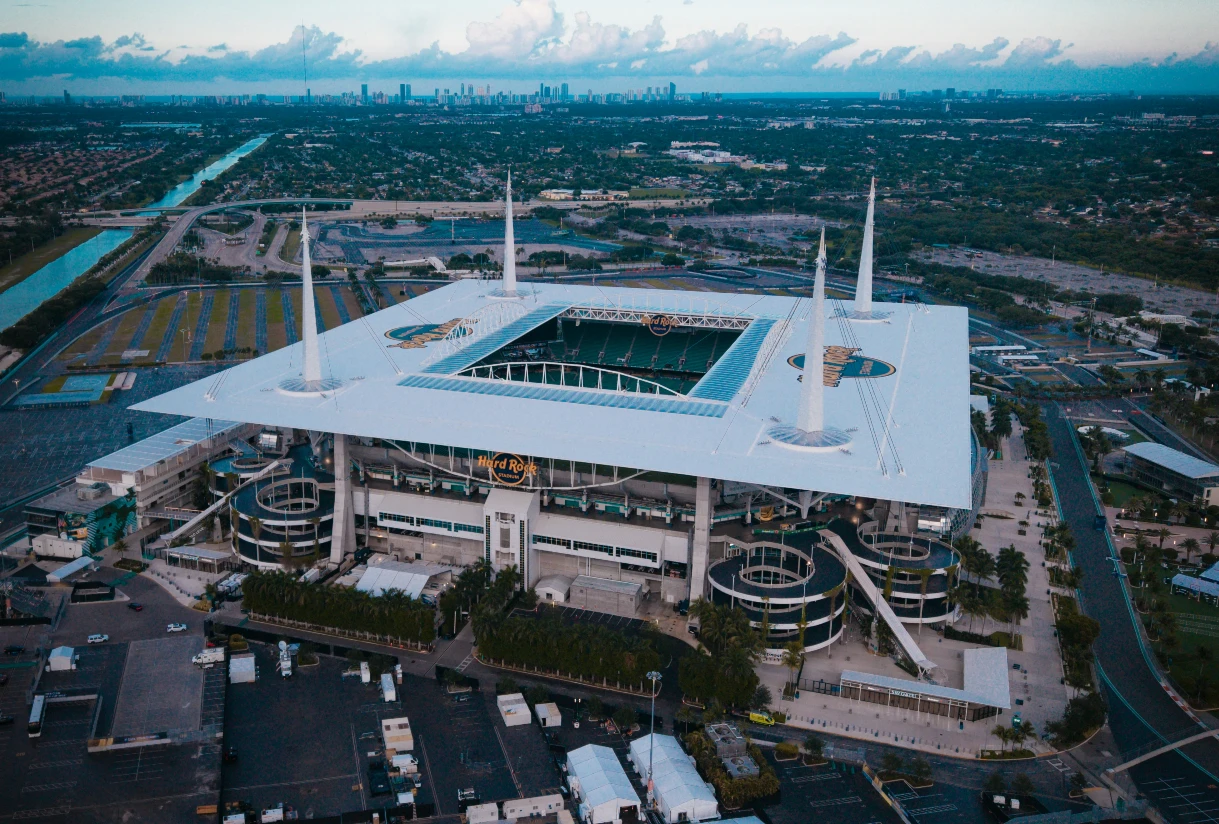
Hard Rock Stadium in Miami Gardens hosts 7 matches including the third-place match on July 18, a fixture that draws the same emotional energy as a semifinal because someone's tournament is ending there. But the more interesting point about Miami isn't the match count. For fans from Colombia, Uruguay, Brazil, and Argentina, South Florida already functions as a second home. The World Cup doesn't bring them here; it gives them a reason they couldn't ignore.
For investors who own rental property in Miami-Dade or Broward, this isn't a distant upside scenario. It's arriving in roughly 90 days. And if you haven't already turned your property into a short-term rental, you're running low on time to do it before the window closes.
Deloitte projects Miami host earnings averaging around $5,000 for the tournament window, top 5 among all US host cities. Deloitte's economic model used a 90% average rate surge across all host cities as a modeling assumption — and in Miami, where typical summer rates are already elevated, that input translates to significant dollar figures even if the real-world rate lands somewhat lower. The compounding effect here is real.
Hard Rock Stadium schedule
Seven matches over five weeks, with the tournament's bookend event on July 18. Here's the full schedule:
- June 15: Saudi Arabia v Uruguay
- June 21: Uruguay v Cape Verde
- June 24: Scotland v Brazil
- June 27: Colombia v Portugal
- July 3: Round of 32
- July 11: Quarterfinal
- July 18: Third Place Match
Brazil on June 24 and Colombia on June 27 are the two most important demand drivers in this schedule. Brazil consistently sends one of the largest traveling contingents of any World Cup nation; a match in South Florida (literally a short flight from Sao Paulo) creates an attendance dynamic unlike any other venue in the US. Colombia has been a serious World Cup presence since their 2014 run; expect long stays and group bookings from Colombian fans who treat Miami as a natural staging point.
Scotland's fixture against Brazil on June 24 deserves a separate mention. The Tartan Army (Scotland's traveling support) is one of the the most well-traveled fanbases in world soccer relative to the country's population. They book far in advance, they stay long, and they spend on local food and hospitality without complaint. Scotland in Miami is a genuine demand event, not an afterthought.
Then the third-place match on July 18. Don't underestimate this one. Both teams playing for third place have just lost a semifinal; their fanbases are emotionally raw and often more present than at a final because they're processing something. The third-place match is frequently one of the most charged atmospheres of the entire tournament. Deloitte puts Miami host earnings at roughly $5,000 average, and that number reflects the full calendar through July 18.
Miami's geographic advantage (and its complication)
No US city has better direct flight connections to South America and Europe than Miami. Sao Paulo, Buenos Aires, Bogota, Medellin, Lisbon, Madrid: all have frequent direct routes to MIA. This is what makes Miami's World Cup positioning unusual: you are not just serving domestic US tourists who happen to like soccer. You are serving international travelers for whom Miami is the most logical entry point into the United States.
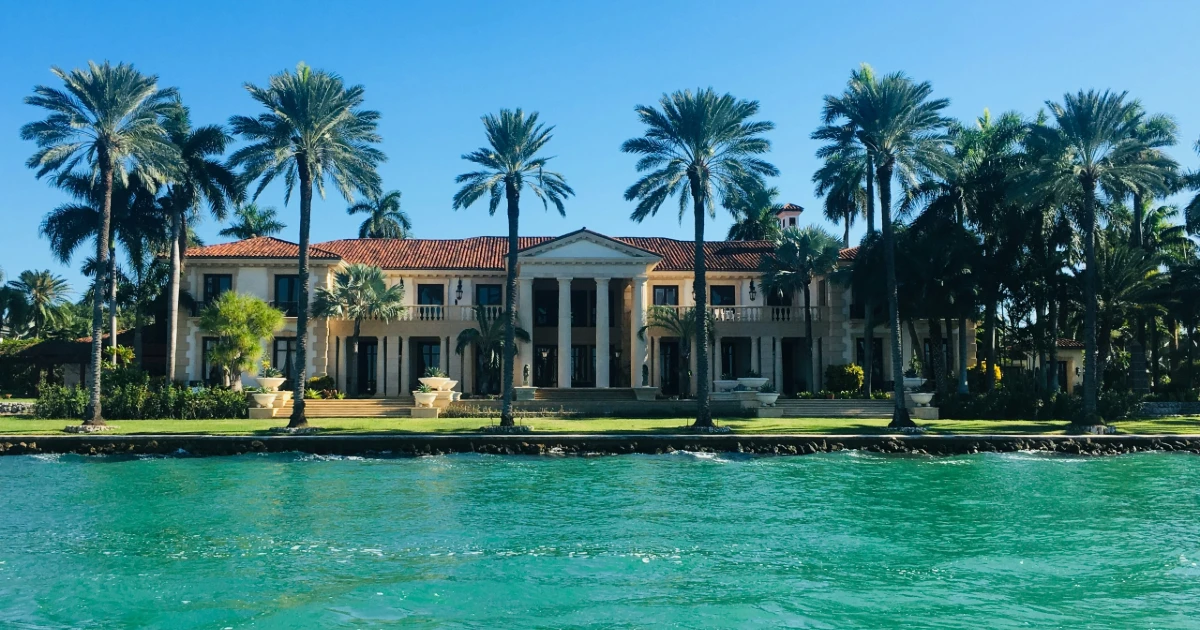
Hard Rock Stadium sits in Miami Gardens, roughly 15 miles north of downtown Miami via I-95. The market is car-dependent, which means guests arriving at MIA need either a rental car or rideshare infrastructure. Properties close to major highways, with good parking, and reasonable proximity to the airport or Brickell/downtown fare best. Waterfront properties and pool homes command the highest premiums with international guests. That combination of outdoor space, privacy, and the distinctly Miami aesthetic is what they're flying here for.
The complication: STR eligibility in Miami is among the more restrictive in Florida. Zoning is the governing factor, and the patchwork of allowed and restricted areas is not intuitive. The strongest demand zones where STR is generally permitted include Brickell, Wynwood, Edgewater, Coral Gables, Coconut Grove, and parts of Miami Beach (with additional regulation layers in Miami Beach specifically). Fort Lauderdale works as a viable secondary market with fewer restrictions and lower property acquisition costs, and it's a reasonable drive to Hard Rock Stadium from Broward County.
Still, the investors who've already done the permitting work in eligible Miami zones are positioned to capture demand that simply can't be matched by properties in less internationally accessible markets.
Miami Airbnb regulations
This is where Miami diverges sharply from other Florida markets. STR rules here are strict, zoning-based, and require active verification before you list a single night.
To operate legally in the City of Miami, you need a Certificate of Use for short-term rental activity and a Business Tax Receipt. Miami Beach applies additional restriction layers beyond the city's base requirements. Some neighborhoods within Miami Beach effectively prohibit STR, while others permit it under specific conditions. The rules also interact with HOA restrictions at the building or development level, which can supersede city-level permissions.
Look, this is not a market where you assume your property qualifies and figure it out later. The permitting process takes time, and enforcement in Miami has been increasingly active. Get the Miami short-term rental regulations sorted before any listing goes live. And if you're evaluating whether the acquisition numbers make sense for a Miami STR, the Miami real estate market data on rental yields and appreciation trends is a necessary part of that underwriting.
The permitting complexity is real — but it's also a moat. The investors who clear it face less competition from last-minute listings than in more permissive markets.
Who's coming and what they'll pay
Brazil fans are the headline. When Brazil plays in a city with direct flights from every major Brazilian metro, the volume of traveling support is extraordinary. They typically book in groups, prefer larger properties with outdoor space, and plan extended stays built around the match window. A 4-bedroom home with a pool in Brickell or Edgewater is exactly what that cohort is looking for; pricing it at 3x to 4x normal for the June 24 match window is defensible.
Colombia and Uruguay are consistent World Cup travelers, and for many of them South Florida is already familiar territory. The Colombian diaspora in South Florida is large; the Colombia v Portugal match on June 27 draws both communities to a city where both have roots. Portuguese fans also have a significant presence in South Florida's diaspora, which creates dual-fanbase demand for that specific fixture.
Scotland's travel reputation means the June 24 match drives real demand for group accommodation. The Tartan Army tends to cluster; properties that can host 6 to 10 people comfortably and are near social infrastructure (restaurants, bars within walking distance or easy rideshare) are what they're booking.
On pricing: Deloitte projects Miami host earnings averaging around $5,000 for the tournament window, with the cross-city rate surge model at 90% as an input assumption. That's an average across all property types. A well-positioned pool home or waterfront property can realistically command 25% to 40% above comparable inventory. The guest coming to Miami from Sao Paulo or Bogota is not making their accommodation decision on price alone.
Pricing strategy for Miami
Group stage runs June 15 through 27. For the Brazil and Colombia matches specifically, treat those game days as peak-within-peak and price accordingly. 3x to 4x your normal rate is the floor, not the ceiling. Minimum stays of 5 to 7 nights during group stage captures guests who want to settle in rather than rush, and that's exactly the international traveler profile you're targeting.
The quarterfinal on July 11 moves into a different pricing tier. By quarterfinal stage, fans whose teams are still in the tournament are fully committed to staying as long as the run continues. Price at 5x to 6x normal rates with 5 to 7 night minimums. Then the third-place match on July 18. Treat it like a semifinal event. Emotionally, it often is. Price at 5x to 7x, extend your minimum stay to 7 to 10 nights for the July knockout phase, and target guests who are planning to be in Miami for the full final stretch of the tournament regardless of which teams are playing.
Pool homes and waterfront properties: the 25% to 40% premium over comparable non-pool inventory is defensible and consistent across the Miami luxury STR market. Call these features out explicitly in your listing. International guests searching Miami are filtering for them.
If your property doesn't have a pool or waterfront access, lean into other differentiators: proximity to MIA, parking availability, walkability to Wynwood or Brickell dining. There's a guest profile for every configuration; the pricing just needs to match the actual offering honestly.
Airbnb promotions for the World Cup
If you weren't already convinced enough to get involved in STRs in Miami for the World Cup, Airbnb is giving you another reason.
New hosts on Airbnb across all 16 host cities (including those in Mexico and Canada) can earn a $750 bonus if they welcome their first guest before July 31, 2026, through Airbnb's biggest-ever host incentive program. The deadline stretches past the closing matches — new hosts have the full tournament window to get their first stay completed.
Miami is also one of three US cities — alongside Los Angeles and Seattle — where the referral rewards are highest. If you're already a host and refer someone new to the platform before the event, you're eligible for between $185 and $1,160. Once that person completes their first booking, there's an additional reward of up to $290 for qualifying zip codes. All the details are on Airbnb's website.
That's Airbnb saying they believe in what this market is about to do. The data already backs them up.
Insurance in Miami
Miami's property values and liability exposure make this the most consequential coverage decision you'll make as an STR investor in this market. Standard homeowner policies exclude commercial rental activity. That's true everywhere, but Miami's coastal exposure and property values make the gap between adequate and inadequate coverage especially costly.
Operating a rental property during a period when large international groups are occupying your home, potentially with pools and waterfront access, under a personal homeowner policy is a real liability risk. A slip-and-fall by a guest in your pool, a damage claim from a party that got out of hand, a stolen item from a guest's belongings — none of these are covered under a standard personal policy when the property is being operated as a short-term rental. Miami short-term rental insurance covers these scenarios.
The broader framework for short-term rental insurance explains what's covered and why the distinction from homeowner policies matters; landlord insurance coverage covers the scenarios relevant to investors treating this as a long-term rental business. Get coverage sorted before the first booking, not after the first incident.
Miami's STR upside beyond the tournament
The World Cup is the best possible first booking for a new STR investor in Miami because it validates the demand thesis in the most unambiguous way possible. But the investment case for Miami STR is not a tournament-specific argument.
Miami's year-round tourism profile is strong: Art Basel in December, Formula 1 in May, a steady flow of South American and European visitors throughout the winter and spring, and a domestic tourism draw that extends well beyond summer. The international connectivity that makes Miami a natural World Cup destination also makes it a reliable STR performer in a way that doesn't apply to, say, a stadium suburb in a landlocked city.
The short-term vs. long-term rental comparison for Miami properties has shifted toward STR over the past few years; the STR loophole tax treatment is worth understanding in the context of a Miami investment, where property values mean the depreciation math is more significant. And the STR surge data from market observers bears out what the tournament schedule implies: demand events of this scale don't just move rates in the short term. They establish properties in platform rankings and generate reviews that sustain organic demand for months afterward.
Miami's zoning complexity is real. For the properties that qualify, the demand environment during the World Cup is arguably unmatched in the US. Sort the permit situation first. Price accordingly. Then recognize that the July 18 third-place match is not the end of the opportunity; it's the beginning of a compounding asset.




.jpg)


.png)