
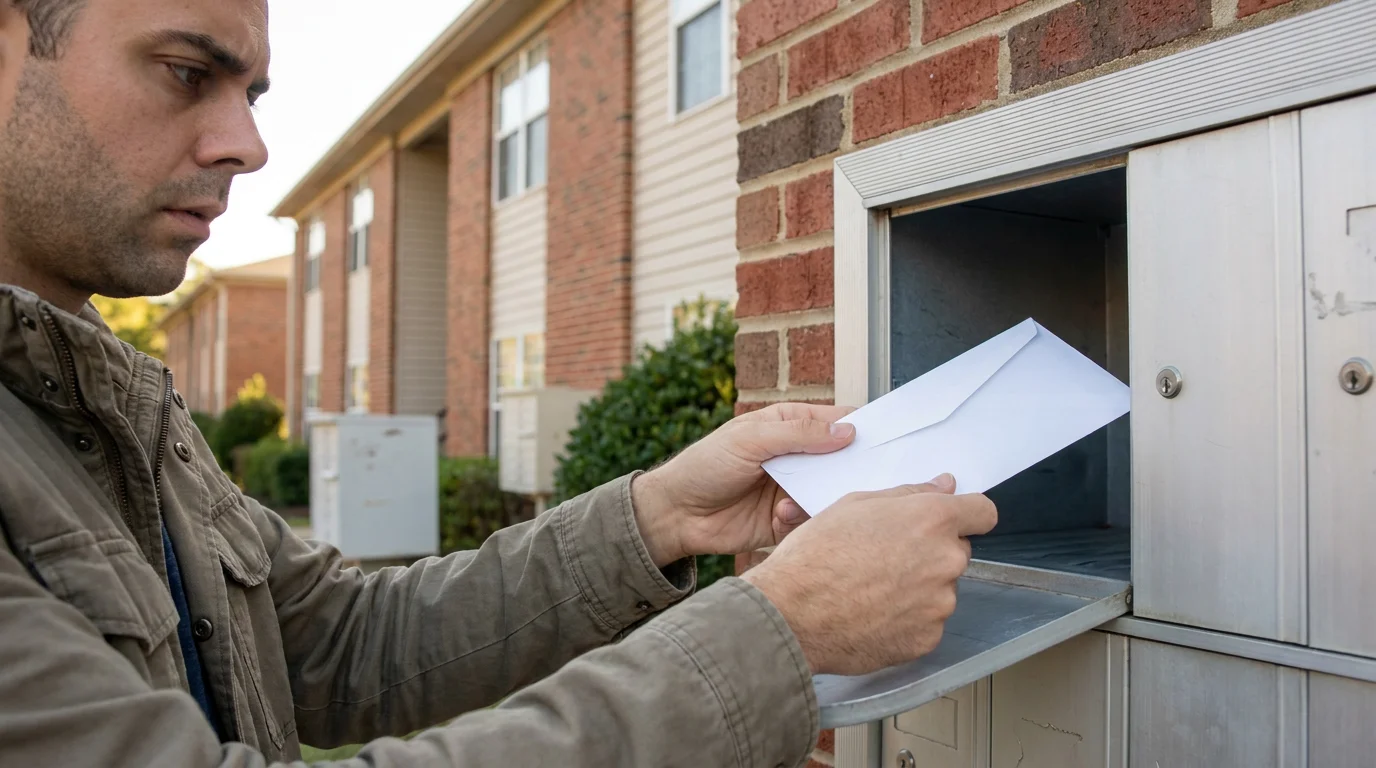
If you're searching for how much can a landlord raise rent in Alabama, the answer is: as much as the market will bear. Alabama has no rent control statute or percentage cap. It also sets no dollar limit on increases. State law also bars Birmingham, Huntsville, Mobile, and every other city or county from passing a cap of their own.
Four rules still constrain an increase. The lease term controls timing: rent cannot change during a fixed-term lease unless the lease itself authorizes it, through a rent escalation or step-up clause the tenant signed at the outset, or both parties sign a written amendment mid-term. Ala. Code § 35-9A-441 sets the written notice period for periodic tenancies. Ala. Code § 35-9A-501 bans increases that punish a tenant for complaining about repairs or joining a tenant union, and the federal Fair Housing Act bans increases aimed at a protected class. Voucher tenancies add a fifth: the housing authority must approve any new rent.
The 2026 regular session, which adjourned April 9, 2026, changed none of this. Below is what each rule requires, how to deliver a notice that holds up, what a normal increase looks like in the three largest metros, and what a tenant can do when an increase breaks one of the rules.
How much can a landlord raise rent in Alabama? The short answer
No Alabama statute caps the amount of a rent increase, and no statute sets a maximum percentage. The Alabama Uniform Residential Landlord and Tenant Act (AURLTA) leaves rent to the rental agreement, and the state does not require advance notice of a new rent figure beyond the termination-notice mechanism for periodic tenancies, as an Alabama landlord-tenant overview explains. A landlord can set the renewal rent at whatever a comparable unit commands, which is a large part of why Alabama sits among the most landlord-friendly states.
The legislature has shown no appetite to change that. Alabama Daily News reports that the 2026 regular session saw 1,046 bills filed and 402 passed, and none imposed rent control, a rent cap, source-of-income protections, or security deposit changes. The Alabama REALTORS public-policy team tracked more than 350 bills in 2025 and its session recap reports no such measure either.
Why Alabama has no rent control (and why your city can't add one)
The Legislature enacted Ala. Code § 11-80-8.1 in 1993 and has never amended it. The statute forbids local rent control outright. Subsection (b) reads: "A local governmental unit shall not enact, maintain, or enforce an ordinance, resolution, or rule that would have the effect of controlling the amount of rent charged for leasing private property." The only carve-out lets a government "manage and control property in which the local governmental unit has a property interest," meaning its own public housing. The full text is on Justia.
A second statute blocks the workaround. Ala. Code § 35-9A-121 bars counties and municipalities from any ordinance "relative to residential landlords, rental housing codes, or the rights and obligations governing residential landlord and tenant relationships," and it supersedes local rules enacted before or after January 1, 2007 (Justia).
Courts enforce this. The Alabama Supreme Court affirmed an injunction against the City of Center Point's Ordinance No. 2019-11, which required a certificate of occupancy each time a rental went vacant, because the AURLTA preempted it (FindLaw).
So no, Birmingham and Huntsville have not passed rent control and cannot. Birmingham's 2026 legislative agenda under Mayor Woodfin asked for a vacant-property registry and a Birmingham Housing Trust Fund. It also sought community land trust authority, the Birmingham Times reported. The land trust piece became HB404, which passed 35–0 and takes effect October 1, 2026 (ALISON); it affects nonprofit affordable housing, not private-market rents. Huntsville responded to rising costs with a $2.7 million rental and utility assistance program for households at or below 50% of Area Median Income.
When a landlord can raise rent: fixed-term vs month-to-month
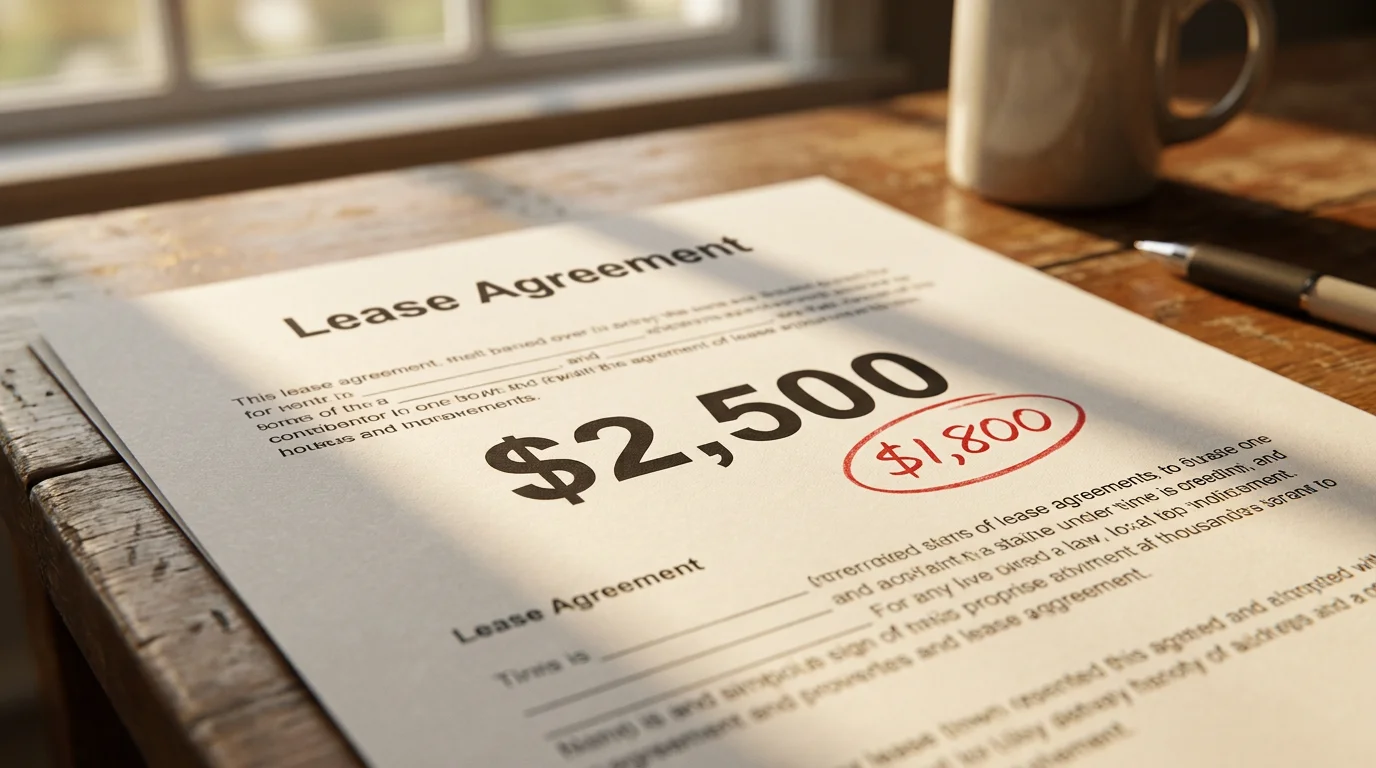
The lease sets the earliest date rent can change. Ala. Code § 35-9A-161(a) lets the parties fix "rent, term of the agreement, and other provisions" in the rental agreement (Justia). Once a 12-month lease sets rent at $1,200, that figure holds for all 12 months. Legal Services Alabama's Alabama Tenants' Handbook (July 2024) puts it plainly: "Landlords cannot raise rent or make changes during the lease term" (PDF).
That holds regardless of market conditions, the landlord's preference, or a notice letter. If the landlord wants a different number mid-term, they need the tenant's signature on a written amendment. In Anselmo Meat Co. v. Riley, the Alabama Supreme Court described a valid rent change as one documented by an "Agreement to Amend Lease" signed by both parties (Justia). Without that signed amendment, the original rent stands, and the landlord must wait until the term ends to offer a new rate.
The one exception is a rent escalation or step-up clause written into the lease itself. Under Ala. Code § 35-9A-161(a), the parties may fix rent and other terms at signing, including a scheduled increase that kicks in later. Because the tenant agreed to the clause when they signed the lease, it is enforceable without any further amendment. For the clause to hold up, it should state the new amount, or a clear formula such as a fixed percentage increase, and the exact date it takes effect. A 12-month lease might set rent at $1,200 for months one through six and $1,250 starting in month seven; as long as the signed lease says so, the landlord can collect $1,250 in month seven without asking for anything else. Without either a lease clause of this kind or a separately signed written amendment, the landlord has no legal basis to raise rent before the term is up.
Month-to-month and week-to-week tenancies work differently. The AURLTA has no standalone rent-increase notice rule for them; instead, the landlord gives written notice terminating the current tenancy and offers continued occupancy at the new rent. If the tenant stays and pays the new amount, the tenant accepts the offer and creates a new periodic tenancy on those terms. For a broader view of what the AURLTA requires of each side, see our guide to Alabama landlord-tenant law.
How much notice is required to raise rent in Alabama?
A month-to-month tenant must receive written notice at least 30 days before the periodic rental date; a week-to-week tenant, at least 7 days. Ala. Code § 35-9A-441 supplies both figures (Justia). Subsection (b): "The landlord or the tenant may terminate a month-to-month tenancy by a written notice given to the other at least 30 days before the periodic rental date specified in the notice." Subsection (a) uses the same construction with "at least seven days before the termination date."
The notice requirements by tenancy type:
- Tenancy type | Written notice required | Authority
- Week-to-week | At least 7 days before the termination date | § 35-9A-441(a)
- Month-to-month | At least 30 days before the periodic rental date | § 35-9A-441(b)
- Fixed-term | No mid-term change without a written amendment signed by both parties | § 35-9A-161(a)
Late notice fails entirely rather than shortening the period. In Woodruff v. Gazebo East Apartments (Ala. Civ. App. 2015), a July 7 notice for a July 31 expiration fell short of 30 days, and the court held the tenancy renewed automatically on the old terms (case summary). Days are calendar days under Ala. Code § 35-9A-141(3), but if the last day of a statutory period lands on a weekend or official holiday, the deadline rolls to the next business day the court is open (Justia).
How to deliver a rent increase notice
Deliver the notice in writing, in a way you can prove. Alabama law does not require certified mail; the AURLTA speaks only of "mailing with adequate prepaid postage in the United States mail" (§ 35-9A-144). But the Woodruff court also faulted a landlord because "nothing in the record indicates that the landlord properly notified the tenant." A certified mail receipt or a signed acknowledgment of hand delivery is the record.
One trap catches landlords who mail late. The general notice rules in § 35-9A-144(c), including the presumption that a tenant receives a mailed notice three days after posting, do not apply to notices that terminate a tenancy, per subsection (e). Since a rent increase on a periodic tenancy rides on a termination notice, mail early enough that the tenant has it in hand a full 30 days before the rental date, or hand-deliver it.
The statute does not expressly authorize email. A lease can include an electronic-notice clause under § 35-9A-161(a), but no Alabama appellate decision in the research holds that email alone satisfies a statutory termination notice. Use email as a courtesy copy and deliver the notice itself on paper.
A notice that will hold up contains these items:
- The tenant's name and the property address.
- The current rent and the date the current periodic tenancy ends.
- The new rent and the periodic rental date on which it begins.
- A statement that continued occupancy after that date is on the new terms.
- The date of the notice and the landlord's or agent's signature.
- The method of delivery, recorded on your own copy.
A compliant 30-day notice example
A month-to-month tenant in Birmingham pays $1,200 due on the first of each month, and you want $1,260 starting October 1, 2026. Counting back 30 days from October 1 lands on September 1, a Tuesday. Hand-deliver the notice by September 1 at the latest, or send it by certified mail in late August so the tenant holds it before that date. The notice terminates the existing tenancy effective September 30 and offers a new month-to-month tenancy at $1,260 beginning October 1.
Miss the date and the whole month slips. A notice delivered September 10 gives only 20 days, so under Woodruff the tenancy renews for October at $1,200 and the earliest the increase can take effect is November 1.
If the tenant stays past October 1 and pays the new $1,260, the tenant accepts the offer and creates a new tenancy. If the tenant stays and keeps sending $1,200, the old tenancy has already ended by the notice and the tenant has not accepted the new terms. Your remedy is a possession action, which follows the same unlawful-detainer steps as any other eviction process in Alabama. Don't skip the written notice and hope the tenant pays; without a record of proper notice, the court will treat the tenancy as continuing at the old rent.
How often can a landlord raise rent in a year?
The AURLTA sets no limit on frequency. For a month-to-month tenancy, a landlord could in principle serve a compliant 30-day notice every rental period, and raising rent twice in one year is lawful if each notice meets § 35-9A-441 and neither is retaliatory or discriminatory. For a fixed-term lease, the answer is once per term, at renewal, unless a signed amendment or a step-up clause says otherwise.
Frequent increases carry two costs the statute doesn't impose. A second increase that lands weeks after a tenant's repair request invites a retaliation claim under § 35-9A-501. A court may weigh that timing as evidence. And in a market where Huntsville reported 17.7% vacancy in 2025 (Matthews Real Estate Investment Services), a tenant pushed twice in twelve months has plenty of alternatives. You can compare an annual increase with the local rent growth in the metro data below.
How landlords set the new rent amount
With no statutory number to anchor to, the new rent should come from comparable units first and your cost base second. Pull asking rents for similar bedroom counts within a mile or two on Zillow and Apartment List, then check whether your costs have moved faster than the market.
Inflation gives a floor for what standing still costs you. The U.S. all-items CPI rose 3.4% over the 12 months ending August 2026, and the South region, the closest published proxy for Alabama since BLS publishes no state figure, rose 3.1% (BLS). Rent of primary residence nationally rose 2.7% (BLS). If your operating costs rose 3%, holding rent flat is a real cut in net operating income.
Trade-group guidance runs ahead of the Alabama market. The National Apartment Association recommends "gradual increases, say, 3% to 5% annually" as easier for tenants to plan around (NAA, June 2025), and the American Apartment Owners Association calls 2 to 4 percent "a good rule of thumb" (AAOA). Neither figure is a legal limit. IREM's 2024 Income/Expense IQ found multifamily properties collected only 0.75% more in total gross rents in 2024 than in 2023 nationally (IREM), which is closer to what Alabama's metros have delivered.
Insurance is often the line item that moves most between renewals. Nationally, landlord insurance runs $800 to $3,000 per year for a standard rental, with higher-risk locations reaching $2,200 to $4,600 or more, according to 2026 industry data, and a $300K dwelling typically prices between $900 and $1,800 a year. Before you set the renewal number, confirm what landlord insurance in Alabama will cost you for the coming term rather than carrying last year's premium into the math. You can get a quote in minutes at quote.steadily.com, no phone call required.
Rent increases that are still illegal: retaliation and discrimination
Ala. Code § 35-9A-501 can void an otherwise lawful increase when a landlord uses it as retaliation. It bars a landlord from "discriminatorily increasing rent," decreasing services, or bringing or threatening a possession action in response to three protected tenant acts (Justia).
The three triggers are specific:
- The tenant complained to a governmental agency that enforces a building or housing code about a violation "materially affecting health and safety."
- The tenant complained to the landlord about a violation of § 35-9A-204, the habitability section that requires working plumbing, electrical, heating, ventilation, air conditioning, running water, reasonable heat, garbage receptacles, and code compliance (Justia).
- The tenant organized or joined a tenant's union or similar organization.
A tenant who proves retaliation gets the remedies in § 35-9A-407: possession or termination of the lease plus "not more than three months' periodic rent or the actual damages sustained by the tenant, whichever is greater, and reasonable attorney's fees" (Justia). Retaliation is also a defense to any possession action.
The landlord keeps the right to evict when the tenant caused the code violation or is in default on rent.
The landlord may also evict when compliance requires remodeling that would displace the tenant. Other material lease violations can also support eviction under § 35-9A-501(c).
Alabama dropped the Uniform Act's presumption that adverse action within six months of a complaint is retaliatory. The Alabama Act commentary states the state "omitted the Uniform Act's presumption" and that retaliation "is a question of fact for the court" (AURLTA commentary). A Legal Services Alabama Authority webpage claims a six-month presumption exists; the enacted text contradicts it.
Under Leeth v. J & J Properties (Ala. Civ. App. 2011), the tenant must show a qualifying complaint, the landlord's knowledge of it, and a violation materially affecting health and safety (opinion PDF).
In Tiller v. YW Housing Partners (2008), the court reversed summary judgment for a landlord who failed to address the retaliation issues at all (case summary), so a landlord can't win by silence either.
Discrimination is the second ceiling. The Fair Housing Act, 42 U.S.C. § 3604(b), bars discrimination in the "terms, conditions, or privileges" of a rental based on race, color, national origin, religion, sex, familial status, or disability (Cornell LII). HUD's February 2021 memorandum extended sex-discrimination enforcement to sexual orientation and gender identity (HUD memo). Alabama's own fair housing law, Ala. Code § 24-8-4, covers the same seven federal classes and no more (ADECA analysis).
Cities can add classes here, because no statewide law preempts local nondiscrimination ordinances. Birmingham's 2017 ordinance adds sexual orientation and gender identity, with a Human Rights Commission and fines up to $500 (Ogletree). Montevallo's 2017 ordinance adds age, marital status, and veteran status, with fines up to $100 per day (ordinance PDF), and Auburn Municipal Code § 13-9 adds ancestry (NAA). A landlord who raises rent on one tenant and not another for any of these reasons has crossed the line regardless of the amount.
What to do if rent was raised without notice or as retaliation
Start a file today. Legal Services Alabama's February 2026 filing guide advises keeping every communication, date, screenshot, letter, and note (LSA guide). The remedy path depends on which rule was broken.
For an increase without proper notice, the increase is ineffective and the old rent stands. Under Woodruff, a month-to-month tenancy renews on its existing terms when the landlord's notice arrives fewer than 30 days before the rental date. Point the landlord to § 35-9A-441 in writing, keep paying the old rent on time, and keep the proof of payment.
If the landlord files for possession, that late notice becomes your defense, and you must file a written answer within 7 calendar days of being served or face a default judgment. Alabama's PS-01 form (Answer to Landlord's Claim) or a written denial is acceptable, and a losing tenant has 7 calendar days to appeal.
For a retaliatory increase, raise § 35-9A-501 as a defense in any possession action and consider a claim for the § 35-9A-407 damages described above. Because Alabama has no presumption, gather the evidence Leeth demands: a dated copy of your code complaint or repair request, proof the landlord knew about it, and documentation that the problem affected health or safety.
Free and low-cost help is available statewide:
- Legal Services Alabama handles evictions, repair problems, and housing discrimination in all 67 counties at 1-866-456-4995 (Spanish 1-888-835-3505), Monday through Friday, 8:30 a.m. to 4:30 p.m., or apply online. Income must be at or below 125% of the federal poverty guidelines, which in 2026 is $19,950 for one person and $41,250 for a family of four.
- The Alabama State Bar Lawyer Referral Service at 1-800-392-5660 connects tenants above the LSA income limit with a private attorney; the initial 30-minute consultation costs no more than $50 (Alabama State Bar). The Bar's Volunteer Lawyers Program offers free civil help at 888-857-8571.
- Volunteer Lawyers Birmingham takes eviction and habitability cases for income-eligible Jefferson County residents at (205) 250-5198, and the Madison County Volunteer Lawyers Program does the same for Huntsville-area tenants at (256) 539-2275.
For a discriminatory increase, file with HUD's Office of Fair Housing and Equal Opportunity within one year of the last incident. You can file online at HUD's complaint portal or by phone at 1-800-669-9777 (TTY 1-800-927-9275).
A private federal lawsuit has a two-year window under 42 U.S.C. § 3613.
Alabama has no state or local agency certified under HUD's Fair Housing Assistance Program. The Atlanta Regional Office of FHEO at (800) 440-8091 therefore investigates directly.
HUD must reach a reasonable-cause determination within 100 days unless impracticable. If the case proceeds to an administrative hearing, HUD attorneys represent the complainant at no cost.
Three HUD-funded fair housing organizations in Alabama will help you draft the complaint: the Fair Housing Center of Northern Alabama in Birmingham at (205) 324-0111 (fhcna.net), the South Alabama Center for Fair Housing in Mobile at (251) 479-1532 or complaints@sacfh.org, and the Central Alabama Fair Housing Center in Montgomery at (334) 263-4663.
Section 8 and voucher tenants: the one case with a real ceiling
For a Housing Choice Voucher tenancy, the public housing authority (PHA) must approve any new rent before it takes effect, and the rent may never exceed what the PHA determines is reasonable. Under 24 CFR § 982.507(a)(4), "At all times during the assisted tenancy, the rent to owner may not exceed the reasonable rent as most recently determined or redetermined by the PHA."
The PHA must redetermine reasonableness before any increase. It compares your unit's location, quality, size, type, age, amenities, services, maintenance, and utilities against unassisted units nearby.
Timing rules are stricter than the state's 30 days. The owner "must notify the PHA of any changes in the amount of the rent to owner at least sixty days before any such changes go into effect" under 24 CFR § 982.308(d)(4). HUD also bars the owner from raising rent during the initial lease term, which must generally run at least one year (§ 982.309). One 2025 change favors landlords: PIH Notice 2025-28 (November 17, 2025) states a PHA may not "freeze" rents due to insufficient funding when an owner requests an increase the PHA finds reasonable.
Each of the three big-metro housing authorities runs its own intake:
- The Housing Authority of the Birmingham District lists a "Rent Adjustment Form and Procedures" among its landlord forms and answers HCV questions at (205) 974-4440 (HABD).
- The Huntsville Housing Authority requires 60 days' notice and a Request for Tenancy Approval with the proposed rent, which it tests against market comparables; reach it at (256) 539-0774 (HHA landlord guide, May 14, 2026).
- The Mobile Housing Authority's rent increase department takes requests at (251) 434-2364 or rentincrease@mobilehousing.org. Its September 2025 form states "Increased rents will be effective 60 days after date requested," requires the tenant's signature, and warns that "The inspection rating of your unit must also validate the increased rent" (MHA form). Mobile also uses Small Area FMR payment standards by ZIP code, effective January 1, 2026; in ZIP 36610, the two-bedroom standard is $990.
HUD's Fair Market Rents set the baseline the PHAs work from. The FY 2026 figures, effective October 1, 2025 (HUD schedule), are:
- Metro area | 0BR | 1BR | 2BR | 3BR | 4BR
- Birmingham-Hoover, AL HMFA | $1,024 | $1,155 | $1,266 | $1,583 | $1,801
- Huntsville, AL MSA | $1,030 | $1,136 | $1,310 | $1,690 | $2,109
- Mobile, AL MSA | $854 | $919 | $1,083 | $1,414 | $1,445
PHAs must set payment standards within 90–110% of these figures, with a streamlined exception up to 120% (PIH 2024-34). The PHA will deny a landlord's request for more than comparable unassisted units get, regardless of what the private market would have tolerated.
What a typical increase looks like in Birmingham, Huntsville and Mobile
Rents in Alabama's three largest metros moved between roughly 1% and 3% over the year to mid-2026 by Zillow's measure, flat to negative in Birmingham and Huntsville but up about 4.5% in Mobile by Apartment List's measure. Both readings are far below the 3% to 5% trade-group figure. The two indexes measure different things: Zillow's ZORI tracks typical observed rent across the full rental stock, while Apartment List tracks median rent for recent movers, so a gap between them is expected.
The current figures side by side:
- Metro | Zillow ZORI, June 2026 (metro) | Apartment List, Aug/Sept 2026 (city)
- Birmingham | $1,462, +1.21% YoY | $1,145, −1.4% YoY
- Huntsville | $1,381, +1.32% YoY | $1,003, −1.1% YoY
- Mobile | $1,335, +2.78% YoY | $1,124, +4.5% YoY
Sources: Zillow ZORI via rentmarker.com for Birmingham, Huntsville, and Mobile; Apartment List for Birmingham, Huntsville, and Mobile.
Birmingham is drifting sideways. Cushman & Wakefield's Q3 2025 report put average effective rent at $1,291 per unit, down 0.2% to 0.3% year over year, and AL.com's Zillow-based comparison for May 2025 to May 2026 showed the city at $1,350, up 1.0% (AL.com). A 5% increase on a Birmingham single-family rental is above what the market is doing on average; a 1% to 2% increase is in line.
Huntsville is the metro where the indexes disagree most. Analysts at Matthews attributed their −2.8% rent growth reading to the "immense amount of supply that has come online in the past few years," and CoStar reported in February 2026 that net absorption in Q4 2025 was the lowest quarterly total in four years (CoStar). Those findings point down. ZORI's positive figure likely reflects older stabilized units rather than the new-supply segment where concessions are concentrated. A Huntsville landlord with a vacancy across the street from a lease-up should expect pushback on any increase at all.
Mobile is the outlier on the upside. Apartment List's +4.5% is the only positive city reading among the three by its methodology, and AL.com's May-to-May comparison showed $1,310, up 2.7%. Statewide, Zillow puts the average at $1,400. Apartment List's national report noted that "Rent declines are mostly concentrated in Sun Belt markets" (Apartment List), and Birmingham and Huntsville fit that pattern.
For a tenant judging fairness, an increase of 1% to 3% in any of these cities in 2026 is ordinary. An increase of 8% to 10% is legal but well above what comparable units are commanding, which is grounds to negotiate or shop.
Do you have to accept the increase?
No. A tenant on a periodic tenancy can decline the new rent, and § 35-9A-441 gives the tenant the same termination right it gives the landlord: 30 days' written notice for month-to-month, 7 days for week-to-week. A tenant on a fixed-term lease can refuse to sign a mid-term amendment, and the rent stays where the lease set it until the term ends. What a tenant cannot do is stay past the termination date and keep paying the old amount indefinitely, since the old tenancy has ended and the landlord may seek possession.
Negotiation is the middle path. A tenant can use the market figures to make a stronger counteroffer. In a Huntsville market with 17.7% reported vacancy and a Birmingham market where effective rents fell slightly in 2025, a landlord's cost of turnover often exceeds the dollar value of the increase. Counter with the Zillow or Apartment List figure for your neighborhood and bedroom count. Ask for a smaller step or a longer fixed term at the new rate. You can also request an improvement in exchange.
Landlords should run the same math from the other side. A $60 monthly increase on a $1,200 unit produces $720 a year; one month of vacancy plus cleaning and listing costs erases it. Offer a 12-month lease at the new figure so the tenant gets certainty and you lock in the number without another notice cycle.
Alabama rent increase FAQs
Common follow-up questions about Alabama rent increases, answered briefly.
How much notice does a tenant have to give to move out in Alabama?
A month-to-month tenant gives at least 30 days' written notice before the periodic rental date, and a week-to-week tenant gives at least 7 days, under § 35-9A-441. A fixed-term tenant follows whatever the lease says about renewal and move-out; absent a clause, the tenancy ends on the lease's expiration date.
What can a landlord not do in Alabama?
A landlord cannot raise rent during a fixed-term lease without a signed amendment. A landlord also cannot impose a new rent on a periodic tenant without written notice of at least 30 days, or 7 days for week-to-week. An increase cannot punish a protected complaint or tenant organizing.
A landlord cannot raise rent based on a protected class and must keep the unit habitable under § 35-9A-204. Before terminating for nonpayment, the landlord must give a written notice specifying the breach with at least seven business days to cure under § 35-9A-421.
Did Alabama pass new tenant protection laws in 2026?
No. The 2026 regular session passed no rent control or rent cap. It also made no AURLTA amendment. HB80, which would have added a 7-calendar-day move-out period after an eviction judgment and a 24-hour written warning before a writ executes, passed the House and died in the Senate on April 9, 2026 (Alabama REALTORS session recap). The enacted landlord-tenant-adjacent housing measure, HB404, authorizes community land trusts in Birmingham beginning October 1, 2026. The last landlord-tenant statute to take effect was HB182 in 2024, which excluded squatters from the AURLTA and created an affidavit-based removal process effective June 1, 2024 (ALISON).
Is there a maximum percentage a landlord can raise rent in Alabama?
There is no maximum percentage or dollar amount in Alabama law, and § 11-80-8.1 prevents cities and counties from creating one. The only rent that has a ceiling is a Housing Choice Voucher rent, which the housing authority must find reasonable against comparable unassisted units.
Can a landlord raise rent by text or email in Alabama?
The AURLTA does not expressly authorize electronic notice for terminating a periodic tenancy, and no Alabama appellate decision in the research holds that email alone satisfies § 35-9A-441. A lease may include an electronic-notice clause under § 35-9A-161(a), but a landlord who relies on it should still deliver a paper copy in hand or by certified mail so the record shows proper notice.


.jpg)




.png)