

Start hosting your property on Airbnb
Receive a $115 bonus if you list your property within 180 days!
Atlanta is one of the 11 U.S. cities that will be hosting games for the World Cup 2026 — eight games, to be exact. It may not host the Final like New York or two Team USA games like Los Angeles, but it will have a lot of World Cup activity that rental property investors should not overlook.
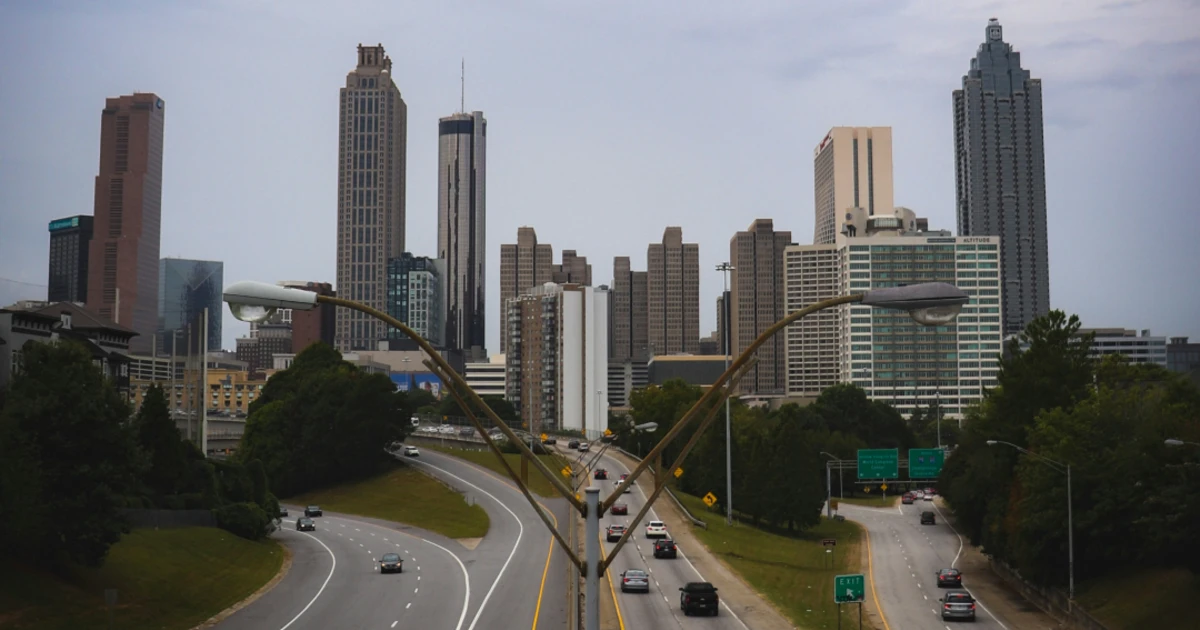
Hartsfield-Jackson is the world's busiest airport. Mercedes-Benz Stadium, where the games will be played, sits less than a mile from downtown MARTA stations. And on July 15, Atlanta hosts a semifinal. Alongside Dallas, it's one of only two US cities where the final stretch of the tournament actually plays out.
If you own investment property in the metro and you've been sitting on the fence about short-term rentals, the window is tightening fast. The tournament opens in June, which sounds like plenty of time until you factor in permit applications, listing photography, insurance underwriting, platform onboarding, and the pricing strategy work that separates hosts who clear $5,000 from those who clear $8,000 or more. The operators who'll own the premium end of this market started months ago.
The good news: you're not too late. But you're also not early.
Mercedes-Benz Stadium match schedule
Atlanta's schedule is genuinely stacked. Spain appears twice in the group stage — June 15 against Cape Verde and June 21 against Saudi Arabia. Spanish fans travel in extraordinary numbers and concentration; they're not a trickle, they're a wave. Morocco's June 24 match against Haiti brings one of the breakout fanbases from 2022, a team that captured global attention with a semifinal run that turned casual observers into devoted followers overnight.
Here's the full slate of games being played in Atlanta:
- June 15: Spain v Cape Verde
- June 18: South Africa v Group H runner-up
- June 21: Spain v Saudi Arabia
- June 24: Morocco v Haiti
- June 27: Uzbekistan v Group G runner-up
- July 1: Round of 32
- July 7: Round of 16
- July 15: Semifinal
Eight match dates stretching from mid-June to mid-July with no meaningful gaps. For an STR investor, this is the equivalent of booking a venue for a full month at elevated rates, except demand does the heavy lifting for you.
Deloitte projects average Atlanta host earnings around $3,700 for the tournament window — but that's an average across the entire metro. Properties within a mile of a MARTA station, positioned and priced intelligently, will run considerably higher. The semifinal alone, on July 15, is an event where last-minute inventory can realistically fetch 8-10x a normal nightly rate.
The South Africa match deserves attention too. Bafana Bafana qualifying for a major tournament is meaningful for the African diaspora community, which has a large and concentrated presence in the Atlanta metro. South African fans don't just attend matches — they create an atmosphere. Group that alongside Spain's back-to-back appearances, and Atlanta's fan demographics are more diverse, more international, and more revenue-productive than the raw Deloitte figure suggests.
Atlanta's transit advantage
Here's something most US World Cup venues can't say: you can get to Mercedes-Benz Stadium from a MARTA train in under 10 minutes. Vine City station is a five-minute walk. GWCC/CNN Center and Georgia State are both under a mile. For international fans used to European stadium infrastructure — where you hop a tram or underground line and arrive at the ground — Atlanta's setup is unusually familiar and comfortable.
Now, think through what this means for your listing. Properties anywhere along MARTA's rail lines are marketable as stadium-accessible, not just those in Vine City or Downtown. Midtown, Buckhead, Inman Park, Virginia-Highland, Decatur, East Point — all MARTA-connected, all viable bases for fans who want to move around the city easily. A guest staying in Inman Park can hit a match at Mercedes-Benz, dinner in Little Five Points, and breakfast in Midtown without ever renting a car.
Then there's the airport angle. Hartsfield-Jackson processes more passengers than any airport on earth. Fans attending matches in multiple cities — Dallas, Miami, New York, wherever their team plays — often route through Atlanta because it's the easiest connection point. Some will deliberately base themselves in Atlanta for a week and day-trip to nearby match cities. That extends your average booking length and justifies the minimum-stay requirements that maximize your revenue per turnover.
When you write your listing, lead with transit. "Three-minute walk to MARTA" is not a throwaway detail for an international guest arriving without a car. It's a primary decision factor. Advertise the airport connectivity explicitly; fans planning multi-city itineraries will specifically filter for it.

Atlanta short-term rental regulations
Georgia is generally hospitable toward short-term rentals at the state level, which means Atlanta's local framework is where you need to focus. Registration is required. The city's safety compliance checklist covers smoke detectors, carbon monoxide detectors, fire extinguishers, and proper egress — standard stuff, but it has to be documented. Non-primary-residence properties face more scrutiny than owner-occupied ones. If you're operating a dedicated investment property, verify your permit pathway carefully before you list.
Get into the specifics through our detailed breakdown of Atlanta short-term rental regulations. And if you're evaluating Atlanta as a longer-term STR market, the Atlanta real estate market overview gives you the demand fundamentals you need to make that case. Bottom line on compliance: don't assume your property is already eligible. Confirm it before you list it.
Who's actually coming to Atlanta
Spain brings the numbers. Two group stage matches means two separate waves of Spanish fans entering the city, and the Spanish traveling support is among the most reliably large in European soccer — well-organized, long-stay bookers who plan months in advance. You're not waiting on last-minute demand from Spanish fans; they've had flights and accommodation plans in place since the draw.
Morocco is the sleeper pick in Atlanta's demand story. Their 2022 World Cup run — beating Spain on penalties, knocking out Portugal, reaching the semifinal — created a global fanbase overnight, especially among the African diaspora in the US and Europe. The Atlanta metro has one of the most significant West and North African communities in the Southeast. A Morocco match in Atlanta is a local event, not just a tourism event. Expect high demand and high energy around June 24.
South Africa's appearance is historically meaningful. It's been years since a sub-Saharan African nation featured this prominently in World Cup group-stage scheduling, and the Atlanta African diaspora community will show up for it. Croatian fans (strong Northeast US presence) may make the trip for the Round of 32 or Round of 16 if Croatia advances. And the semifinal on July 15 brings whoever survives — demand that can't be predicted by team but can be assumed to be premium.
Pricing your Atlanta property
Deloitte's baseline of $3,700 for average Atlanta hosts is a reasonable floor. Here's how to think about the ceiling by phase:
Group stage (June 15-27): target 2.5-3x your normal nightly rate. Spain match dates and the Morocco date will be on the higher end of that range. Round of 32 and Round of 16 (July 1, July 7): 3.5-5x. Demand narrows as the tournament progresses — fewer guests, more willing to pay for quality. Semifinal week: plan for 5-7x on bookings made in advance, 8-10x for last-minute inventory. If you have availability the week of July 13-17 and haven't priced it yet, you're leaving real money on the table.
Properties with direct MARTA access can realistically command a 15-25% premium over comparable properties requiring a car or rideshare. Set minimum stays at 5 nights for group stage windows and 7 nights for the semifinal week — shorter minimums fragment your calendar and create gaps between bookings that are nearly impossible to fill mid-tournament.
Airbnb promotions for the World Cup
Airbnb has financial skin in the game here, and Atlanta is firmly in the mix.
Through their largest-ever host incentive program, new Airbnb hosts across all 16 host cities stand to earn $750 extra if they complete their first guest stay by July 31, 2026. That deadline extends past the tournament's final whistle, giving new hosts the full window to get their listing live and their first booking in.
Already an established host? Refer a new host to the platform before the tournament and the referral bonus runs from $185 to $1,160 based on city. After their first booking completes, you can earn another reward of up to $290 if they're in a qualifying zip code. Full eligibility and zip code details are available directly on Airbnb's site.
Airbnb is running a program this size in Atlanta for the same reason you're reading this article. They see the opportunity.
Protecting your Atlanta property
Large international fan groups are the majority of your guest profile here, and the risk profile shifts accordingly. Post-match celebrations are the main exposure: groups returning from a win, festivities extending late, neighbors noticing. This is manageable; it's just different from your typical leisure traveler.
Require security deposits in the $500-$1,000 range. Do a full photo and video walkthrough of every room, every fixture, every appliance before guests arrive — timestamped, cloud-backed, thorough. Standard homeowner's insurance does not cover STR activity; your policy almost certainly has an exclusion clause you haven't read yet.
Atlanta short-term rental insurance through Steadily covers property damage, liability, and loss of rental income — the three things that can turn a $6,000 tournament into a net loss. More broadly, short-term rental insurance is the category of coverage built specifically for this use case, as opposed to standard landlord insurance coverage, which applies to longer-term tenants. Know the difference and make sure you have the right product in place before your first guest checks in.
The long-term investment case for Atlanta STR
Atlanta's STR market has depth beyond the World Cup. The city hosts major conventions at the GWCC year-round; Mercedes-Benz Stadium runs NFL, college football, and major concerts through fall and winter; the Braves draw visitors to Cobb County; Hawks playoff runs have historically produced short spikes in Downtown demand. The underlying demand calendar is full. World Cup is a peak, not a one-off.
Think about it this way: if you've been weighing whether to convert an investment property into a short-term rental, you're choosing between launching in a normal month and launching into the single most concentrated international demand event this city will see for a generation. The short-term vs. long-term rental calculus is worth running carefully — STR income potential is substantially higher, but it comes with active management and the right insurance structure.
One more thing: the short-term rental loophole allows qualifying STR operators to deduct losses against active income, which changes the math for investors in higher tax brackets. And the broader case for STR as a strategy is laid out in detail in the STR surge analysis from operators who've run the numbers across multiple markets.
Atlanta is an underrated World Cup market, and that's actually an advantage. The spotlight is on New York and LA; the operators in Atlanta who move now face less platform saturation and more room to rank. You have the world's busiest airport, a transit-accessible stadium, Spain twice, Morocco, and a semifinal. The question isn't whether to list your property. It's whether you'll have everything ready before the premium inventory window closes.




.jpg)


.png)