
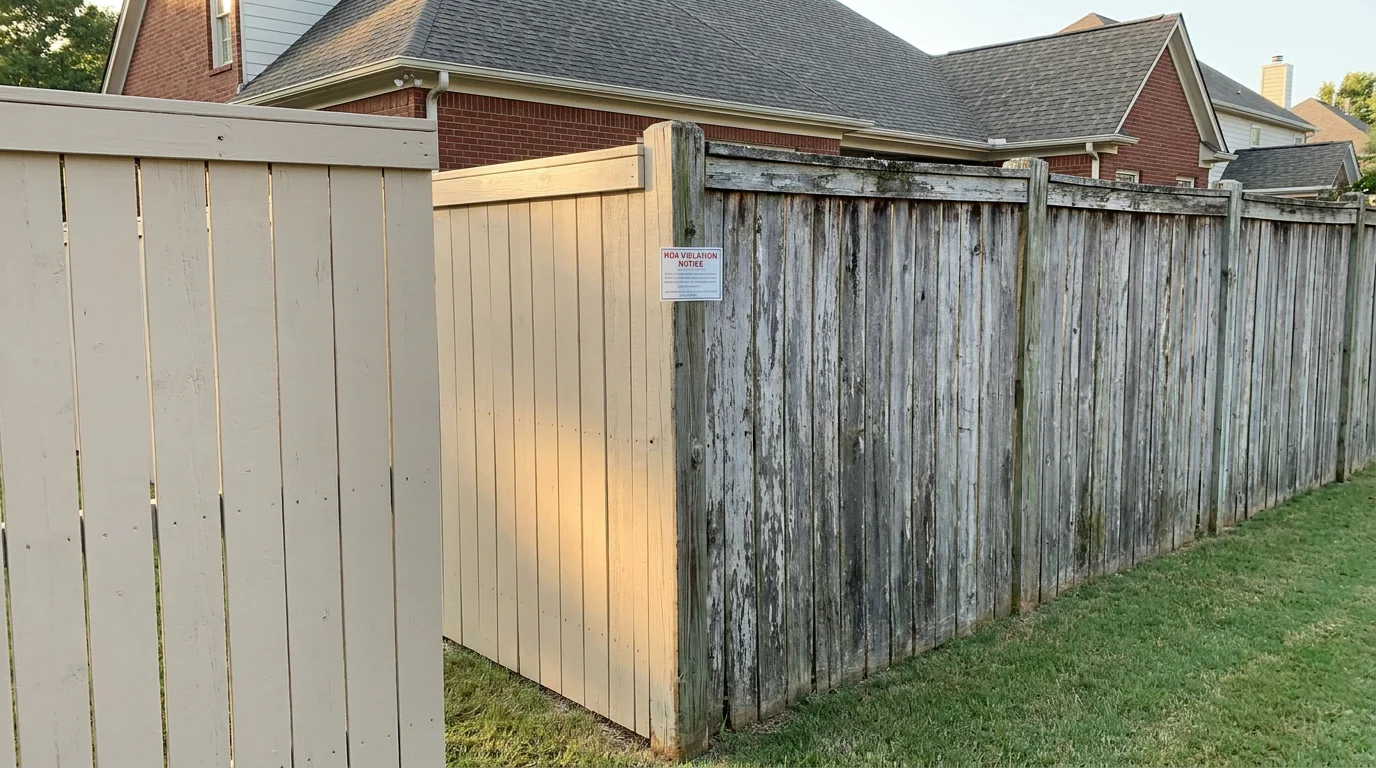
Say you close on a rental in a Fishers subdivision, list it on Airbnb, and get a violation letter from the association two weeks later. In Indiana, courts enforce homeowner association rules and regulations as private contracts: the recorded covenants bind you the moment you take title, and if you leave assessments unpaid, the association may record a lien and eventually ask a court to foreclose it. Indiana lawmakers also passed the state's biggest set of HOA reforms in years during the 2026 legislative session, a four-bill package with three bills effective July 1, 2026, so what you learned buying your last property may already be out of date.
What is an Indiana homeowners association and how does it work?
Your Indiana HOA is a nonprofit corporation that collects dues and maintains common areas while enforcing recorded covenants through a board the members elect. The Nonprofit Corporation Act supplies its corporate rules; the Indiana Homeowners Association Act adds HOA-specific duties. Buy in a covered community and the covenants make you a member automatically; you owe assessments whether or not you attend a meeting.
In Talley v. Cheswick (Feb. 27, 2025), a non-precedential memorandum decision, the Indiana Court of Appeals read the HOA Act to reach only associations established after June 30, 2009, or those that opted in. HEA 1115-2026 extended several provisions to all HOAs regardless of establishment date, effective July 1, 2026.
Indiana laws that govern HOAs
Indiana HOAs answer to two statutes, with a separate track for condominiums and federal law overriding all three:
- The Indiana Homeowners Association Act, IC 32-25.5, covers budgets, records access, grievance resolution, attorney general actions, and use-specific carve-outs.
- The Indiana Nonprofit Corporation Act, IC 23-17, supplies the corporate machinery for member meetings and voting. It also governs director elections and fiduciary duties.
- Condominiums follow a separate statute, IC 32-25, with their own lien procedures, amendment rules, and disclosure requirements.
- Federal law controls where the two conflict, including the Fair Housing Act and the ADA. The FCC's OTARD rule on antennas and the Freedom to Display the American Flag Act also override conflicting rules.
Indiana lawmakers amended the HOA Act twice during the 2026 session, with both amendments effective July 1, 2026. P.L. 53-2026 (HEA 1152), signed March 3, 2026, revised budget procedures; P.L. 155-2026 (HEA 1115), signed March 12, 2026, rewrote fine procedures, board-meeting notice, amendment thresholds, and disclosure fee caps. HEA 1150 covers flag display and HEA 1210 rental-restriction voting.
HOA governing documents and their hierarchy
IC 32-25.5-2 defines "governing documents" to include recorded covenants and the corporation's articles and bylaws. No Indiana statute ranks these documents against each other; for review purposes, start with the legal authority and then work through the documents in this order:
- Priority | Document | What it controls
- 1 | Federal and Indiana law | Overrides any conflicting document provision
- 2 | CC&Rs (recorded declaration) | Use restrictions, assessment authority, architectural controls; runs with the land
- 3 | Articles of incorporation | Corporate existence and purpose
- 4 | Bylaws | Elections, meetings, quorum, board procedure
- 5 | Board rules and regulations | Day-to-day rules; must stay within CC&R and statutory authority
A board rule that contradicts the recorded declaration loses, and so does a declaration provision conflicting with IC 32-25.5, which bars an HOA from enforcing "a provision of the governing documents that conflicts with" its amendment-rights section.
Role and authority of the board of directors
Under IC 23-17-13-1, the board of directors owes a fiduciary duty to your nonprofit corporation. To meet that duty, each director must act in good faith and exercise the care an ordinarily prudent person in a like position would use. The director must also act in a manner the director reasonably believes to be in the corporation's best interests. Even if a board of directors member falls short of this standard, a court may hold that director liable only where the breach "constitutes willful misconduct or recklessness," so negligence alone is not enough.
Statutory limits bind the board:
- Members elect directors by a plurality of votes cast at a meeting with a quorum, which defaults to 10% of votes entitled to be cast; a proxy appointment stays valid for eleven months unless the appointment form says otherwise.
- Director terms may not exceed five years, with a one-year default.
- The board must properly call the meeting, and a majority of attending members must approve the annual budget; without quorum, the board may adopt up to 100% of the last approved budget, or 110% if the documents allow.
- Since July 1, 2026, boards must give members at least four days' written notice of each board meeting, agenda included.
- Members can inspect financial records and minutes on written request; the HOA Act makes the first hour of search time free and caps total search fees at $200.
HOA management company vs the board
Where a community hires a management company, the board sets policy and the manager executes it. The elected directors control rulemaking and enforcement under the governing documents and IC 23-17. They also set fine schedules and budgets. In practice a fine on management letterhead is the board's action, so appeal it to the board.
Common HOA rules and regulations Indiana homeowners should expect
Indiana homeowner association rules and regulations cluster around the same handful of subjects; the restrictions below are typical, and your declaration controls:
- Category | Typical restriction | Investor implication
- Landscaping and lawn upkeep | Mowing and weed standards | You stay liable for tenant-caused violations
- Parking (vehicles and trailers) | No boats or trailers in driveways | Parking rules often bar boats and trailers. Screen tenant vehicles before signing
- Pets | Number and breed limits | Smaller tenant pool
- Noise and nuisance | Quiet hours | Add a lease clause
- Exterior modifications | Prior ARC approval | Build approval time into your renovation schedule
- Leasing and rentals | Minimum lease terms or outright bans | May block your rental plan
Indiana's HOA Act includes dedicated chapters on amateur radio antennas, solar energy systems, outdoor equipment, beekeeping, HOA use of automated license plate readers, and property used to provide child care. Some declarations impose minimum lease terms or ban leasing outright. An express no-lease covenant may withstand a disparate-impact claim, but discriminatory intent can still make its enforcement unlawful. In Villas West II (Ind. 2008), the Indiana Supreme Court reversed the relief the trial court gave the homeowner on disparate-impact grounds and sent the intentional-discrimination claims back for reconsideration.
Architectural controls and exterior modifications
Most declarations require architectural review committee (ARC) approval before you change anything visible: paint colors, fences, roofing, additions, sheds, solar panels. If the committee denies your application, appeal to the board.
In Slavick Trust (Feb. 4, 2025), the Indiana Court of Appeals held that architectural-review authority extends only to what the covenants expressly grant. Under Indiana's solar statute, an HOA may prohibit a roof-mounted system that rises more than six inches above the roof or does not conform to the roof slope. It may also prohibit frames, brackets, or visible piping and wiring outside silver, bronze, or black tones.
Short-term rental restrictions
Indiana's short-term rental statute, IC 36-1-24, limits what cities and counties can do to STRs, but it spares HOAs. Section 19 states the chapter "does not affect, prohibit, preempt, or render unenforceable any property or use restrictions" in properly enacted HOA, condominium, or lake association rules.
In Applegate v. Colucci (Ind. Ct. App. 2009), covenants permitting residential leasing with no direct STR prohibition did not bar nightly or weekly cabin rentals. An HOA that wants an STR ban must amend its covenants with explicit language. Under HEA 1210 (P.L. 157-2026), only members who use their property as a homestead may vote on measures restricting rental use, so restriction votes on or after its effective dates that included non-homestead owners are open to challenge.
How HOA rule enforcement works in Indiana
Enforcement escalates in five steps:
- The association or its manager sends a violation notice naming the covenant breached and the cure expected.
- The association runs whatever grievance process IC 32-25.5-5 and your governing documents require. Use any hearing rights in your declaration and bring documentary evidence, including dated photos and correspondence.
- If the violation stands, the board assesses a fine. Since July 1, 2026, IC 32-25.5-3-12 permits a fine for a covenant violation described in IC 32-25.5-2-3(2) only "if the board first adopts a schedule of fines," so a fine issued without one is vulnerable.
- If assessments remain unpaid, the association may record a notice of lien against the property.
- The association may ask a court to foreclose the lien or sue the owner personally for a money judgment.
In Sandoval v. Willow Lake (Mar. 12, 2025), the Court of Appeals held that the homeowner still owed assessments though the association missed annual meetings and adopted no budget, because the governing documents did not make those steps conditions precedent.
HOA fees and special assessments
Dues typically fund maintenance and insurance for common areas, along with management fees, shared utilities, and reserves. iPropertyManagement reported a median Indiana HOA fee of $61 per month in 2024. The U.S. Census Bureau's 2024 national median was $135 for condo and HOA fees. Dues scale with amenities: roughly $25–$75 per month in a basic single-family subdivision, $75–$200 with a pool or clubhouse, and up to $400+ per month in a full-service community.
Under IC 32-25.5-3-4, a board may not enter a contract creating a new assessment or an increase above $500 per year per member without at least two meetings on the contract and approval from two-thirds of affected members. The 2025 insurance survey from the Foundation for Community Association Research found that property insurance premiums rose at 93% of community associations at their last or current renewal. Of those associations, 31% funded the increase with a special assessment.
HOA lien and foreclosure for unpaid assessments
For planned-community HOAs, IC 32-28-14 controls; condominiums follow IC 32-25-6-3, and the tracks differ at almost every step:
- Step | Planned-community HOA (IC 32-28-14) | Condominium (IC 32-25-6-3)
- Lien creation | Attaches only on recording of a notice of lien, so it does not relate back to the assessment date | Arises automatically at assessment, no recording required
- Notice contents | Must name the HOA, the property, the owner, and the amount, signed by an officer and acknowledged like a deed | Foreclosure requires a sworn statement under IC 32-28-3
- Waiting period before foreclosure | 90 days after recording | None stated
- Filing deadline | Within five years of recording, or the lien is void | One year, under Indiana's mechanics' lien law
- Owner or mortgagee demand | Written demand by registered or certified mail forces suit within one year, or the lien dies | Written demand triggers a 30-day deadline for the lienholder to act, under mechanics'-lien law
- Priority | Set by the recording date; a purchaser at a first-mortgage foreclosure is not liable for pre-acquisition assessments (IC 32-28-14-7) | Behind only tax liens and a first mortgage of record, no super-lien in Indiana
After judgment the court orders a sheriff's sale, and the owner may redeem by paying the judgment before the sale.
HOA rules that cannot be legally enforced in Indiana
Some HOA rules are unenforceable no matter what the CC&Rs say. Federal and Indiana law invalidate or preempt them:
- Rule the HOA tries to enforce | Why it fails | Limits on the override
- Banning satellite dishes ≤1 meter or TV antennas in your exclusive-use area | FCC OTARD rule, 47 C.F.R. § 1.4000 | Excludes common areas and solar panels; the HOA may impose written safety and historic-preservation restrictions
- Prohibiting U.S. or Indiana state flag display, including from a flagpole | Freedom to Display the American Flag Act plus Indiana HEA 1150 (effective July 1, 2026) | Reasonable time, place, and manner restrictions survive under the federal act
- Banning political signs near elections | Indiana AG guidance (Oct. 4, 2024): no prohibition from 30 days before through 5 days after an election | The AG guidance addresses only that window
- Discriminating by race, religion, sex, disability, familial status, national origin | Fair Housing Act and Indiana civil rights law | Applies to all rule enforcement
- Blocking a member-approved solar exemption petition | IC 32-25.5-3.5 | No automatic solar right in Indiana; the owner must first win the required member signatures
For a dish or antenna covered by the FCC OTARD rule, the board generally cannot require advance approval. The HOA may not continue assessing fines while a proceeding remains pending, and the HOA carries the burden of proving its restriction is lawful.
Indiana courts have also refused to enforce covenants and board actions on non-federal grounds:
- Restrictive covenants get strict construction in favor of the free use of property (Applegate).
- Architectural-review authority extends only to what the covenants expressly grant (Slavick).
- Amendments increasing assessment obligations are void without the member vote the documents require (Village Pines).
- Amendments are ineffective until the next covenant term (Allison v. Roock).
- An HOA cannot exercise police power (Lakes of Four Seasons, a non-precedential memorandum decision).
Federal fair housing and civil rights compliance
The Fair Housing Act applies to HOAs directly; HUD and DOJ guidance confirms courts have applied it to "homeowners and condominium associations," and Indiana's rules cover property governed by a homeowners' or resident association. Protected classes in Indiana are race, color, religion, sex, disability, national origin, ancestry, and familial status. ADA Title III reaches HOA spaces open to the public, such as a sales office or clubhouse used by non-residents. Resident-only common areas generally fall outside Title III.
The Act reaches physical modifications and rules, including complaint handling, which Indiana routes through the ICRC:
- The association must change rules where a disability requires it, such as waiving a no-pets rule for an assistance animal. It may not charge extra fees for a disability-related animal and must permit modifications like a wheelchair ramp at the homeowner's expense.
- Complaints go to the Indiana Civil Rights Commission within one year of the discriminatory act or the last act in a continuing violation. A probable-cause finding can lead to conciliation or an administrative hearing. Available remedies include actual damages and attorney's fees, as well as injunctive relief and a civil penalty up to $10,000 for a first violation.
HUD has charged Indiana HOAs directly, including for rules designed to remove residents using housing choice vouchers.
Selective enforcement as a homeowner defense
The Fair Housing Center of Central Indiana lists selective enforcement among prohibited HOA conduct, and enforcement that tracks a protected class violates fair housing law. If your HOA fines you for a parked trailer while neighbors keep identical trailers untouched, photograph the comparables, note dates, and request the association's enforcement records in writing. The ICRC recommends that you "make sure all official communication is done in writing."
How to dispute an HOA fine or violation in Indiana
Escalate in order, because the association's own process usually has to run first:
- Start inside the association: use the grievance process your governing documents require under IC 32-25.5-5, and confirm the board adopted a fine schedule if the fine issued after July 1, 2026.
- If the dispute remains unresolved, try mediation as a low-cost middle step before taking it to the appropriate Indiana court. Fair-housing claims can use the ICRC's voluntary mediation track.
Indiana courts enforce the governing documents as written. In Sandoval that cut against the homeowner, and the same rule limits what your board can do to you. Suspected misuse of association funds is a separate matter from a fine dispute: IC 32-25.5-4 authorizes the Indiana Attorney General to bring actions relating to HOAs.
How to amend HOA rules and governing documents
Under IC 32-25.5-3-9, governing documents must let owners amend them "at any time, from time to time," and the statute caps how much owner consent the documents may demand:
- Document set | Maximum owner consent the documents may require
- Documents owners adopted or amended before July 1, 2026 | 75% of owners
- Documents owners adopted or amended after June 30, 2026 (HEA 1115) | 2/3 of owners
- Condominium declarations (IC 32-25-7-7) and bylaws (IC 32-25-8-2) | 75%
If you own three lots in a 200-lot community, your votes never block an amendment on their own. The association still must obtain the required consent from two-thirds of all owners for documents subject to that ceiling; attendance alone does not satisfy the threshold.
Governing documents may still require up to 95% owner approval for extraordinary acts like conveying common areas or dissolving the governance plan. Under IC 23-17-18-1, a board may amend bylaws unless the articles, bylaws, or the Act say otherwise; some Indiana HOA bylaws grant boards unilateral amendment power, which covenants almost never allow. The HOA must typically record CC&R amendments with the county recorder.
What Indiana homebuyers and investors should review before joining an HOA
Indiana has no statutory resale certificate, so diligence falls on you and your purchase contract. For transfers after June 30, 2015, IC 32-21-5-8.5 makes the seller deliver, no later than ten days before closing:
- a disclosure that the property sits in an HOA community
- a copy of the recorded governing documents
- whether assessments exist and their amount
- contact information for a board member, agent, or manager
The statute does not require budgets, reserve balances, insurance declarations, minutes, or litigation disclosures; if you want those, put them in the purchase agreement. The seller must also complete State Form 46234 before offer acceptance, which asks whether the property is subject to HOA covenants and assessments. Under IC 32-21-5-8.5, HEA 1115 cut the cap on the fee an HOA may charge for the statement of unpaid assessments from $250 to $50, effective July 1, 2026.
Under IC 32-25-5-2, a condo buyer may request a statement of the seller's unpaid assessments, due within 10 business days, and is not liable beyond the amount it shows. Underwrite dues as a fixed monthly expense. Then stress-test a one-time special assessment, the route many associations took to fund insurance increases. Read the amendment thresholds and leasing provisions during your inspection period.
Protecting your Indiana rental with landlord insurance
An HOA or condo master policy typically covers common areas and building exteriors. It typically does not cover your liability as a landlord. It also does not cover loss of rental income after a covered loss or tenant damage inside your unit. If a tenant's overflowing bathtub ruins the subfloor in your Brownsburg rental, the master policy and the HOA both point at you.
A landlord dwelling policy fills that gap. Steadily writes landlord insurance in Indiana on DP1 and DP2 dwelling forms, along with DP3 coverage. Policies are available for condos in HOA communities and short-term rentals, with liability limits from $100K to $1M+ per occurrence and loss of rental income up to a 12-month fair rental value cap. The national average landlord premium is about $1,478 a year. Get a quote in minutes at quote.steadily.com, no phone call required.
FAQ
Which Indiana statutes govern HOAs?
Planned communities answer to the Indiana Homeowners Association Act (IC 32-25.5) and the Indiana Nonprofit Corporation Act (IC 23-17); condominiums follow IC 32-25. HEA 1115, 1150, and 1152 took effect July 1, 2026, and HEA 1210 carries multiple effective dates, some retroactive to January 1, 2024.
What controls when CC&Rs, bylaws, and board rules conflict?
For review purposes, start with state and federal law, then the recorded CC&Rs, the articles, the bylaws, and board rules; a rule exceeding the CC&Rs or the statute is unenforceable.
What rules are most common?
Landscaping, parking, pets, noise, architectural approval for exterior changes, and leasing, including STR bans or minimum lease terms.
How does enforcement work?
A violation notice comes first, followed by the grievance process your governing documents require under IC 32-25.5-5. The board may then impose a fine if it has adopted the required schedule. For unpaid assessments, the association may record a lien and, after the 90-day waiting period, file a foreclosure action.
Which HOA rules can't be enforced?
Several unenforceable HOA rules exist that your association cannot legally act on: bans on small satellite dishes or TV antennas (FCC OTARD), bans on U.S. and Indiana flag display, election-sign bans from 30 days before to 5 days after an election, and discriminatory enforcement under the Fair Housing Act.
Can I refuse to pay dues or a fine I think is unfair?
Withholding payment is risky, since Indiana courts held in 2025 that governance failures do not excuse assessments and the association may turn unpaid amounts into a foreclosable lien. Dispute the charge and keep paying.
How do I dispute a fine?
Raise it in writing with the association, try mediation, then take unresolved disputes to the appropriate Indiana court.
What should I review before buying into an Indiana HOA?
Read the ten-day disclosure package (community status, recorded governing documents, assessment amounts, management contact), State Form 46234, the CC&Rs' leasing and amendment provisions, and, for condos, the unpaid-assessment statement. Indiana statutes do not require sellers to provide budgets or reserve information, so demand both in the purchase contract.




.jpg)




.png)