

New York has one of the most tenant-protective legal frameworks in the country. The New York landlord regulations covered here are not guidelines; they are enforceable limitations for landlords in New York that carry real legal consequences. If you rent in New York, knowing these rules is the clearest way to protect your home, your belongings, and your peace of mind. Before signing a lease, it is also worth looking into landlord insurance in New York to understand what coverage applies to your property.
Key takeaways
- New York law gives tenant rights real teeth; landlords who cross legal lines face civil and criminal exposure.
- The limitations for landlords in New York cover discrimination, privacy, evictions, repairs, and harassment.
- Privacy, peaceful habitation, and freedom from discrimination are legally enforceable rights, not optional courtesies.
- Tenants can assert their rights in court and request regulatory intervention when a landlord acts unlawfully.
- Knowing the rules lets you act early, before problems escalate.
- When landlords break the law, tenants have concrete legal avenues to get relief.
Landlord discrimination in New York
Both federal and state law prohibit landlords from discriminating against tenants and applicants. The Fair Housing Act sets a national floor; New York State and New York City layer additional protections on top. These are not soft norms; they are prohibited actions for landlords in New York that carry serious legal consequences.
The Fair Housing Act and NY State Law Against Discrimination
The Fair Housing Act bars landlords from discriminating in any housing-related activity based on race, color, religion, sex, national origin, familial status, or disability. New York law echoes those protections and, in some cases, goes further. The state Human Rights Law and New York City's Human Rights Law both hold landlords to a high standard of equal treatment, in advertising, tenant selection, lease terms, and day-to-day management.
Protected classes under New York law
In New York, protected classes include those under federal law plus sexual orientation, gender identity, military status, source of lawful income, and, in New York City, a range of additional categories. Landlords cannot deny housing, set different lease terms, or provide unequal services based on any of these characteristics. Violations expose landlords to administrative complaints and civil suits.
What to do if you face discriminatory treatment
Document everything: emails, text messages, showing refusals, any written communication. Then consult a tenant rights attorney. You can also file a complaint with the New York State Division of Human Rights or HUD. Acting quickly matters; statutes of limitations apply.
Landlord access to your unit

Your rented home is your private space. New York law draws firm boundaries around when and how a landlord can enter; those rules apply whether you have been there six months or six years. Understanding them is key to keeping your privacy intact and stopping the unlawful behaviors of landlords in New York before they become a pattern.
Notice requirements for landlord entry
Landlords must give at least 24 hours' written notice before entering, and entry must happen at a reasonable time. The notice should state both the date and the reason for entry. This requirement is not a formality; it is what separates a lawful visit from an illegal intrusion.
When landlords can enter without notice
True emergencies are the exception: a fire, a gas leak, a burst pipe flooding the building. In those situations, a landlord can enter without prior notice because waiting would make the damage worse. That exception is narrow; routine inspections, contractor estimates, and showings do not qualify.
Your options when a landlord ignores notice rules
If a landlord enters without notice, and it is not a genuine emergency, you can refuse future unauthorized entry. If the behavior continues, you can seek a court order and may have a claim for damages. Keep a log of every unauthorized entry: date, time, what you observed, and any witnesses.
Handling tenant belongings
New York law places clear restrictions on how landlords can interact with a tenant's personal property. Without your explicit consent, a landlord cannot remove, move, or tamper with your belongings, and that rule applies during the tenancy, not just after you move out.
When a tenancy ends and items are left behind, a landlord must follow specific state procedures before touching anything. Here is what that means in practice:
- A landlord cannot throw out or keep a tenant's belongings after the lease ends. State law requires written notice and a waiting period before any items can be disposed of, giving the tenant a fair chance to retrieve them.
- The notice period exists so tenants are not rushed or blindsided. Landlords who skip this step take on legal liability for the property they discard.
- If a landlord must store or inventory abandoned items, they are required to document what they have. That documentation protects both parties if there is a later dispute about missing or damaged property.
These rules exist because belongings have real value, financial and personal. Tenants who know them can hold landlords accountable and recover losses if property is mishandled.
Tenant harassment under New York law
New York has detailed anti-harassment protections for tenants, particularly in New York City. Landlord responsibilities in New York include not just making repairs and collecting rent; they include leaving tenants alone to live in peace. Harassment is not limited to physical threats; tenant rights cover a broad range of behaviors designed to pressure tenants into leaving or accepting worse terms.
What counts as harassment
Under New York law, harassment includes threatening tenants, repeatedly entering without notice, disrupting essential services, filing frivolous lawsuits, and any conduct designed to make a tenant's home unbearable. Subtle pressure tactics, excessive rule enforcement, and intrusive communication campaigns can also meet the legal definition. The test is whether the conduct interferes with the tenant's right to peacefully occupy their home.
Legal options for harassed tenants
When a landlord will not stop, tenants have real options. You can file a harassment claim in Housing Court; courts can issue injunctions and award damages. New York City tenants can also contact the Office of Tenant Advocate within the Department of Buildings. The right to quiet enjoyment is embedded in New York landlord-tenant law; it is enforceable, not just aspirational.
Eviction rules: what landlords can and cannot do
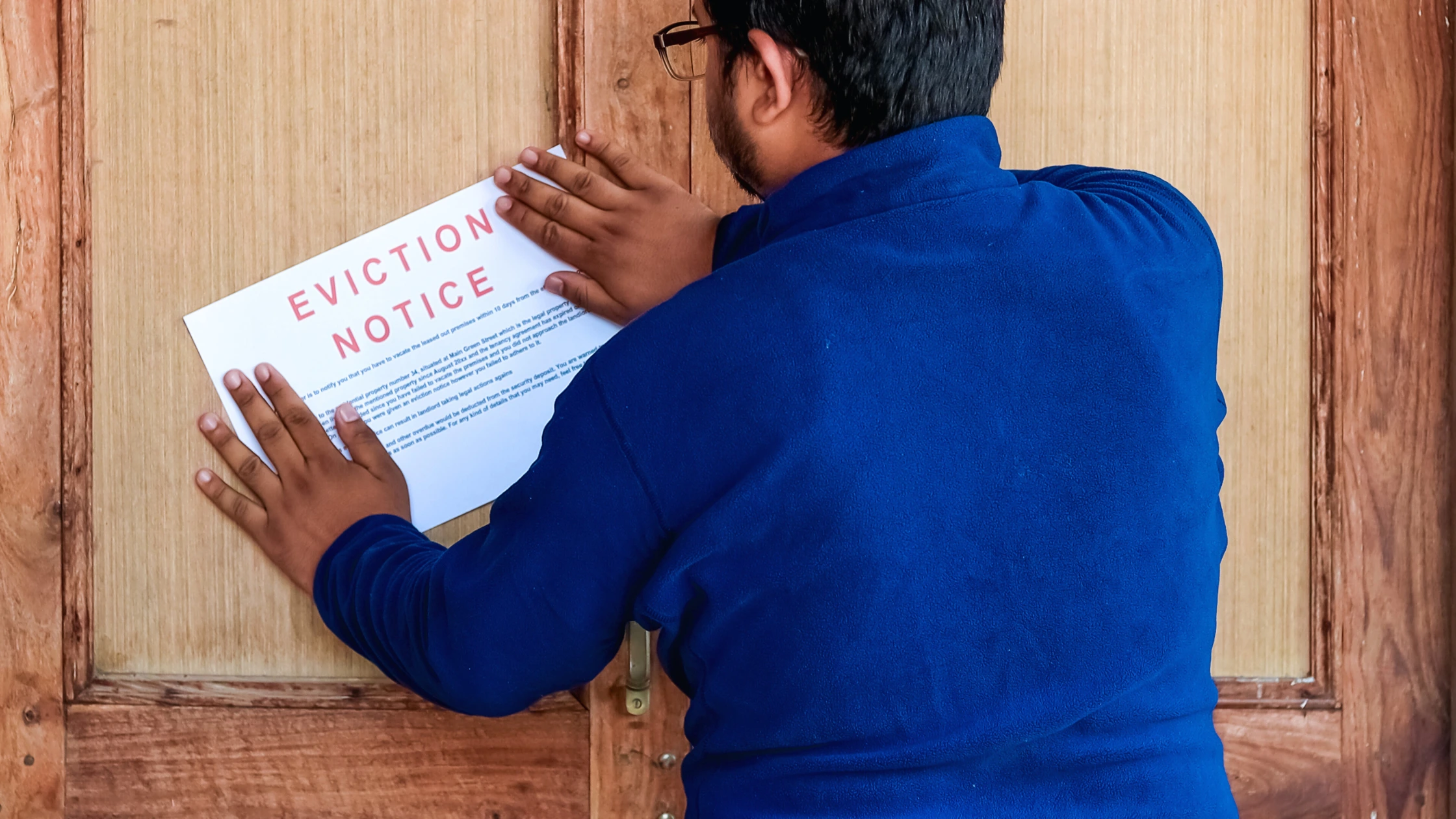
New York has some of the strongest eviction protections in the country. A landlord who wants you out must go through the courts, full stop. There is no shortcut, and attempting one exposes the landlord to serious liability.
The law is clear on this: a court order is required before any eviction can proceed. Self-help tactics are flatly illegal. That means no changing the locks, no removing your belongings, no shutting off utilities to force a move-out. These restrictions apply even if you are behind on rent.
- Self-help evictions are prohibited: no lock changes, no property removal, no utility shutoffs as a pressure tactic.
- Every eviction requires proper notice followed by a court proceeding and a judge's order.
- If a landlord attempts an illegal eviction, you can stay in the unit, call the police, and pursue damages in court.
Tenants facing eviction pressure should document every incident and consult a housing attorney immediately. The law is on your side; use it early, before a landlord's illegal actions gain momentum.
Landlord retaliation
Tenant rights protection in New York includes a clear prohibition on landlord retaliation. If you report a code violation, request a repair, or join a tenant organization, your landlord cannot legally respond by raising your rent, refusing to renew your lease, or trying to evict you. The fact that these actions followed your complaint is itself evidence of retaliation. Rent hikes have hard limits too; see how much you can raise rent in New York.
What illegal retaliation looks like
Retaliation can be obvious, an eviction notice two weeks after you filed a complaint, or more subtle, like a sudden rent increase or a previously approved renewal suddenly denied. What matters is the timing and context; courts look at whether the adverse action came in response to protected activity.
Steps to take if you are being retaliated against
Start by documenting every interaction: dates, what was said or sent, what happened afterward. Keep paying rent; stopping rent payments muddies the record and gives the landlord a separate legal argument. Get legal advice from a tenant rights attorney; many offer free consultations. In court, you can seek compensation and, in serious cases, punitive damages. New York's tenancy laws back you up; the documentation you gather is what turns that legal backing into a real outcome.
Repair and maintenance obligations
New York landlords have a legally enforceable duty to maintain their properties in habitable condition. That is not a vague standard; the state sets specific benchmarks, and tenants who live in substandard conditions have real remedies.
Repairs landlords are required to make
The list of mandatory repairs is broad. A rental unit must have working heat and hot water, safe electrical systems, intact plumbing, and protection from pests. Walls, ceilings, windows, and floors must be structurally sound. Common areas must be clean and well-lit. These are the minimum requirements; a lease can require more, but it cannot require less.
What happens when a landlord ignores repairs
If a landlord fails to make required repairs after receiving written notice, tenants have several options. Rent withholding is available under New York law when a unit is not habitable; the withheld rent is typically paid into a court escrow account. The repair-and-deduct remedy lets tenants hire someone to fix the problem and subtract the cost from rent, subject to dollar limits. These are remedies of last resort; start with a written repair request and give the landlord a reasonable deadline. If the landlord still does not act, contact the local housing authority or file in Housing Court. Landlords who ignore their repair obligations face fines, rent abatements, and court-ordered fixes.
The right to quiet enjoyment
Every New York tenant has a legal right to quiet enjoyment of their home. This is not just about noise; it is a broad protection against any conduct by the landlord that interferes with your ability to live peacefully in your unit. Frequent unannounced visits, harassing phone calls, and deliberate service disruptions all fall within its scope.
Where the boundaries are
A landlord cannot repeatedly drop by without notice, flood you with calls or texts, or take any action designed to make your home feel unsafe or unwelcoming. Even if each individual act seems minor, a pattern of conduct can add up to a violation of your quiet enjoyment rights.
What to do about it
When your quiet enjoyment is being disrupted, document the pattern: dates, what occurred, how often, any witnesses. Raise it in writing with the landlord first; sometimes a formal letter stops the behavior. If it does not, mediation is an option, as is seeking an injunction in Housing Court. Courts can order a landlord to stop specific behaviors and award damages for past violations.
Privacy during tenant screening

Tenant screening is legitimate; landlords need to assess whether an applicant can pay rent and will treat the property responsibly. But screening has limits. Privacy rights during tenant screenings bar landlords from asking intrusive or discriminatory questions, and those limits apply from the first application form to the final interview.
Questions landlords cannot ask
Landlords should stick to rental history, creditworthiness, income verification, and background checks. Questions about immigration status, religion, family plans, disability, sexual orientation, source of income (in jurisdictions where it is protected), and other protected characteristics are off-limits. If a question has nothing to do with whether you can pay rent and follow lease terms, it probably should not be on the application.
Keeping the screening process professional
A screening process grounded in objective, relevant criteria protects everyone. Landlords who stay in that lane avoid discrimination claims; tenants get a fair shot based on their actual qualifications. If you are asked something inappropriate during screening, you are not required to answer, and you can report it to the State Division of Human Rights.
Rights of tenants with disabilities and other protected groups
New York law requires landlords to provide reasonable accommodations for tenants with disabilities. That includes allowing service animals regardless of a no-pets policy, permitting structural modifications to improve accessibility, and adjusting rules and procedures when necessary. These are not optional; refusing a reasonable accommodation request is a form of discrimination.
The same principles apply across all protected classes. When a landlord treats one tenant differently from another because of race, religion, national origin, or any other protected characteristic, that difference in treatment is discriminatory, whether it shows up in lease terms, maintenance response times, or how complaints are handled.
- Refusing to allow a service animal violates federal and state fair housing law, not just the spirit of the rules.
- Denying reasonable disability accommodations exposes landlords to administrative complaints and civil liability.
- Landlords must apply their rules equally across tenants; inconsistent enforcement based on protected characteristics is discriminatory.
The rights of protected tenants are not a favor landlords grant; they are legal obligations. Tenants who are denied reasonable accommodations or treated unequally have clear avenues to seek relief through the courts and state agencies.
Conclusion
New York tenants have more legal protection than most people realize. The rules covered here touch every stage of the rental relationship, from the screening call to the day you move out. Knowing them is not just useful; it is the practical foundation for dealing with landlord problems before they become serious. Whether the issue is privacy, repairs, harassment, or an unlawful eviction attempt, the law gives you tools to push back.
What knowing your rights actually does
When you understand the restrictions placed on landlords, you can recognize problems early and respond appropriately, rather than assuming the landlord must be right because they own the building. Asserting your rights is not adversarial; it is how the system is supposed to work. And when a landlord genuinely breaks the law, the legal remedies available in New York are substantial.
When to get legal help
Many tenant rights organizations and legal aid offices in New York offer free or low-cost consultations. If your landlord is retaliating, refusing repairs, attempting an illegal eviction, or harassing you, get professional advice early. The earlier you document the problem and seek guidance, the stronger your position will be.
FAQ
What are the basics of the Fair Housing Act and how does it apply to landlords in New York?
The Fair Housing Act prohibits discrimination in housing based on race, color, religion, sex, national origin, familial status, or disability. New York landlords must comply with this federal law and also with additional state and city protections, covering everything from advertising to tenant selection to day-to-day management decisions.
How are protected classes defined under New York law, and what protections do they have?
New York extends federal protections and adds categories including sexual orientation, gender identity, military status, and, in New York City, lawful source of income. Landlords cannot deny housing, set different lease terms, or provide unequal services based on membership in any of these classes.
What should a tenant do if they suspect discriminatory practices by their landlord?
Document all relevant incidents and contact a tenant rights attorney. You can also file a complaint with the New York State Division of Human Rights or the U.S. Department of Housing and Urban Development.
Are there specific notice requirements for landlords before entering a tenant's property in New York?
Yes. Landlords must give at least 24 hours' written notice before entering, and the entry must occur at a reasonable time, unless there is a genuine emergency.
What qualifies as an emergency for a landlord to enter without notice?
Situations involving immediate danger to life, safety, or property: fires, gas leaks, major water leaks, or structural damage that requires immediate action. Routine visits do not qualify.
What rights do tenants have to protect their privacy?
Tenants can refuse entry to landlords who do not give proper notice or lack a legitimate reason. If the violation continues, tenants can seek a court order and may be entitled to damages.
Can landlords in New York dispose of belongings a tenant leaves behind?
No. Landlords must follow a specific legal procedure, including written notice and a waiting period, before they can dispose of any items a tenant leaves behind.
What counts as landlord harassment?
Harassment includes threatening tenants, deliberately disrupting services, filing frivolous lawsuits, repeated unauthorized entries, and any conduct designed to pressure a tenant into leaving or accepting worse conditions.
What legal protections exist against landlord harassment in New York?
Tenants can file harassment claims in Housing Court, seek injunctions, and report landlords to local housing authorities. New York City tenants also have access to the Office of Tenant Advocate within the Department of Buildings.
What are the limits on evictions for New York landlords?
Landlords must serve proper legal notices, file in court, and obtain a court order before any eviction can occur. Self-help measures, changing locks, removing property, cutting off utilities, are illegal regardless of the circumstances.
How is illegal landlord conduct defined in tenant disputes?
Illegal conduct includes harassment, discrimination, unlawful eviction tactics, and retaliation against tenants who exercise legal rights, such as filing complaints or joining tenant organizations.
What can a tenant do when facing landlord retaliation?
Document the behavior, keep paying rent, and get legal advice. You can file a claim in court and seek compensation; in serious cases, punitive damages may be available.
What are landlords required to repair in New York?
Landlords must keep units safe and habitable: working heat, hot water, plumbing, electrical systems, structural integrity, pest control, and clean common areas are all required under state law.
What options do tenants have when landlords ignore repair requests?
Tenants may withhold rent (paid into court escrow), use the repair-and-deduct remedy within applicable limits, report the condition to the housing authority, or file in Housing Court to compel repairs.
What does the right to quiet enjoyment mean?
It means you have the right to occupy your rental unit without excessive interference or disturbance from your landlord, including unauthorized entries, harassing communication, and deliberate disruption of services.
What can tenants do when their quiet enjoyment is violated?
Address it in writing with the landlord, document the pattern of disruptions, and, if that does not resolve it, seek an injunction or damages through Housing Court.
What questions are landlords prohibited from asking during screening?
Landlords cannot ask about immigration status, religion, disability, family plans, sexual orientation, or other protected characteristics. Screening questions must be limited to topics relevant to tenancy: rental history, income, credit, and background.
How should landlords approach tenant screening professionally?
By evaluating all applicants on the same objective criteria, income, rental history, creditworthiness, and avoiding questions that touch on protected characteristics or personal life details unrelated to tenancy.
What rights do tenants with disabilities have in New York?
Tenants with disabilities are entitled to reasonable accommodations, including permission to keep service animals regardless of a no-pets policy, and structural modifications to make their unit accessible. Denying these accommodations is discrimination under both federal and state law.


.jpg)




.png)