


Start hosting your property on Airbnb
Receive a $115 bonus if you list your property within 180 days!
Texas has quickly become one of the top destinations in the U.S. for short-term rental investors. With a fast-growing population, steady tourism, and business hubs from Austin to Dallas, the Lone Star State offers a rare blend of affordability, demand, and landlord-friendly laws.
If you’re looking to scale your Airbnb or VRBO portfolio, it’s worth first reviewing how insurance, licensing, and taxes work here. Before buying or listing your next property, take a moment to explore short-term rental insurance in Texas—a must-have safeguard for landlords operating in this competitive market.
In this guide, we’ll break down the top 5 short-term rental markets in Texas for 2025 and highlight what makes each one appealing for investors—along with insights into regulations, property management, and local tax considerations.
Why Texas stands out for short-term rental investors
Few states match Texas’s mix of economic growth, tourism, and real estate opportunity. The absence of a state income tax, diverse job market, and steady inflow of residents make it an ideal place for landlords to build wealth through short-term rentals.
The state’s laws also favor property owners. There’s no statewide ban on STRs, and while cities can enforce their own rules, many municipalities still encourage responsible hosting. Understanding how these local regulations differ is crucial—our guide to Airbnb and short-term rental laws in Texas breaks them down in detail.
Texas landlords should also stay informed about lease protections and dispute procedures. You can find more context in our overview of Texas landlord-tenant laws, which covers everything from deposits to eviction timelines.
Finally, as you plan your STR strategy, factor in Texas rental property tax regulations—including the state’s 6% hotel occupancy tax on stays under 30 days, plus local add-ons that can vary by city.
What makes a top-performing Texas STR market
To pinpoint the most promising markets for short-term rentals, we evaluated:
- Occupancy rates and average daily revenue
- Tourism, event, and business-travel demand
- Acquisition costs and long-term appreciation potential
- City-level licensing requirements and regulatory friendliness
- Access to attractions, amenities, and transportation
Here are the five cities that currently offer the best balance of profit potential, legal clarity, and guest demand.
Austin

Austin remains Texas’s flagship short-term rental market — and one of the most reliable Airbnb cities in the entire country. The combination of tech-driven economic growth, year-round music and film festivals, and a thriving outdoor lifestyle gives it the kind of diversified demand that many other U.S. markets can’t match. Travelers come for SXSW, Formula 1, the University of Texas, and the city’s countless cultural events, keeping bookings steady even through traditional off-seasons.
Average occupancy rates hover above 60 percent, but nightly rates — especially in neighborhoods like Zilker Park, South Congress, and Downtown — routinely exceed $250. That blend of high ADRs and strong year-round visitation translates to impressive annual revenues, with many hosts earning upwards of $60,000 per property. Apartments and condos near nightlife corridors perform particularly well, while single-family homes with yards or pools attract longer stays.
Austin’s regulatory environment, however, is more restrictive than most Texas markets. The city divides short-term rentals into specific permit types, limiting the number of non-owner-occupied listings in certain zones. Hosts are required to register, display license numbers, and comply with strict occupancy and noise rules. These hurdles can deter casual operators — but for compliant investors, they also keep supply tight and revenue per listing strong.
Beyond performance metrics, Austin continues to appreciate in both property value and traveler recognition. Its mix of culture, economy, and livability make it one of the safest long-term bets for STR investors in Texas
You can find localized insights and coverage options for your short-term rental insurance in Austin, TX
Investor takeaway: Austin is best suited for high-yield investors who value stable demand, premium pricing, and long-term appreciation. Success here requires careful compliance — but the returns justify the extra effort.
Dallas

The Dallas–Fort Worth metroplex is a short-term rental powerhouse, fueled by one of the country’s largest and fastest-growing economies. Dallas draws both business and leisure travelers year-round, thanks to its central location, conference scene, and strong event calendar — from sports tournaments to major conventions. That demand underpins an Airbnb market with more than 5,000 active listings across the region.
Occupancy rates typically fall in the low 60 percent range, while ADRs average around $150 per night. Downtown Dallas, Uptown, and Deep Ellum remain top-performing neighborhoods, but nearby suburbs like Arlington and Plano also see healthy STR activity driven by sports, corporate campuses, and family travel. The city’s size gives investors room to diversify holdings, balancing downtown properties with suburban units for stability.
Recently, Dallas updated its short-term rental regulations, requiring hosts to register with the city, pay lodging taxes, and ensure compliance with zoning maps that differentiate between residential and commercial areas. These new rules aim to formalize the STR market without stifling it — but investors must be diligent about which neighborhoods allow rentals outright. Our guide to property management laws in Texas outlines how to stay compliant while scaling operations.
Dallas hosts can line up coverage with short-term rental insurance in Dallas, TX.
Investor takeaway: Dallas is ideal for investors focused on scale, diversification, and dependable occupancy. It’s a balanced metro market with strong infrastructure, making it one of Texas’s best choices for portfolio growth.
Houston
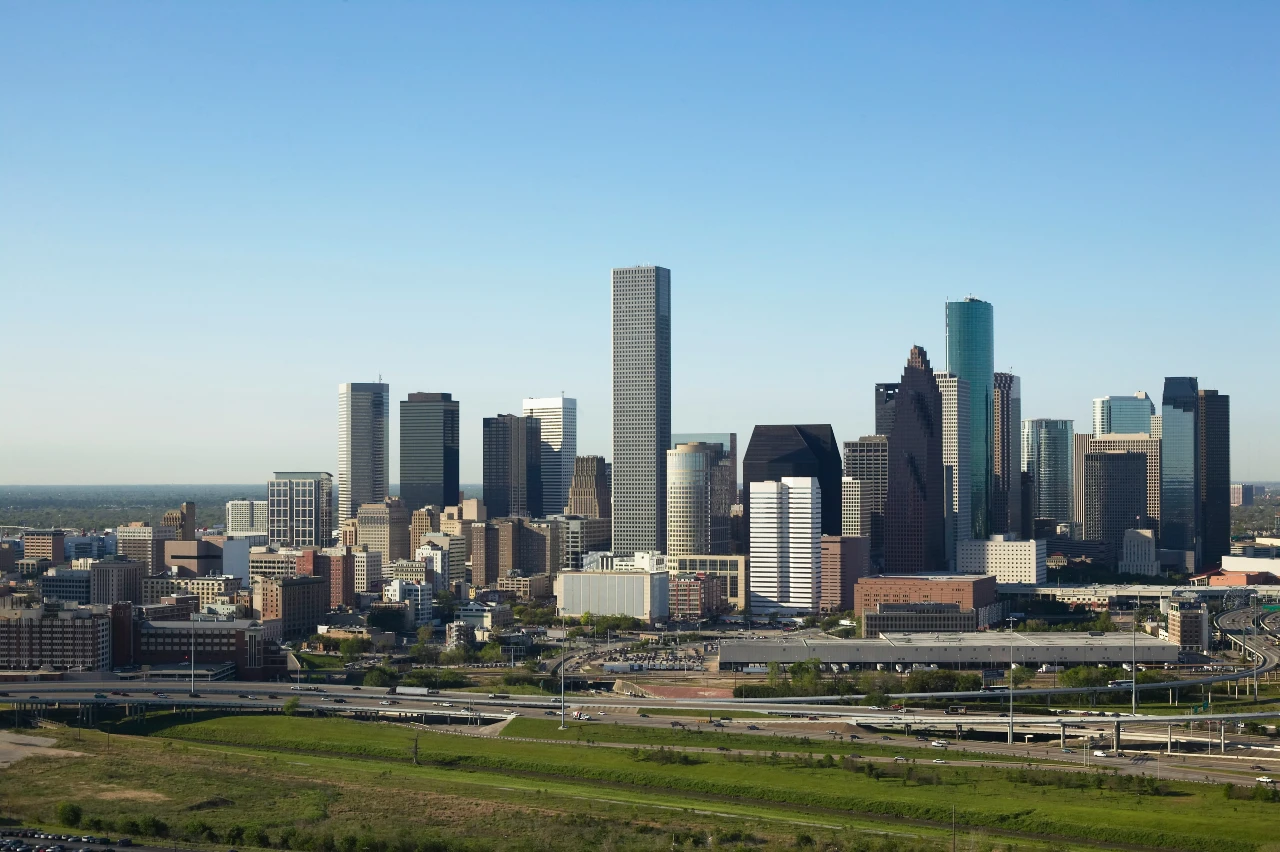
Houston’s vast metropolitan area gives investors a wide range of short-term rental opportunities, from luxury apartments in the Galleria to affordable family homes near the Texas Medical Center. As one of the most economically diverse cities in the U.S., Houston benefits from strong demand across business, healthcare, and leisure segments, with Airbnb and VRBO listings performing well throughout the year.
Average daily rates are moderate, typically in the $130–$160 range, but occupancy remains high due to steady business travel and medical tourism. Areas near the Medical Center, Downtown, and the Museum District generate some of the most consistent bookings. Meanwhile, neighborhoods like Midtown and Montrose attract visitors seeking walkable nightlife and cultural experiences, creating opportunities for smaller apartments and boutique-style rentals.
Regulation in Houston remains relatively open. While proposals for formal licensing have circulated, the city currently allows STRs without the strict registration or zoning limits found in Austin or Dallas. This flexibility has encouraged rapid growth, though investors should monitor ongoing discussions about potential registration frameworks to ensure future compliance.
Houston’s size and diversity make it resilient to economic cycles. Even during slower tourism months, corporate and medical demand helps sustain occupancy. Investors who emphasize design, professional photography, and prompt guest service often achieve returns on par with higher-cost markets.
For guidance on protecting your listings, explore short-term rental insurance in Houston, TX.
Investor takeaway: Houston is best for investors seeking flexibility and affordability without sacrificing demand. Its broad visitor base and open regulatory environment create a strong foundation for both new and experienced hosts.
San Antonio

San Antonio is one of Texas’s most underrated short-term rental markets — and a consistent performer for investors focused on family travel and cultural tourism. With millions of visitors drawn to the Alamo, the River Walk, and its UNESCO World Heritage missions, the city enjoys one of the state’s most stable tourism economies.
Occupancy rates average around 63 percent, while nightly rates hover near $140. Those numbers may seem modest compared to Austin or Dallas, but San Antonio’s lower acquisition costs dramatically improve yield potential. Many homes can be purchased below the state’s major-metro averages, giving new investors a lower barrier to entry. Family-sized rentals with parking and proximity to downtown attractions tend to outperform smaller condos or apartments.
Regulation in San Antonio is balanced. The city requires short-term rental permits, safety inspections, and adherence to neighborhood occupancy limits. Hosts must also collect and remit hotel occupancy taxes, though platforms like Airbnb often automate this process. Compared to the complex systems in Austin or Dallas, San Antonio’s approach is predictable and investor-friendly.
One overlooked strength is San Antonio’s year-round demand. Unlike resort markets with strong seasonality, the city’s tourism calendar runs nearly continuously thanks to conventions, theme parks, and cultural events. That makes it easier for hosts to maintain occupancy without aggressive pricing swings.
Investor takeaway: San Antonio is ideal for investors looking for affordable entry, stable family demand, and predictable cash flow. It’s less flashy than Austin or Dallas, but often delivers stronger net yields relative to property cost.
Port Aransas and Galveston

For investors interested in vacation rentals, Texas’s Gulf Coast provides some of the highest seasonal returns in the state. The twin beach markets of Port Aransas and Galveston attract millions of visitors each year, driven by family vacations, fishing, and warm-weather tourism.
Both cities perform exceptionally well during peak summer months, when occupancy can approach 80 percent and nightly rates surge past $300. Even with slower winters, the annualized revenue for well-managed beachfront properties remains strong. Condos, duplexes, and resort-style apartments with amenities such as pools and ocean views command premium pricing, while smaller inland properties appeal to families seeking value.
The primary challenge for Gulf Coast investors is seasonality and weather exposure. Hurricane risk and coastal maintenance costs can eat into profits if not properly accounted for. Comprehensive short-term rental insurance is essential, as it covers storm damage, lost income, and liability incidents that typical homeowner policies may exclude.
Regulatory environments differ slightly: Galveston requires registration and hotel tax collection, while Port Aransas emphasizes safety and occupancy limits. Both cities have embraced STRs as key economic drivers, making compliance straightforward for responsible operators.
Investor takeaway: Port Aransas and Galveston cater to vacation-rental investors prioritizing high seasonal revenue and scenic appeal. While more hands-on and weather-dependent, these markets deliver strong returns for landlords who plan and insure properly.
Taxes, regulations, and the short-term rental loophole
Each Texas city has its own approach to short-term rental taxation and licensing. Most collect both state and local hotel occupancy taxes, which hosts are required to remit—Airbnb and VRBO often handle this automatically.
It’s important to understand where your property fits within local zoning codes and whether HOAs restrict STR activity. Some landlords have explored the short-term rental loophole to manage compliance or tax treatment, but this should always be reviewed with a licensed professional.
Insurance and risk management
Operating a short-term rental involves unique risks—guest damage, liability exposure, and the high turnover that comes with frequent bookings. That’s why comprehensive short-term rental insurance in Texas is essential.
Traditional homeowners or landlord policies rarely cover commercial guest stays. A dedicated policy ensures protection for your structure, furnishings, and liability in the event of accidents or unexpected damage.
Read more: Top 5 short-term rental markets in Arizona
Final thoughts
Texas remains one of the strongest states in the U.S. for short-term rental investors. The top markets—Austin, Dallas, Houston, San Antonio, and Port Aransas/Galveston—offer a mix of occupancy stability, legal clarity, and yield potential across different property types and budgets.
From a modern condo in downtown Austin to a coastal apartment in Galveston, every Texas market rewards landlords who stay informed, insured, and compliant.
At Steadily, we help property owners protect their rentals with flexible, landlord-focused coverage. Get a quote today to keep your Texas short-term rentals secure and profitable.




.jpg)



.png)