Rental home insurance for single-family homes
Single-family homes are the most popular type of dwelling for real estate investors, but once it becomes a rental property, a standard homeowners policy no longer applies. Landlord insurance is needed to protect rentals against property damage, liability claims from tenants or guests, loss of rental income after a covered event, and the unique risks that come with renting to others.


What is a single-family home?
In real estate, a single-family home is a standalone dwelling designed to house one household, sitting on its own lot with no shared walls with neighboring properties.
The single-family home definition is straightforward; you own both the structure and the land it sits on, giving you complete control and full responsibility for maintenance. Unlike condos or townhouses where ownership gets divided between units and shared spaces, a single-family home means everything from the roof to the foundation to the yard is yours alone, making it the most common choice for real estate investors entering the rental market.
What a single-family home means for landlords is maximum flexibility over your investment. You can make renovations without HOA approval, choose your own contractors, and landscape however you'd like.
Single-family rentals typically attract long-term tenants like families looking for yard space and privacy, which translates to lower turnover and more stable rental income. The trade-off is you're responsible for every aspect of maintenance, from the roof to the lawn, but many investors prefer this because there are no surprise HOA fee increases eating into profits.
Protect your single-family rental in minutes!
How do I insure a single-family rental property?
Insuring a single-family rental requires landlord insurance, not a standard homeowners policy. Once you start collecting rent, homeowners insurance no longer applies, leaving you exposed to significant financial risk.
Single-family rental insurance is designed for investment properties and covers the unique challenges landlords face, from tenant-caused damages to liability claims when someone gets hurt on your property. Getting coverage with Steadily is straightforward; most landlords can get a quote in minutes and have coverage in place before their first tenant moves in.
What single-family home landlord insurance covers goes far beyond basic property protection. Your policy protects all parts of the dwelling itself against covered perils like fire, wind, hail, and vandalism, plus any detached structures like garages or sheds on your lot.
Liability coverage is crucial; it protects you financially if a tenant or their guest is injured on your property and decides to sue, which can happen even when you've done everything right as a landlord.
You'll also get loss of rent coverage, which replaces your rental income if the property becomes uninhabitable due to a covered event and your tenant has to move out temporarily.
Unlike condo insurance where the HOA covers exterior maintenance, single-family rental insurance means you're protecting the entire property from foundation to roof, which is why coverage limits are typically higher and premiums reflect that comprehensive protection.


What affects the cost of single-family rental insurance?
There’s no single price for single-family rental insurance, and two similar houses can quote out very differently. Location does most of the heavy lifting: a home in a high-crime ZIP or a wildfire or coastal zone costs more to insure than one in a quiet, low-risk suburb. After that, the building itself matters, since the age and material of the roof, the wiring, and the overall construction all feed into the number. Your coverage amount is the other big lever, because insuring a full rebuild costs more than a bare-bones limit, and underinsuring to save a few dollars a month is how landlords end up short after a total loss.
Occupancy and history round it out. A tenant-occupied rental prices differently than an owner-occupied home, and a stretch of vacancy pushes the rate up further. A recent fire or water claim follows you into your next renewal. If you want to bring the cost down honestly, that’s where the everyday things pay off: a newer roof, updated systems, monitored alarms, a sensible deductible, and bundling your policies usually beat chasing the cheapest sticker price.
We cover a wide range of risks, or you can choose a limited set of coverages for a lower premium

Wind and hurricane
Steadily covers wind and hurricane damage to the structure of your rental, from a stripped roof and broken windows to siding torn loose and a tree through the wall, plus the rental income you lose while it's repaired.

Riot & civil commotion
Steadily’s landlord insurance covers property damage from riots and civil commotion, including broken windows, structural fires, and looted common areas, so the repair costs don’t fall entirely on you. Documentation connecting the damage to the civil unrest is required.

Vandalism & burglary
Steadily covers malicious damage to your rental from vandalism and break-ins: broken doors and windows, defaced surfaces, damaged fixtures and appliances. A police report is typically required to file the claim.

Loss of rent
When a covered event makes the unit temporarily uninhabitable, Steadily’s loss of rent coverage replaces the income you’d lose while repairs are underway, whether the cause is a fire, a burst pipe, or storm damage.

Storm and hail
Steadily covers storm and hail damage to the structure of your property, including roof punctures, dented or torn shingles, broken windows, and damage from fallen trees and debris, up to your policy limits.

Water
For sudden water damage events such as burst pipes, plumbing failures and appliance overflow, Steadily covers the structural repairs and lost rental income if the unit can’t be occupied while the work is done. Flood damage from rising water requires a separate policy.

Legal liability
Landlord liability insurance pays medical bills, legal defense, and settlements when a tenant or visitor is injured at your rental and holds you responsible. It's built into every Steadily landlord policy in all 50 states with $300,000 to $2 million per occurrence, typically adding $200 to $400 a year to the bundled premium.

Fire
Steadily covers structural fire damage, smoke damage, personal property you own at the unit, and lost rental income while repairs are underway. That includes fires started in the kitchen, by the wiring, by a tenant, or by a wildfire nearby.
Does homeowners insurance cover a single-family home I rent out?
No, not once tenants move in. A homeowners policy is written for a home you live in, and renting it out is treated as a business use the policy excludes, so a claim could be denied. To stay covered you need landlord or rental home insurance, which protects the structure, your liability as the owner, and the rental income you would lose if the home became unlivable after a covered event.
How much does rental home insurance cost for a single-family home?
Rental home insurance for a single-family property usually costs more than the homeowners policy on the same house, often around 15 to 25 percent more, because a tenant-occupied rental carries more liability and risk than an owner-occupied home. Your actual premium depends on the home's value, location, age, construction, your coverage limits, and your deductible. The best way to know your number is a quick quote on the specific property.
Why are single-family homes the most popular rental property type?
Single-family homes are the most popular type of rental property for real estate investors, accounting for roughly 35% of all rental housing in America – over 16 million single-family rentals nationwide. Real estate investors often choose single-family rentals over multifamily properties because they typically appreciate faster, attract longer-term tenants, and offer easier exit strategies since you can sell to both investors and owner-occupants. The advantages of single-family vs multifamily rental investing include lower entry costs, simpler property management with one tenant, and stronger demand from families seeking yards and privacy.
Can I turn the home I live in into a rental?
Yes, you can turn your primary residence into a rental property, but you'll need to make some important changes first (and, of course, move out). The most critical step is switching your homeowners insurance to a landlord insurance policy since your current coverage will no longer apply once you start renting. You'll also want to check with your mortgage lender to ensure rentals are allowed under your loan terms and notify your HOA if applicable to confirm rentals are permitted in your community.
Is a townhouse a single-family home?
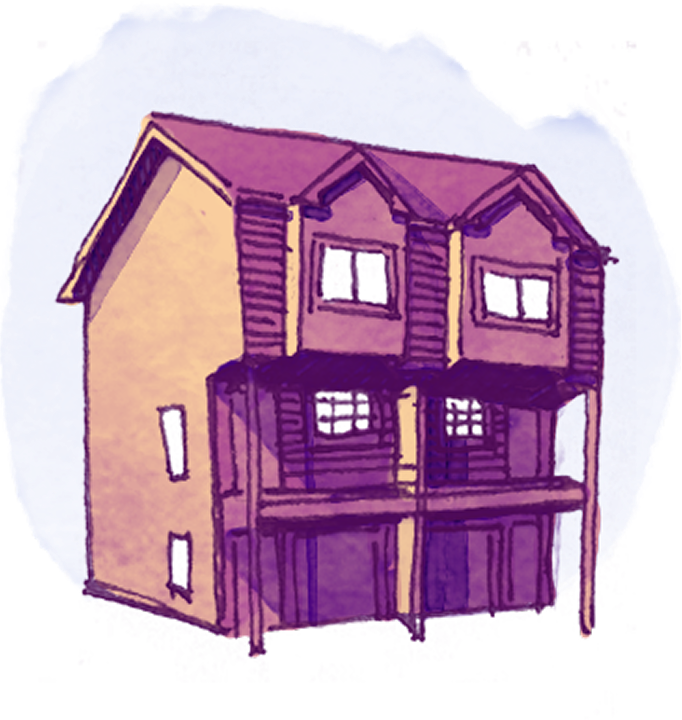
A townhouse is technically a single-family home in terms of structure – it's a multi-story dwelling designed for one household – but it differs from a detached single-family home because it shares one or more walls with neighboring units. From an insurance perspective, townhouses are treated similar to single-family homes since you own and maintain the dwelling – but it may be a part of a townhomes association that could cover certain aspects, including any communal property and sometimes the roof.
Related Articles
Go to Blog
Landlord tips & tricks
What is a single-family home? A guide for landlords and investors

Landlord tips & tricks
Single-family vs. multifamily: Which rental property type is right for you?

Landlord tips & tricks
How to insure a single-family rental property: What landlords need to know
We cover a wide range of risks, or you can choose a limited set of coverages for a lower premium


.webp)