

Start hosting your property on Airbnb
Receive a $115 bonus if you list your property within 180 days!
Airbnb, the world's largest short-term rental operator, has just rolled out a significant upgrade to their host protection offerings. It's creating buzz among short-term rental operators.
The new earnings protection feature, which launched this week for superhosts with plans to expand, represents a notable step up from the existing in-house coverage. Previously, the best protection came in the form of AirCover, Airbnb's host protection program that provided limited protection and liability coverage. Now, they are adding an earnings protection feature that allows you to insure your property for lost earnings if it becomes uninhabitable.
If you're running an Airbnb or considering getting into the short-term rental game, here's how this new coverage works and how it pairs with landlord insurance for the broader property risk profile.
What is Airbnb earnings protection?
Airbnb's earnings protection is essentially a version of loss of rent coverage designed specifically for hosts. When certain covered events make your property uninhabitable or inaccessible to guests, this insurance pays you for the rental income you're missing out on.
According to promotional materials, Airbnb will offer three levels of coverage (one, two, or three months worth of income), with coverage amounts customized based on your listing's historical earnings from the previous year.
How does Airbnb's earnings protection compare to AirCover?
If you're already familiar with AirCover, you're probably wondering what's different. AirCover has been Airbnb's standard host protection program, offering $3 million in damage protection and $1 million in liability coverage. It's included automatically for all hosts at no extra cost.
The new earnings protection feature is a paid add-on that specifically addresses income loss, something AirCover doesn't cover. While AirCover protects you from guest damage and third-party liability claims, it won't help if you're temporarily unable to rent your property due to external factors.
Think of it this way: AirCover handles the "what if a guest destroys my place" scenario, while earnings protection tackles the "what if my place can't be rented at all" problem.
What Airbnb earnings protection covers
Based on the policy documents, here's when this insurance kicks in:
Unexpected damage
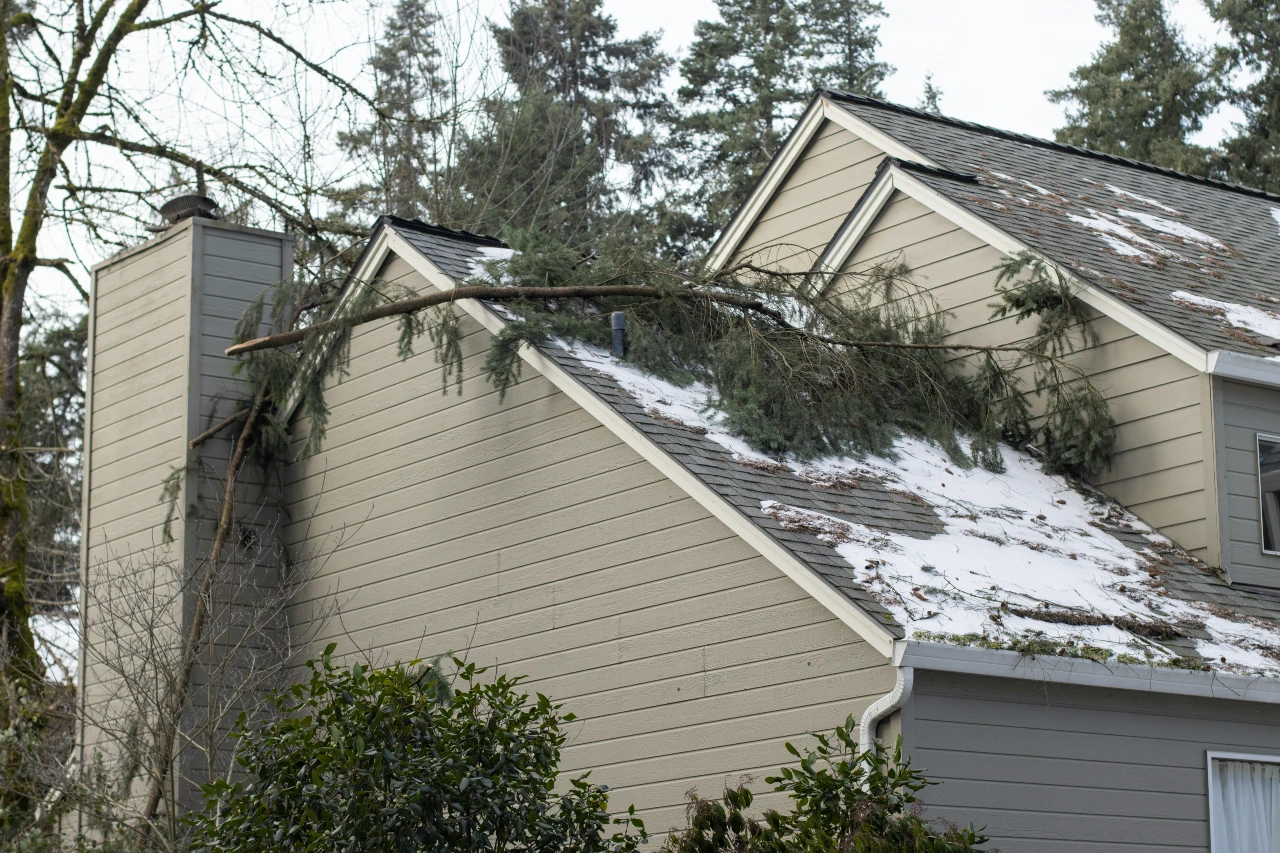
If your property suffers physical damage that makes it uninhabitable, and repairs will take at least four days, you're covered. The damage must be beyond your control and result from a cause that isn't otherwise excluded in the policy.
Severe weather events
The program includes what Airbnb calls "severe payout events" for major natural disasters:
- Category 4+ hurricanes with sustained winds of 130+ mph that pass within 15 miles of your property
- Earthquakes measuring 7.5+ magnitude with significant ground acceleration at your location
- Wildfires burning 15,000+ acres where your property falls within a mandatory evacuation or containment zone for at least seven consecutive days
Loss of access
You're covered if government restrictions completely prevent access to your property for at least seven consecutive days due to:
- Transport disruptions (major airports, railways, or roads closed with no alternative access)
- Flooding
- Severe weather events
- Riots or civil commotion
Electric grid failure
If your property loses electricity for three or more consecutive days due to a grid failure (not local issues), the coverage applies.
What's not covered
Like any insurance offering, there are specific exclusions worth understanding:
- Events starting before or after your coverage period
- Damage from work being done at your property
- Normal wear and tear
- Equipment breakdowns
- Government seizure or quarantine orders
- War, rebellion, or military action
- Nuclear incidents
- Communicable diseases (yes, COVID-like scenarios are explicitly excluded)
- Financial issues, insufficient bookings, or market downturns
- Cyber attacks or computer system failures
The policy also won't cover you if you're negligent or don't maintain your property properly.
How does this compare to traditional loss of rent coverage?
Here's where things get interesting for serious property investors. Traditional landlord insurance policies often include loss of rent coverage, including Steadily's DP-1 and DP-3 products, and it typically works differently than Airbnb's version.
With a landlord insurance policy, loss of rent coverage generally:
- Covers a wider range of perils (fire, water damage, vandalism, storm damage, etc.)
- Doesn't exclude communicable diseases or quarantine situations in all cases
- Provides coverage for the actual rental value of the property, not just historical Airbnb earnings
- Often covers both short-term and long-term rental scenarios
- Includes coverage for additional living expenses in some cases
The coverage typically kicks in when your property becomes uninhabitable due to a covered peril and continues while repairs are being made. Most policies will cover the fair rental value of your property or your actual loss of rental income, whichever is less.
How Airbnb insurance and landlord insurance work together
Airbnb's earnings protection is designed to complement landlord insurance. Each program handles a specific slice of risk, and the layered combination covers more of the property's exposure than either alone.
What Airbnb insurance covers
- Guest damage (through AirCover)
- Host liability claims (through AirCover)
- Loss of rental income for specific covered events (through earnings protection)
What landlord insurance covers
- Property damage from numerous perils (fire, storm, vandalism, theft, etc.)
- Liability protection beyond just guest-related incidents
- Loss of rent from any covered peril
- Additional living expenses in some cases
- Personal property of the landlord
- Fair rental value protection
- Coverage that applies whether you're renting short-term or long-term
Perhaps most importantly, landlord insurance protects you even when your property isn't listed on Airbnb. If you take a booking through another platform, rent traditionally, or simply have the property vacant between bookings, your coverage continues.
Why short-term rental hosts pair Airbnb programs with landlord insurance
Most short-term rental hosts run AirCover and earnings protection alongside a landlord policy. Each program covers a specific slice of risk, and the layered combination closes more of the property's exposure than either alone. Here's how the layers fit together:
- Specific peril coverage: Earnings protection applies to a defined set of qualifying scenarios. A kitchen fire or water damage from a burst pipe falls outside that scope, with a landlord policy covering those property losses instead.
- Coverage timing: Airbnb's programs apply during active rental periods or specific covered events. Landlord insurance picks up vacancy and between-booking coverage, so the property is protected whether or not it's currently listed.
- No structural coverage: Neither AirCover nor earnings protection will pay to repair your actual property if something goes wrong. That's all on you unless you have proper property insurance.
- Liability scope: AirCover provides $1 million in liability coverage tied to guest stays. A landlord liability policy is structured to extend across the full property risk profile, including incidents outside the guest stay window.
- Local requirements: Many municipalities require proof of a standalone landlord or short-term rental policy for licensing or permits. AirCover and earnings protection are built for the Airbnb platform experience rather than as standalone policies for regulatory compliance.
Read more: Airbnb's 65 new features: What hosts and landlords need to know
What a complete short-term rental insurance setup looks like
For STR operators looking at a complete coverage stack, here's how the layers fit together:
Essential coverage components
- Dwelling coverage: Protects the physical structure of your property from fire, storms, vandalism, and other covered perils.
- Liability protection: Covers you if someone is injured on your property or if you're found legally responsible for damage to others. This should typically be $1-2 million minimum.
- Loss of rent/rental income coverage: Pays for lost rental income when your property is uninhabitable due to a covered loss. This should cover both short-term rental income and potential long-term rental income if you need to pivot.
- Personal property coverage: If you furnish your short-term rental (and you probably do), you need coverage for that furniture, appliances, linens, and equipment.
- Umbrella insurance (optional): For additional liability protection beyond your base policy limits.
Some property owners also add:
- Equipment breakdown coverage
- Service line coverage
- Water backup coverage
- Ordinance or law coverage (for building code upgrades)
- Business income coverage for longer-term disruptions
How to set up short-term rental coverage
Getting the right insurance for your Airbnb or vacation rental property is straightforward and works best with insurers who specialize in the short-term rental market.
Many traditional homeowners insurance policies specifically exclude rental activity. Some will drop you if they discover you're running an Airbnb. That's why you need a policy specifically designed for rental properties.
At Steadily, we specialize in landlord insurance that covers short-term rentals in all 50 states. Our policies are designed for property investors who are running everything from occasional vacation rentals to full-time Airbnb operations.
We understand that short-term rental properties face different risks than traditional long-term rentals, and our coverage reflects that reality. Whether you're renting out a single property in Austin or managing a portfolio of vacation rentals across multiple states, we can structure coverage that fits your property and how you host.
The bottom line on Airbnb earnings protection
Airbnb's new earnings protection feature is a step in the right direction. It acknowledges that hosts need protection against income loss, and it provides coverage for some major disaster scenarios that could shut down your operation.
Earnings protection is purpose-built for the active rental period on Airbnb. Landlord insurance covers the broader property risk profile, including vacancy and perils outside the guest stay window. The two work as a layered combination.
Think of it like the warranty you get when you buy a new phone. It covers specific scenarios well within its scope, and a separate device insurance policy handles the broader range of things that could go wrong: theft, accidental damage, drops. The two are built for different jobs and work together rather than overlap.
Most STR hosts run two layers of coverage in parallel:
- A landlord insurance policy with short-term rental coverage, for property risk and broader perils across all rental periods (vacant or booked)
- Airbnb's host programs (AirCover and earnings protection) for guest-related incidents and qualifying events during active stays
The two are built for different parts of the risk profile and work together as a complete coverage stack.
The good news? Getting short-term rental insurance is easier than you might think. You can get a quote online in minutes and have coverage in place before your next guest checks in.
Your rental property is a business asset, and the broadest protection comes from layering Airbnb's host programs with landlord insurance built for short-term rentals. Steadily writes coverage that complements AirCover and earnings protection, filling in vacancy periods, broader perils, and the standalone-policy requirements some markets need for licensing.
Get a quote for short-term rental insurance that fits how you host.




.jpg)



.png)