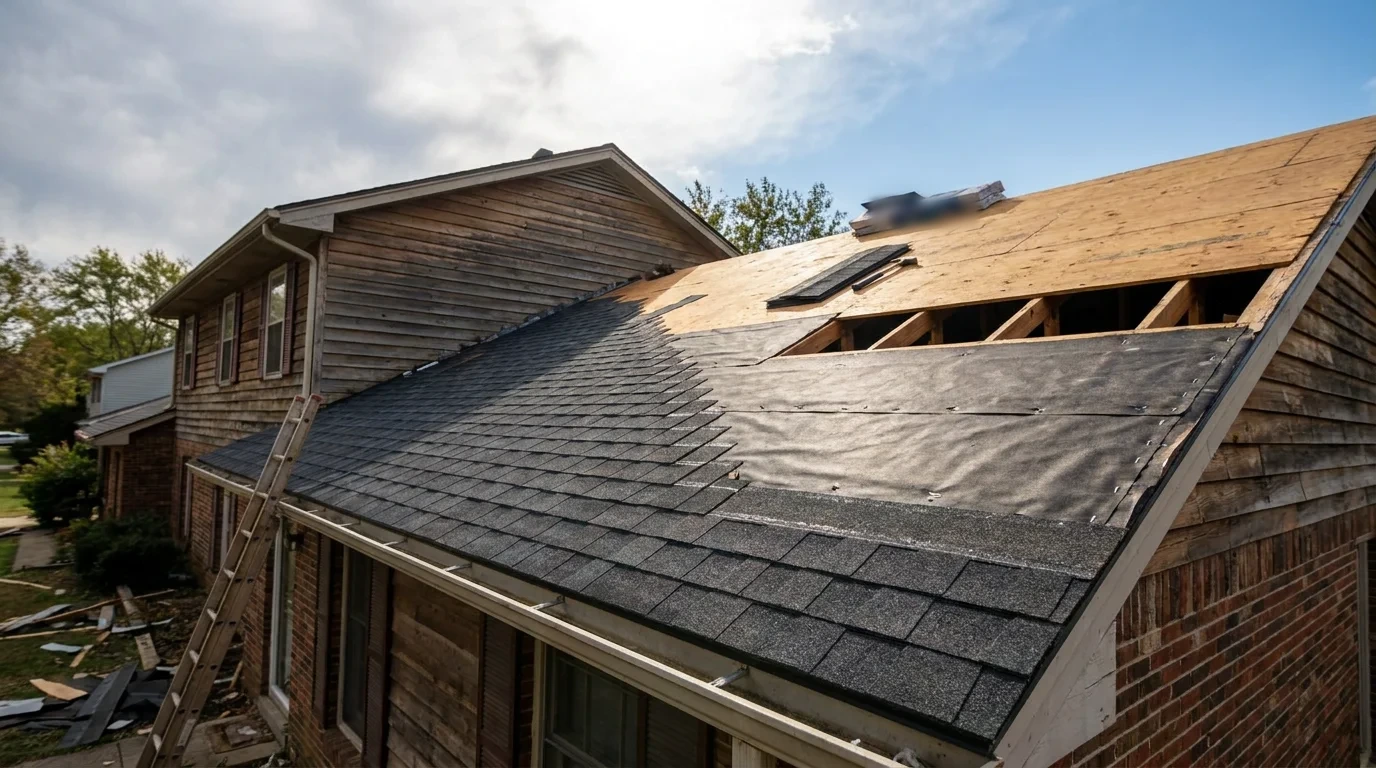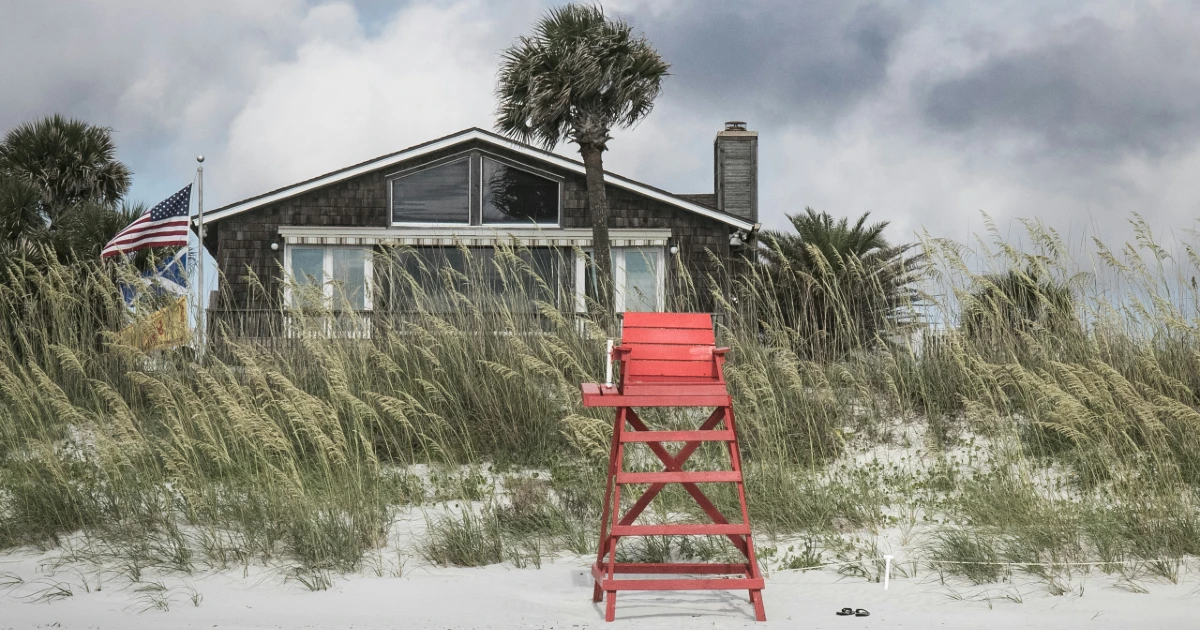
Picture a duplex in Cape Coral, FL the week after a storm rolls through. The roof lost a strip of shingles, a fence is down, and a contractor has quoted $40,000 to put everything right. You call your agent expecting to hear about your $1,000 deductible. Instead, you hear a number closer to $7,000, and it has nothing to do with the size of the repair bill.
That gap between what landlords expect and what they actually owe is the hurricane deductible at work. If you own landlord insurance in Florida, it's probably the single most expensive line in your policy that you never think about until a storm has a name.
So, let's walk through what it is, how it differs from the deductible you're used to, how the percentage turns into real dollars, and what you should look at before you pick one.
What a hurricane deductible is
A hurricane deductible is the amount you pay out of pocket on a claim caused by a hurricane or named storm before the policy starts paying. That part sounds like any other deductible. The difference is how it's calculated: instead of a flat dollar figure, it's usually a percentage of your dwelling limit (the Coverage A amount, which is what the policy would pay to rebuild the structure).
Florida's Department of Financial Services lays out the standard menu for state-regulated insurers: those carriers must offer options of $500, 2%, 5% or 10% of the dwelling limit. In practice, most Florida rental owners land somewhere between 2% and 5%, and on a coastal property it's not unusual to see the higher end.
Here's the thing, though. Because the deductible is tied to the dwelling limit, a bigger house or a pricier rebuild means a bigger deductible, even if the storm damage is modest. That catches a lot of people off guard.
Hurricane deductible vs. wind/hail deductible vs. all-other-perils deductible
A full landlord policy through Steadily carries three separate deductibles, and which one applies depends entirely on what caused the damage:
- Hurricane deductible: applies when a hurricane or named storm causes the loss.
- Wind/hail deductible: covers wind or hail damage from any storm that doesn't have a name, like a summer thunderstorm that peels back part of a roof or a hailstorm that dents the siding.
- All-other-perils deductible: the familiar flat-dollar amount that applies to everything else the policy covers, such as a kitchen fire or a break-in.
The all-other-perils deductible (people in the industry shorten it to AOP) is the one most landlords picture when they hear the word. It's a fixed number, often $1,000 to $2,500, and it doesn't change with the value of your building.
The hurricane deductible is a different animal; it's a percentage, so it scales with your dwelling limit. Wind/hail deductibles are often a percentage too, although some policies set them as a flat dollar amount, so check how yours is written.
Why split it up this way? Because the risks are wildly different. A kitchen fire hits one property at a time. A hurricane can damage thousands of homes in a single afternoon, and insurers price that concentrated risk by shifting more of the first dollars onto the owner.
How a policy words that split can vary, but both wind and hurricane coverage and storm and hail coverage come back to the same question after a claim: what caused the damage.
What triggers the hurricane deductible
This is the part that matters most, so it gets its own section: the storm has to have a name.
The hurricane deductible kicks in when the damage is caused by a hurricane or a named storm. Not just any strong wind. If a storm has been given a name by forecasters, losses from that storm fall under the hurricane deductible; if it hasn't, wind and hail losses fall under the wind/hail deductible instead.
And "named storm" covers more ground than you might think. The National Hurricane Center starts naming a tropical system once its sustained winds reach 39 mph, which is the threshold for a tropical storm in the National Hurricane Center glossary. A storm doesn't become a hurricane until its sustained winds hit 74 mph, the bottom of Category 1 on the Saffir-Simpson Hurricane Wind Scale.
That means a tropical storm that never reaches hurricane strength can still trigger the hurricane deductible on a policy that applies it to named storms. (If you've ever wondered where those names come from, there's a whole rotating system behind it, and how hurricanes get their names is more organized than most people expect.)
Surely a hurricane-force gust from an unnamed squall line counts as a hurricane loss, right? Not under this setup; the name is what decides it.
- A named tropical storm with 50 mph winds drops a tree on your roof. That's a hurricane deductible claim.
- A summer thunderstorm with no name and 80 mph straight-line winds does the exact same damage, and it goes under the wind/hail deductible.
- An April hailstorm cracks your skylights, which is also wind/hail.
- A tenant's space heater starts a fire. All other perils.
As for exactly when a storm's window "opens" and "closes" for deductible purposes, that comes down to policy wording. Each policy defines how a hurricane or named storm loss is identified, so the safest move is to read the definitions section of your policy or ask your agent to walk you through it.
Don't assume the rules from a neighbor's homeowners policy carry over to your rental.
How a percentage deductible turns into dollars
All right, time for some math. These numbers are illustrative, not Steadily's rates or options; they're just round figures that make the mechanics easy to follow.
Say you own a single-family rental with a $350,000 dwelling limit and a 2% hurricane deductible.
- Your deductible works out to $350,000 × 2%, or $7,000.
- If a named storm does $40,000 of damage to the roof, you pay the first $7,000 and the policy pays $33,000.
- If a named storm does $5,000 of damage, the repair is under the deductible, so the policy pays nothing and the whole bill is yours.
Now change one variable. Same house, same $40,000 claim, but you chose a 5% hurricane deductible to save on premium. Your share jumps to $17,500, and the policy pays $22,500. Same storm, same roof, a $10,500 difference in what comes out of your bank account.
The thing to hold onto is that the deductible is a percentage of your dwelling limit, not a percentage of the damage. A lot of landlords hear "2%" and mentally apply it to the claim, which would make a $40,000 repair cost them $800. It doesn't work that way.
And because the deductible is tied to the dwelling limit, it creeps up every time you raise your coverage to keep pace with construction costs (and construction costs haven't exactly been falling).
One more wrinkle for anyone who owns more than one door. A single hurricane can hit several of your rentals at once, and each property may carry its own deductible. Three rentals with $300,000 dwelling limits and 2% deductibles means $6,000 apiece, or $18,000 out of pocket from one storm before any insurance money shows up. That's before you count the rent you won't collect while units are being repaired, which is where loss of rent coverage earns its keep by replacing income while a covered loss gets fixed.
The Florida law most landlords assume applies (and might not)
Now, back to the Sunshine State.
Florida has detailed rules about hurricane deductibles in section 627.701 of the Florida Statutes. Among other things, that law requires a hurricane deductible on a personal residential policy to apply on an annual basis, meaning once you've paid it for a hurricane during a calendar year, later hurricanes that year are handled differently. Florida's DFS also notes that when the hurricane deductible applies to a claim, no other deductible under the policy is applied on top of it.
But those rules apply to admitted insurers, the carriers licensed by the Florida Office of Insurance Regulation that file their rates and forms with the state. A lot of rental property in Florida is insured in the surplus lines market instead, and the Florida Surplus Lines Law says that, unless a provision specifically says otherwise, chapter 627 doesn't apply to surplus lines insurance.
In plain English: the once-per-season rule and the state's standard deductible menu may not be part of your policy at all.
Is that automatically bad? No. Surplus lines carriers often write coverage on properties the admitted market won't touch, and for plenty of landlords that's the difference between being insured and not. It just means the policy wording, not state law, decides how your deductible works. Read it, and if a sentence in the deductible section confuses you, ask your agent before the storm, not after.
What to compare when you're choosing a hurricane deductible
Picking a deductible is a bet on your own cash position. A higher percentage lowers your premium; a lower percentage costs more every year but leaves you with less to cover after a storm. Neither is right for everyone, and the trade-off looks different for an owner with one condo than for someone with a dozen single-family rentals across Lee and Collier counties.
Here's what we'd look at, roughly in the order we'd look at it:
- Look at the dollar amount, not the percentage. Multiply your dwelling limit by the percentage and write the number down. "5%" sounds small; "$17,500" doesn't.
- Be honest about cash you can reach after a storm. Could you cover that amount within a few weeks, possibly while rent is interrupted and contractors want deposits up front? If the honest answer is no, a lower deductible is probably worth the extra premium.
- See how much the premium actually moves. Ask your agent for quotes at two or three deductible levels. Sometimes the savings from going higher are meaningful. Sometimes they're a rounding error for a lot more risk.
- Know which deductible applies to what. Check how the policy separates hurricane and named-storm losses from other wind and hail losses and from everything else. The definitions section is where this lives.
- Think about the whole portfolio. Add up the hurricane deductibles across every property a single storm could plausibly reach. That total is your real worst-case number.
- Ask about wind mitigation credits. Roof-to-wall straps, hurricane shutters and impact-rated windows can reduce the wind portion of your premium with many Florida insurers. A wind mitigation inspection documents those features so you can get credit for them, and it's usually a small cost next to what it can save.
And for the most part, the landlords who get burned by hurricane deductibles aren't the ones who chose a high percentage. They're the ones who never converted the percentage into dollars until a claim forced them to.
It also helps to see how the deductible fits into the rest of your coverage. The broader guide to hurricane insurance for a rental property covers what the policy pays for after a storm, and the basics of how landlord insurance deductibles work apply to the flat-dollar side of your policy too.
Common questions about hurricane deductibles
Why is my hurricane deductible so much higher than my regular deductible?
Because it's calculated as a percentage of your dwelling limit instead of a fixed amount. A 2% deductible on a $350,000 dwelling limit is $7,000, while a typical all-other-perils deductible might be $1,000 to $2,500. Insurers use percentage deductibles for hurricanes because one storm can cause thousands of claims at once.
Does the hurricane deductible apply to a tropical storm?
On a policy that applies it to named storms, yes. Tropical storms are named once their sustained winds reach 39 mph, well below hurricane strength. Wind or hail damage from a storm that never received a name falls under the wind/hail deductible instead.
How much should a hurricane deductible be on a rental?
There's no single right number. Start with the dollar figure (dwelling limit times the percentage), compare it with the cash you could reach right after a storm, and then weigh it against the premium difference between options. Owners with several properties in the same area should add up the deductibles across all of them.
Getting a quote in Florida
To put a bow on this: the hurricane deductible isn't complicated once you see it as a dollar amount tied to your dwelling limit and triggered by a storm with a name. The hard part is deciding how much of that first hit you're willing to carry. If you're weighing options on a Florida rental, the easiest next step is to get a quote on a full landlord insurance policy through Steadily from an independent agent, and ask them to show you the deductible in dollars at a couple of different percentages before you choose.