
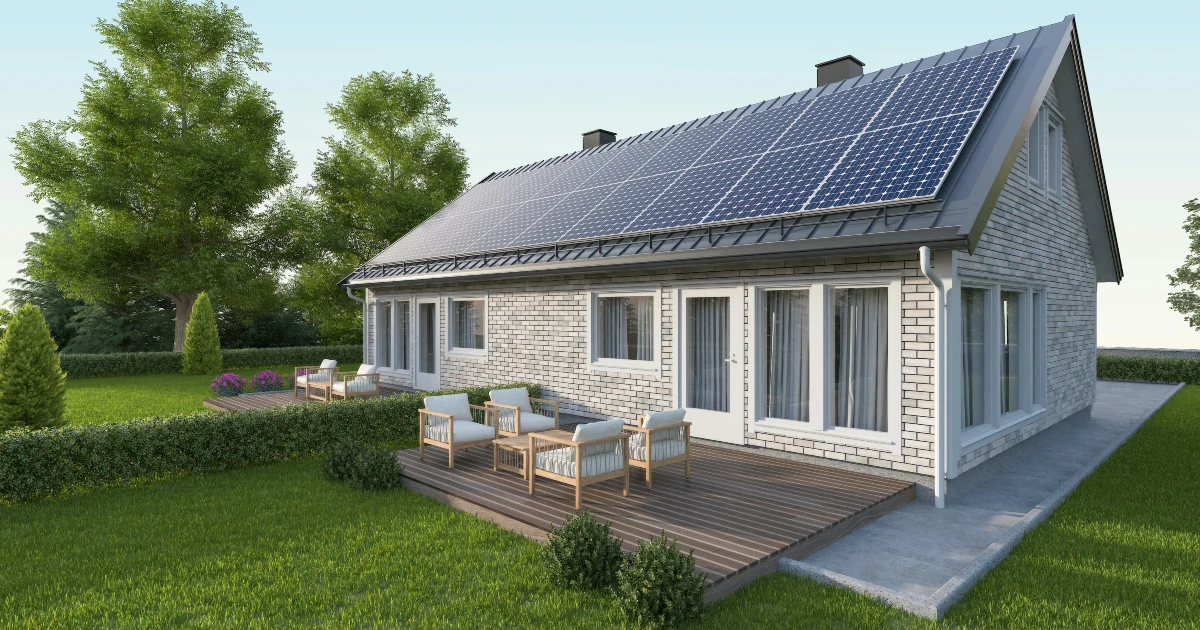
Solar panels on a rental property are a different decision than solar panels on a primary residence. The math is different because the tenant pays the utility bill, not you. The financing is different because the property is a depreciable business asset with access to bonus depreciation. The insurance is different because the panels become part of the dwelling structure and have to be declared. And the tenant-relationship piece doesn't exist on an owner-occupied home but is critical on a rental.
Lots of key decisions. So what exactly is a landlord to do?
This guide walks through what landlords actually need to think about: whether the financial picture works on a unit you don't live in, how to structure tenant agreements when the panels affect the utility bill, what landlord insurance coverage pays for if the panels get damaged or destroyed, what changes at sale or refinance, and the state-by-state context that decides whether the whole thing is worth the trouble.
The short version: solar can absolutely make sense on a rental, but only with explicit attention to three things that don't matter on owner-occupied properties: the tenant-benefit allocation, the lease language, and the insurance declaration.
The financial math is genuinely different on a rental
On a primary residence, the homeowner installs solar and captures 100% of the energy savings on their own utility bill. The payback period (typically 5 to 10 years depending on state and system size) is straightforward.
On a rental, the answer to "who captures the savings" is the entire ballgame. Three configurations cover almost all landlord situations:
- Tenant-paid utilities, landlord-owned panels. Tenant captures all the energy savings. The landlord captures none of them directly. The only landlord upside is property-value lift at sale, a marginal rent premium for "solar-equipped" listings, and tenant retention (a tenant with a $30 electric bill is harder to lose than one with a $180 bill).
- Landlord-paid utilities, landlord-owned panels. Landlord captures 100% of the energy savings. This works on small multifamily and short-term rentals where the landlord pays utilities as part of the rent or nightly rate. Payback math looks essentially identical to owner-occupied.
- Sub-metered or RUBS allocation. The landlord either bills tenants for actual usage or allocates utility costs by a formula. With sub-metering, the landlord captures the savings and rebills the tenant for a reduced utility amount. With RUBS (ratio utility billing system), the math depends on how the formula treats the solar generation.
Layered on top: the federal Investment Tax Credit (ITC) is 30% through 2032, and as a depreciable business asset the system can be written down over five years via MACRS bonus depreciation. For a $25,000 system, that's $7,500 in federal credit plus accelerated depreciation that can offset rental income. On a primary residence, the homeowner gets the 30% credit but no depreciation. The landlord generally comes out ahead on the tax side.
State incentives layer on top of federal. New Jersey, Massachusetts, and New York have aggressive net metering programs that effectively turn the utility into a battery. California moved to net billing (lower than net metering) under NEM 3.0 in 2023, which materially slowed solar payback in that state. Florida still has net metering at 1:1 retail credit. Texas has no statewide net metering but the deregulated market lets you pick a retailer with solar buyback programs.
Pair solar with landlord insurance in Florida that includes ordinance-or-law coverage at full replacement value — without it, the code-upgrade rebuild cost lands on the property owner.
Buy, finance, or lease: three financing paths
The financing decision determines whether you own the asset, who claims the tax credit, and what the lease looks like at sale time.
Cash purchase
Highest ROI but most capital upfront. Typical small-rental system runs $15,000 to $25,000 installed in 2026 (after the federal credit, $10,500 to $17,500). Payback on a single-family rental with landlord-paid utilities is usually 5 to 8 years. With tenant-paid utilities, the payback is essentially the rent premium and asset-value lift, which usually doesn't pencil under 10 years.
Solar loan
Financed purchase. You own the panels, the ITC applies, and depreciation applies. Loan terms are usually 10 to 25 years at rates currently in the 6% to 9% range. Solar loans on rental properties work better than solar leases for most landlords because you keep the tax benefits and have clean ownership at sale.
Solar lease or PPA (power purchase agreement)
The lease or PPA company owns the panels. You buy the electricity from them at a fixed rate (usually 10% to 20% below retail grid rates). No upfront capital, but you don't own the asset, don't claim the ITC, and don't get depreciation. The deal-killer for landlords is what happens at sale: a buyer either has to assume the solar lease (often a deal-blocker), agree to pay it off (often $15,000 to $30,000), or the seller has to handle it. We see more failed rental sales over inherited solar leases than over almost any other due-diligence problem.
For a long-term landlord (10+ year hold), a solar loan or cash purchase is almost always the right answer. For a short-hold flipper or someone considering a sale in the next 5 years, the answer is usually to not install solar at all.
Installation considerations specific to rentals
Roof condition first
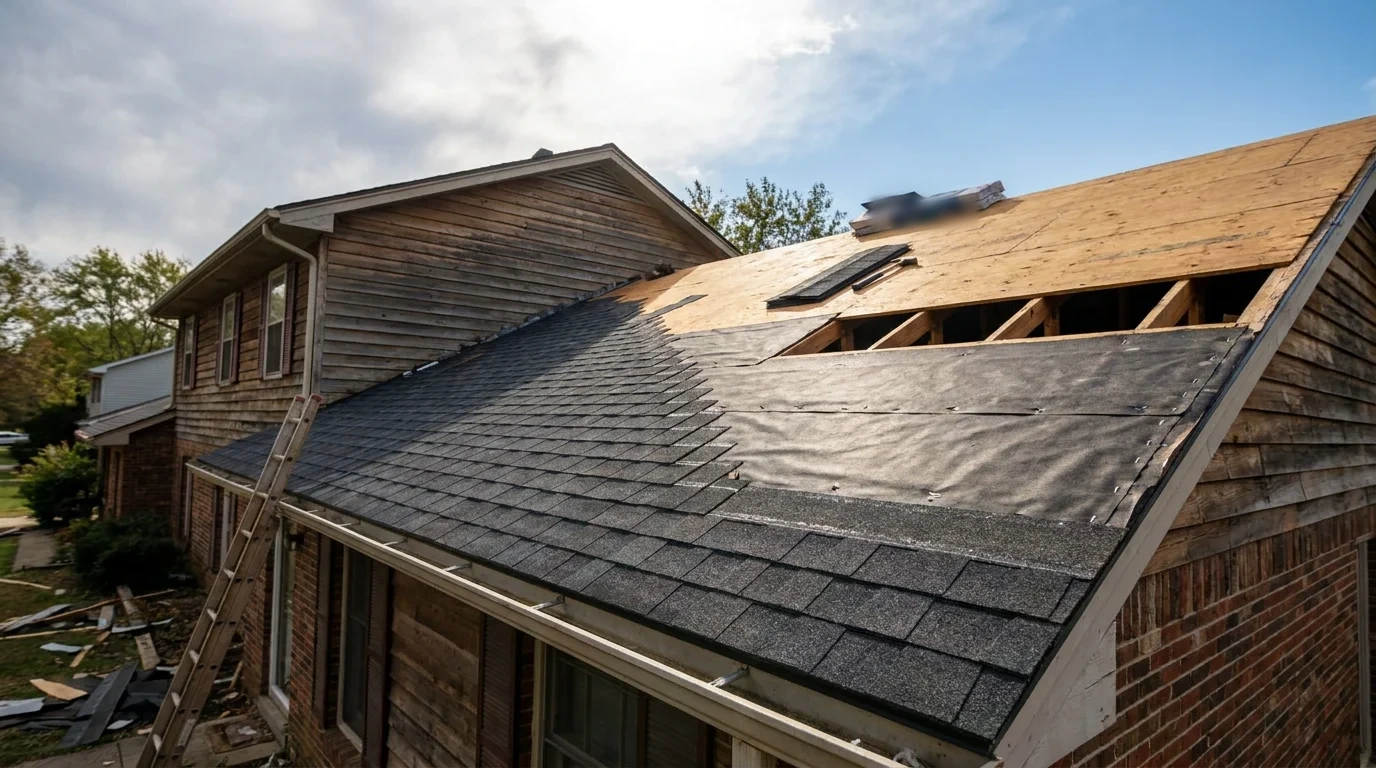
Solar panels last 25 to 30 years. The roof under them needs to last at least that long, or the removal-and-reinstallation cost when the roof is replaced will absorb 30% of the financial benefit. If your roof has less than 5 to 7 years of remaining life, replace the roof first. Removal and reinstallation runs $1,500 to $3,000 per kilowatt-hour of system size, which is material money on a 7-kW system.
Structural assessment on older properties
Rentals built before 1990 may need engineering review for roof load. A typical residential solar array adds 2.5 to 4 pounds per square foot. Most roofs handle it, but older trusses on properties in snow-load regions sometimes don't. The engineering review costs $300 to $600 and is worth it.
Permits and HOA approval
Most jurisdictions permit residential solar without much friction. HOA restrictions are limited by state law in California, Texas, Florida, and 20+ other states under solar access laws. Check before signing the install contract, not after.
Documentation for tenants
The tenant needs to know: system specs, inverter location and access, what to do if a panel malfunctions, who to call for service, and any monitoring access. Include this in the lease addendum at installation or at the next renewal.
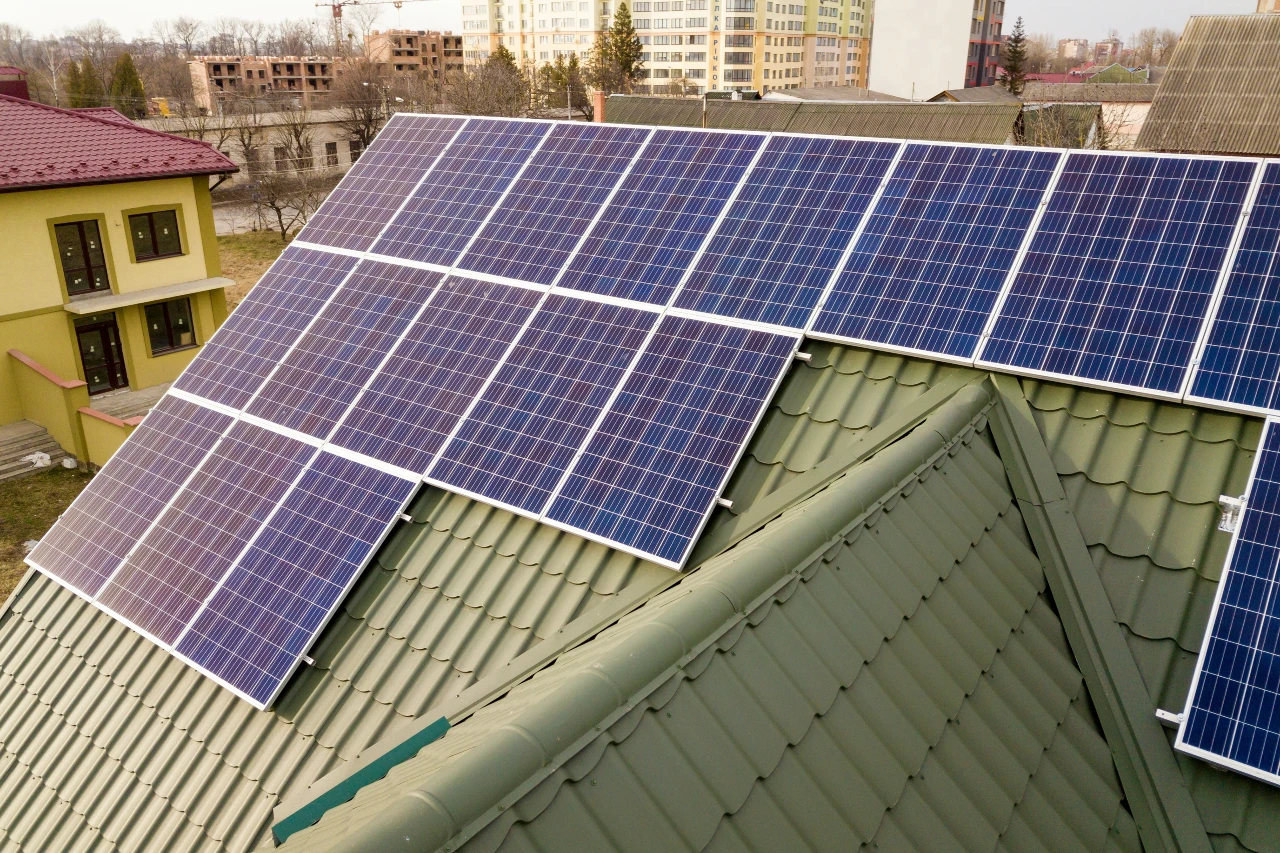
The tenant question: three structures that actually work
The lease has to address solar explicitly because the panels affect the tenant's utility bill, and ambiguity in the lease becomes a dispute at month 6 when the bills don't match what the tenant expected.
Option 1: Landlord keeps utilities, captures all solar savings, raises rent to reflect added value. Tenant pays rent that's $50 to $100 a month higher than comparable properties, plus zero or near-zero electric bill. Landlord captures the savings directly. Works best on small multifamily and short-term rentals where the landlord already pays utilities.
Option 2: Tenant keeps utilities, landlord markets the property as low-utility-cost for premium rent. Tenant captures all the electric savings. Landlord captures a marginal rent premium and reduced tenant turnover. Works on most single-family rentals.
Option 3: Sub-metering or RUBS split. Landlord installs sub-meters, captures most of the solar generation value, rebills tenants for net consumption. Most complicated to administer but captures the most landlord value when utilities were tenant-paid and you want to move some of that value back to the landlord side.
Whatever the structure, document it in the lease before installation. The number-one source of solar disputes on rentals is a tenant who signed a lease before solar was installed, then sees their bill drop and assumes the savings belong to them, while the landlord assumed they were entitled to capture some of it back. The lease addendum solves this with one paragraph.
Insurance implications: what actually changes
Solar panels are commonly excluded from standard landlord policy forms, including most DP3 dwelling fire forms. Whether your policy responds to a solar claim depends on whether the system has been specifically declared and added to the property record. Beyond the coverage question, an undeclared system is a non-disclosure issue that can affect claims unrelated to the panels themselves.
Where the coverage sits once added. When a solar system is added to the policy, roof-mounted panels attached to the dwelling are typically treated as part of Coverage A (Dwelling) at the dwelling's settlement basis. Ground-mounted panels on the property but not attached to the dwelling are typically treated under Other Structures coverage (usually 10% of Coverage A). Either way, the dwelling limit also needs to be raised to reflect the added asset value, because if a covered fire destroys the building, the rebuild cost now includes the solar system.
What changes on the declarations page. Adding a solar system raises the dwelling limit on the policy to reflect the added asset value, and the corresponding premium adjusts accordingly. The exact impact varies by system size, property type, and state.
ACV vs RCV matters more here than on most coverages. Solar panels depreciate. A 10-year-old panel system has an actual cash value of roughly 60-70% of its original cost, while replacement cost is the current installed price. The difference between actual cash value vs replacement cost on a $25,000 system is $7,500 to $10,000 of out-of-pocket exposure if you settle at ACV on a total loss. Most landlords on DP3 with RCV settlement are fine; landlords on DP1 with ACV should think about this. Plug your property details into a landlord insurance calculator for a property-specific number.
Code-upgrade exposure on rebuild. If the panels are destroyed in a covered loss and have to be rebuilt, current code may require fire setbacks, rapid-shutdown devices, and rooftop access requirements that didn't exist when the original system was installed. This is where ordinance or law coverage earns its keep on a solar rebuild.
Leased panels. The leasing company typically requires you to carry insurance covering them. The lease itself dictates the coverage requirements. Read the lease.
Hail and wind damage: the largest claim category
Across our claims data and industry data more broadly, hail and wind damage is the most-claimed peril on landlord policies that include solar. Solar panel glass cracks under hail above 1.5 inches (golf-ball-sized hail). Wind-rated panels handle gusts up to 140 mph, but improperly installed ground-mount arrays can fail at lower speeds.
Manufacturer warranties cover defects (typically 25-year power output warranty, 10-15 year product warranty). They do not cover damage. Your insurance covers damage, subject to the deductible.
For rentals in hail-prone states (Texas, Oklahoma, Kansas, Nebraska, Colorado) or hurricane states (Florida, Louisiana, the Carolinas, coastal Texas), the hail and wind exposure changes the cost-benefit math meaningfully. A solar array that gets totaled by a single major hail event every 8-12 years isn't necessarily uneconomic, but you need to plan for the deductible on each major claim. Steadily writes solar into the storm coverage portion of the policy, so the claim mechanics work the same as any other storm-related loss on the dwelling.
Document at installation: photos of the array from multiple angles, panel serial numbers, install specs, inverter location, mounting hardware. The insurance carrier will ask for all of this on a claim, and the photo-at-install set is what makes the difference between a fast settlement and a six-month back-and-forth.
Sale or refinance with solar on the property
Owned panels generally appreciate the property value on a sale. The premium varies by region but typically lands in the $4 to $7 per watt range for a system in good condition with a clear ownership trail. A 7-kW system that adds $28,000 to $49,000 of asset value is meaningful.
Leased panels are the headache. Buyers can either assume the lease (most lenders allow it but require disclosure), pay it off (which falls on the seller in negotiations), or refuse to close. Most failed rental sales involving solar trace back to a leased system where the lease language and the buyer's expectations didn't align. If you're considering selling a rental within the next 5 years, don't lease panels. Buy them or skip them.
On refinance, lenders sometimes have specific solar provisions. The "20% rule" you'll see in PAAs refers to some lenders capping combined loan-to-value plus solar lease obligations. If you have a leased system and want to refinance, expect more paperwork.
State variations that move the math
California
NEM 3.0 (April 2023 onward) reduced net metering payouts significantly. New solar installs in California are still profitable but payback periods moved from 5-8 years to 9-13 years for systems without battery storage. Pair the system with battery storage to recover most of the payback. AB 2188 limits HOA restrictions on solar. California is still a strong solar state, just not as automatic a yes as it was three years ago.
Florida
High electricity rates, full retail net metering (so far), aggressive growth in residential solar. Hurricane and hail exposure are the offsetting risk. Florida ordinance or law requirements mean a covered loss on a solar-equipped rental triggers code upgrades on the rebuild. Pair solar with adequate ordinance or law coverage.
Texas
Deregulated market means you can pick a retailer with solar buyback programs (Octopus, Rhythm, others). No statewide net metering but many retailers offer 1:1 buyback. Hail exposure is high in the I-35 corridor. Texas property tax law exempts solar from added assessment, which preserves the after-tax math.
New York, Massachusetts, New Jersey
Aggressive net metering, high electricity rates, generous state incentives. Best ROI states in the country for residential solar. New York and Massachusetts have SREC (solar renewable energy certificate) programs that pay landlords for solar generation independent of net metering credits.
Hawaii
Highest electricity prices in the country combined with full sun. Fastest solar payback anywhere, often 4-6 years even at retail purchase prices.
When solar makes sense on a rental
- Property held long-term (10+ years)
- Landlord-owned, ideally cash-purchased or financed (not leased)
- Roof in good shape with 25+ years of remaining life, or replaced before install
- Single-family or small multifamily in a strong solar state
- Tenant-utility-savings can be either tenant-captured (longer tenancy) or landlord-captured (sub-metering or landlord-paid utilities)
- Hail and wind exposure manageable
- Insurance properly declared at the higher dwelling limit
When solar doesn't make sense
- Property is going on the market within 5 years
- Roof needs replacement first (install would have to be removed and re-done)
- Multifamily with master meter and tenant-paid utilities (landlord pays for install, tenant captures all the savings, and the math rarely works)
- HOA or condo restrictions you can't easily clear
- Tenant insists on a leased system (you'd be inheriting the lease at every turnover)
- Coastal hurricane zone where total-loss frequency exceeds 1-in-15 years
- Property has unresolved structural issues
How Steadily handles solar on a landlord policy
Solar systems are part of the property declaration on a Steadily quote when present. The system type, mounting style, install year, and capacity get added to the property record. The dwelling limit is adjusted to absorb the system value, and damage to the panels from a covered loss is handled through the same claim path as any other dwelling damage, subject to the policy deductible. Steadily writes landlord coverage that supports solar systems across all 50 states, on single-family and multifamily configurations.
The bigger structural question on any solar declaration is whether the policy is on DP1 or DP3. DP1 vs DP3 determines whether solar settles at actual cash value (DP1 default) or replacement cost (DP3 default), and for a depreciating asset like solar, the difference between those two settlement bases is the biggest variable in any total-loss claim. Most landlords with solar should be on DP3.
The claim path for solar follows the same procedure as any other property claim, walked through in the broader landlord insurance claims process guide. Police report (for theft or vandalism), photos before any repair, carrier notification within the policy's reporting window, separate documentation of solar damage from any other property damage on the same loss.
Frequently asked questions
Does landlord insurance cover solar panels?
Solar panels are commonly excluded from standard landlord policy forms and typically require the system to be specifically declared and added to the policy at quote or via endorsement. Once added, roof-mounted panels are usually handled under Coverage A (Dwelling) at the dwelling's settlement basis, and ground-mounted panels under Other Structures. The dwelling limit also needs to be raised to reflect the added system value, otherwise a covered total loss only pays out to the original dwelling limit.
How much does landlord insurance change with solar panels added?
Adding a solar system raises the dwelling limit to absorb the system value, and the premium adjusts to match the higher coverage A. The exact impact depends on system size, property type, and state, and is generally modest relative to the asset value being protected.
Should I tell my landlord insurance carrier about solar panels?
Yes, always. Solar systems are commonly excluded from standard landlord policies and require specific declaration to be covered at all. Beyond the coverage question, undeclared modifications are a non-disclosure issue that can affect claims unrelated to the panels themselves.
What happens to solar panels when I sell a rental?
Owned panels transfer with the property and typically add $4 to $7 per watt of installed capacity to the sale price. Leased panels require the buyer to assume the lease or the seller to pay it off; this is where most solar-related sale problems come from.
Can tenants benefit from solar on a rental?
It depends entirely on who pays the utility bill. If the tenant pays utilities, the tenant captures the energy savings directly. If the landlord pays utilities, the tenant doesn't see direct savings unless the rent is structured around utility credits.
Are solar panels worth it on a rental property?
For long-hold rentals in strong solar states with cooperative roof and tenant structures, yes. For short-hold properties, properties needing roof work, or properties where the savings flow entirely to the tenant and don't return to the landlord, often no.


.jpg)




.png)