
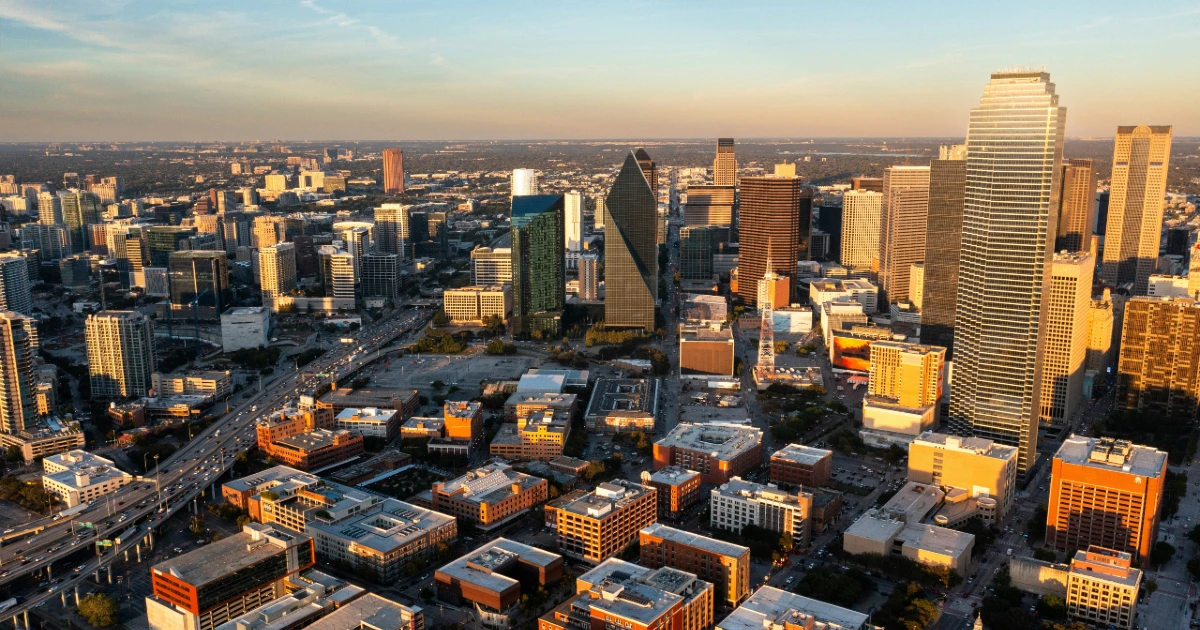
The Dallas-Fort Worth metroplex has emerged as one of the nation's hottest markets for rental property investment, and for good reason. With a booming economy, steady population growth, and investor-friendly policies, DFW consistently ranks among the best cities in Texas for rental properties. Understanding what makes this market tick can mean the difference between a profitable investment and a costly mistake.
The metroplex isn't just growing; it's transforming. Corporate relocations from high-tax states, a thriving job market, and relatively affordable housing compared to coastal cities have created consistent rental demand that shows no signs of slowing. But success in DFW requires more than just buying property and hoping for the best.
In this guide, we'll explore what you need to know about investing in rental properties in this dynamic market – or, if you're an experienced investor, what you'll need to know before buying another property in DFW.
Why Dallas-Fort Worth stands out for rental property investment
The numbers tell a compelling story. The DFW metroplex added over 100,000 new residents annually in recent years, making it one of the fastest-growing metro areas in the country. This population boom isn't random; it's driven by economic fundamentals that create ideal conditions for rental property investment.
Major corporations continue choosing DFW as their headquarters or establishing significant operations here. From tech giants to financial services firms, the corporate migration brings high-earning professionals who need places to live. Many of these relocating employees initially rent while they familiarize themselves with different neighborhoods, creating steady demand for quality rental properties.
Texas's business-friendly environment extends to real estate investors. The state is widely recognized as one of the most landlord-friendly states, with reasonable regulations that don't overburden property owners. Unlike some markets where rent control and tenant-favorable laws can squeeze margins, Texas provides a balanced framework that protects both landlords and tenants without making it prohibitively difficult to operate rental properties profitably.
The market's diversity is another major advantage. DFW isn't a single city but a sprawling metroplex encompassing Dallas, Fort Worth, Arlington, Plano, Frisco, and dozens of other communities. This gives investors options across different price points, neighborhood types, and renter demographics. You can invest in urban apartments near downtown Dallas, suburban single-family homes in family-friendly Plano, or properties near the growing business districts of Fort Worth.
Understanding DFW market trends and opportunities
Market trends in Dallas-Fort Worth show resilience even during broader economic uncertainty. While property values have appreciated significantly over the past decade, the market hasn't experienced the extreme volatility seen in some coastal cities. This stability makes DFW attractive for long-term rental property investment strategies.
Rental rates have climbed steadily alongside population growth. According to recent market data, median rents in DFW have increased consistently, though the pace varies by neighborhood and property type. Single-family homes in desirable school districts command premium rents, while multifamily properties near employment centers maintain strong occupancy rates.
The short-term rental market in Dallas presents additional opportunities. With the city's convention centers, corporate travel, and sports tourism, short-term rentals can generate higher returns than traditional leases in certain locations. However, investors should research local regulations carefully, as rules vary by municipality within the metroplex.
Emerging submarkets deserve attention. Areas like Frisco and McKinney in the northern suburbs have seen explosive growth, driven by excellent schools and new corporate campuses. Fort Worth's near-southside neighborhoods are experiencing revitalization, offering potential value-add opportunities. Meanwhile, established areas like Richardson and Arlington continue providing stable, predictable returns for conservative investors.
The question many investors ask is: are rental properties a good investment in DFW right now? The answer depends on your strategy and timeline. For buy-and-hold investors focused on cash flow and long-term appreciation, the fundamentals remain strong. The key is understanding that success requires careful property selection, realistic financial projections, and proper management.
Calculating your return on investment for a rental property
Before diving into any DFW investment, you need to understand the numbers. Knowing how to calculate return on investment for a rental property helps you compare opportunities and make informed decisions. The most common metrics include cash-on-cash return, cap rate, and gross rental yield.
Cash-on-cash return measures your annual pre-tax cash flow against the actual cash you invested. If you put $50,000 down and generate $5,000 in annual cash flow after all expenses, your cash-on-cash return is 10%. This metric helps you understand how efficiently your invested capital is working.
Capitalization rate (cap rate) is calculated by dividing net operating income by property value. If a property generates $30,000 in annual NOI and is worth $400,000, the cap rate is 7.5%. In DFW, cap rates typically range from 5% to 8% depending on location, property condition, and class. Prime locations with lower risk generally have lower cap rates, while emerging areas may offer higher cap rates with more potential volatility.
A rental property investment calculator can streamline these computations. These tools factor in purchase price, down payment, interest rates, property taxes, insurance, maintenance costs, and expected rental income to project your returns. Given DFW's relatively high property taxes compared to other states, accurate calculation is essential.
Don't forget to account for appreciation potential. While cash flow matters, property value growth over time significantly impacts your total return. DFW's strong fundamentals suggest continued appreciation, though past performance doesn't guarantee future results. Conservative investors typically project modest appreciation rather than banking on rapid value increases.
Expense estimation requires local knowledge. Rental property costs in Texas include property taxes that can range from 1.5% to 2.5% of assessed value annually, insurance, maintenance, property management fees (typically 8-10% of rent), and occasional vacancy losses. Underestimating these costs is a common mistake that can turn a seemingly profitable investment into a cash drain.
Finding investment loans for a rental property in DFW
Financing strategy significantly impacts your returns. Most DFW rental property investors use leverage to maximize their purchasing power and returns, but understanding your options is crucial for success.
Conventional investment loans for a rental property typically require 20-25% down payments, though some lenders may accept 15% for highly qualified borrowers. Interest rates on investment properties run higher than primary residence mortgages, usually 0.5% to 1% above standard rates. Your credit score, debt-to-income ratio, and cash reserves all factor into loan approval and terms.
Many investors explore rental property loans in Texas through local and regional lenders who understand the DFW market specifically. These lenders may offer more flexibility than national banks and can provide valuable insights about neighborhoods and property types that perform well.
Portfolio lenders represent another option for investors planning to acquire multiple properties. These lenders hold loans in their own portfolios rather than selling them to secondary markets, which allows more creative underwriting. If you're building a rental property empire in DFW, establishing relationships with portfolio lenders can streamline future acquisitions.
For experienced investors, commercial loans or blanket mortgages covering multiple properties may offer better terms. These products typically require substantial assets and experience but can reduce per-property costs and simplify management of larger portfolios.
Cash purchases aren't uncommon in DFW's investment market, particularly for properties needing renovation. Cash buyers can negotiate better prices, close quickly, and avoid financing contingencies that might cause sellers to choose their offers over financed competitors. However, paying cash means tying up capital that could potentially generate returns elsewhere, so this strategy requires careful consideration of your overall financial picture.
Key considerations for real estate investment in the Dallas Fort Worth area
Insurance is one of the largest fixed operating costs DFW landlords carry, and it's the line item most investors under-budget when running yield math. Texas landlord insurance premiums typically run higher in North Texas due to hail alley exposure — expect percentage-based wind and hail deductibles (1-5% of insured value) on almost every policy. Factor that into breakeven rent, not just the annual premium.
Location analysis separates successful DFW investors from those who struggle. The metroplex's size means that averages hide significant variation. A property in downtown Dallas performs very differently from one in suburban Mansfield, even if purchase prices are similar.
School quality drives single-family rental demand. Families with children prioritize highly-rated school districts, and they'll pay premium rents for that access. Districts like Plano ISD, Coppell ISD, and Carroll ISD consistently attract family renters willing to sign longer leases and maintain properties well. Research school ratings before investing if you're targeting family renters.
Employment centers influence rental demand for apartments and condos. Properties within reasonable commuting distance to major employers like DFW Airport, Legacy West in Plano, or downtown Dallas's business district maintain strong occupancy. As remote work evolves, this dynamic may shift, but proximity to jobs remains a fundamental driver of rental demand.
Property age and condition affect both purchase price and ongoing expenses. Newer properties typically require less maintenance and appeal to tenants willing to pay higher rents, but they cost more upfront. Older properties offer lower entry prices but may need substantial updates to command competitive rents. Many successful DFW investors find their sweet spot with properties built in the 1990s or early 2000s that need cosmetic updates rather than major systems replacements.
The neighborhood life cycle matters tremendously. Emerging neighborhoods offer appreciation potential but come with uncertainty about future development and tenant quality. Established neighborhoods provide predictability but may have limited appreciation upside. Declining areas might seem like bargains but can trap investors in situations where tenant quality deteriorates and property values stagnate or fall.
Property management deserves serious thought. Becoming a landlord in Texas involves responsibilities that extend beyond collecting rent. Will you self-manage or hire a property management company? Self-management saves money but requires time, local presence, and expertise in maintenance, tenant screening, and landlord-tenant law. Professional management costs 8-10% of rent but handles day-to-day headaches and often pays for itself through better tenant retention and maintenance cost management.
Structuring your investment for success
Business structure impacts liability protection, taxes, and operational flexibility. Many DFW investors choose to set up an LLC in Texas to hold rental properties. An LLC separates personal assets from business liabilities, provides tax flexibility, and creates a professional structure for scaling your investment business.
LLCs aren't right for every investor. Single-property owners sometimes find the administrative overhead exceeds the benefits, while large portfolio investors might explore more complex structures like series LLCs or trusts. Consulting with a Texas-based real estate attorney and CPA helps you choose the optimal structure for your specific situation and long-term goals.
Insurance requirements extend beyond standard homeowners policies. Landlord insurance covers different risks than owner-occupied home insurance, including liability protection for tenant injuries, loss of rental income during repairs, and property damage from named perils. Given DFW's weather-related risks including hailstorms and tornadoes, comprehensive coverage is essential, not optional.
Tax planning can significantly impact your net returns. Rental property owners can deduct mortgage interest, property taxes, insurance, maintenance, and depreciation. Understanding these deductions and properly documenting expenses throughout the year maximizes tax benefits. Texas's lack of state income tax already provides an advantage over many other states, but federal taxes still require attention.
Risks and challenges to consider
No investment comes without risks, and DFW rental properties are no exception. Property taxes in Texas rank among the highest nationally, and rates can increase substantially over time as property values rise. Investors must budget conservatively for tax increases that can erode cash flow if rental rates don't keep pace.
Market saturation in certain segments presents concern. The massive apartment construction boom in some DFW submarkets has created temporary oversupply situations where landlords compete aggressively for tenants. While long-term fundamentals remain strong, short-term pressure on rents and occupancy can challenge investors who overleverage or underestimate holding costs.
Economic downturns affect rental markets differently than owner-occupied housing. During recessions, some homeowners become renters, increasing rental demand. However, job losses can make rent collection challenging and increase tenant turnover. DFW's diversified economy provides some protection, but no market is recession-proof.
Regulatory changes represent ongoing risk. While Texas remains landlord-friendly, local municipalities can and do implement new regulations. Short-term rental restrictions, occupancy limits, and inspection requirements can emerge, affecting investment returns. Staying informed about local politics and proposed regulations helps investors anticipate and adapt to changes.
Maintenance and capital expenditures inevitably arise. Roofs, HVAC systems, and appliances all have finite lifespans. In DFW's climate, air conditioning systems work hard, and hot summers accelerate wear on exterior components. Budgeting at least 1% of property value annually for maintenance, with additional reserves for major replacements, prevents financial stress when inevitable repairs arise.
Getting started with your DFW investment journey
New investors often feel overwhelmed by information and options. Starting small makes sense for most people. A single-family home in an established neighborhood provides a manageable entry point to learn the business without excessive complexity or risk. As you gain experience with tenant relations, maintenance management, and financial tracking, you can expand strategically.
Building a team accelerates success and reduces costly mistakes. Your team should include a knowledgeable real estate agent specializing in investment properties, a reliable contractor for repairs and renovations, an experienced property manager (even if you plan to self-manage initially, having someone to consult is valuable), an insurance agent familiar with landlord policies, and a CPA who understands rental property taxation.
Due diligence cannot be shortcut. Professional inspections, title reviews, and neighborhood research protect your investment. In hot markets, the temptation to waive inspections or rush decisions is strong, but experienced investors know that patient, thorough evaluation prevents expensive mistakes.
Financial preparation extends beyond the down payment. Lenders want to see cash reserves covering 3-6 months of mortgage payments, plus funds for immediate improvements or repairs. Even if you find the perfect property, insufficient reserves can derail financing or leave you vulnerable to unexpected expenses immediately after purchase.
Market education is ongoing. Attend local real estate investment meetups, follow DFW market reports, and build relationships with other investors. The Dallas-Fort Worth real estate community is active and generally welcoming to newcomers willing to learn. The insights you gain from experienced investors who've weathered multiple market cycles prove invaluable.
Own a rental property in DFW? Get a free landlord insurance quote in minutes:
The bottom line on DFW rental property investment
Dallas-Fort Worth offers compelling opportunities for rental property investment backed by solid fundamentals: population growth, economic diversity, business-friendly policies, and relatively affordable entry points compared to many major metros. However, success isn't automatic. It requires careful property selection, realistic financial analysis, proper business structure, and ongoing active management or excellent property management partners.
The investors who thrive in DFW's market approach it professionally, not as a get-rich-quick scheme. They understand their numbers, know their neighborhoods, maintain proper insurance coverage, and treat rental property ownership as a business requiring attention and expertise. They also recognize that investing in rental properties is a long-term wealth-building strategy, not a short-term speculation.
For those willing to do the work, study the market, and make informed decisions, the Dallas-Fort Worth metroplex presents opportunities to build substantial wealth through real estate. The combination of cash flow from rents, tax benefits, mortgage paydown, and long-term appreciation creates multiple paths to returns. Whether you're looking to supplement your income, build long-term wealth, or create a full-time real estate investment business, DFW's rental property market offers the scale, diversity, and fundamentals to support your goals.
The key is starting with education, proceeding with caution, and building systematically. Your first property might not make you wealthy, but it will teach you the business and set the foundation for future success. And in a market as dynamic and opportunity-rich as Dallas-Fort Worth, that foundation can support remarkable growth for investors who stay disciplined, informed, and committed to the long-term vision.




.jpg)




.png)