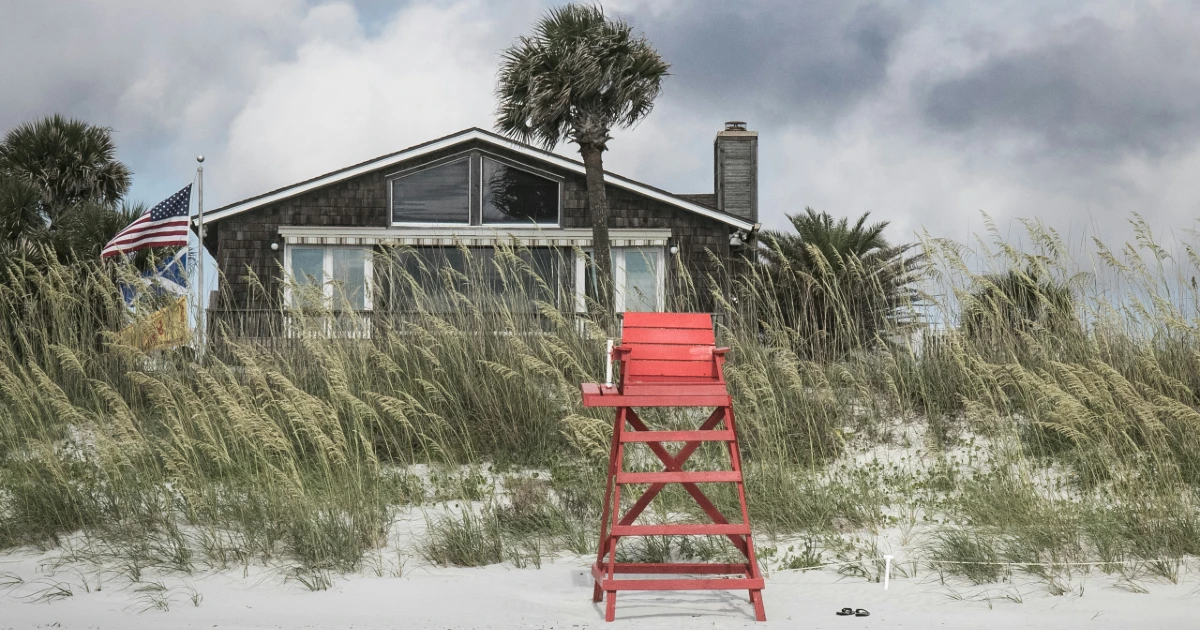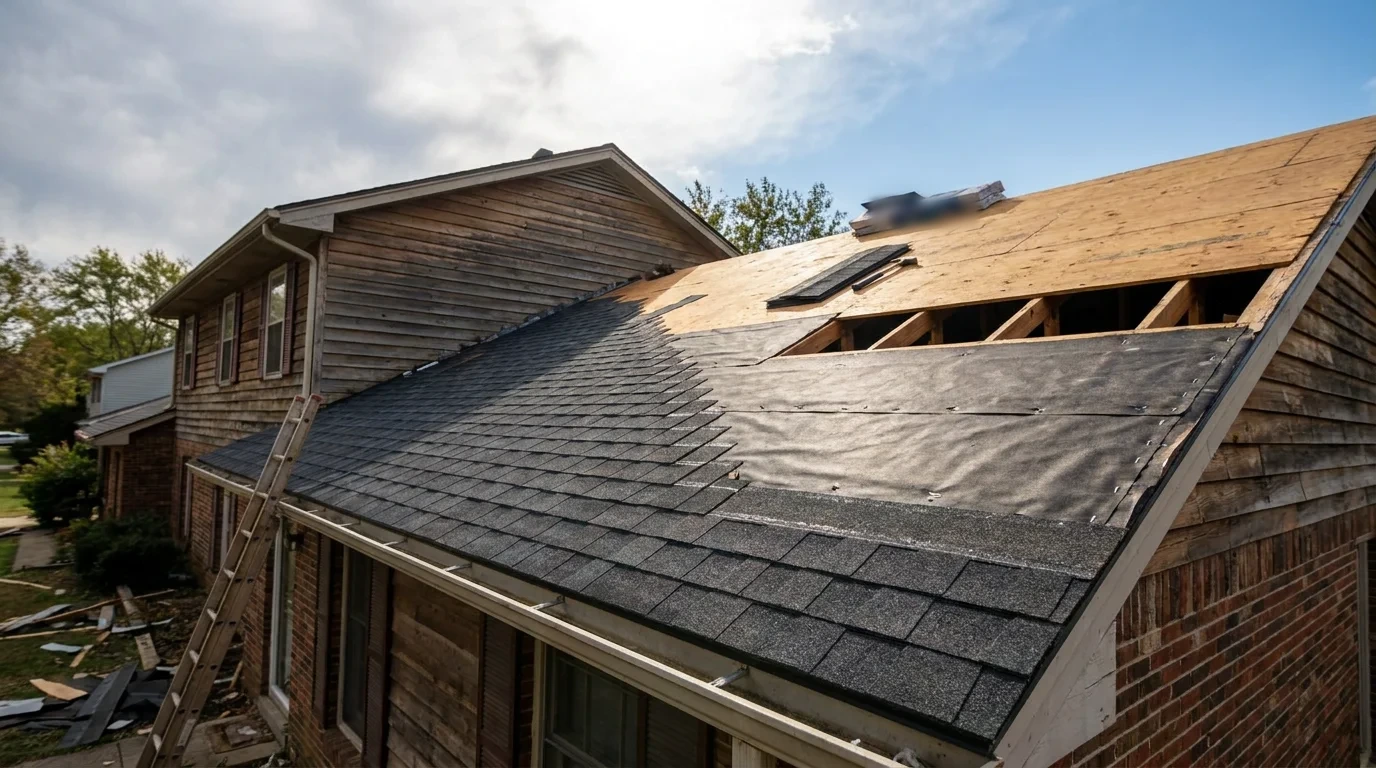
A landlord closes on a three-bedroom rental outside Lake Charles, sets up insurance through the same agent who wrote the policy on her primary home, and files the paperwork away.
Eighteen months later a storm takes part of the roof. She opens the policy for the first time, and on page four there's an endorsement titled "Windstorm or Hail Exclusion." The roof isn't covered. Neither are the shingles scattered across the neighbor's yard, and neither is the rent she won't collect while the house is tarped.
That situation is more common than it should be, and it's the reason so many Louisiana landlords end up asking whether they need separate wind coverage. The honest answer is that it depends on how your current policy handles wind, which in turn depends a lot on where the property sits.
If you own landlord insurance in Louisiana, wind can show up on your policy in one of three ways, and only one of them means you need a second policy.
The three ways wind shows up on a Louisiana rental policy
Before you shop for anything, figure out which of these describes the coverage you already have:
- Wind is included, and it shares the same deductible as everything else.
- Wind is included, but it comes with its own deductible (or two of them), usually a percentage of the dwelling limit rather than a flat dollar amount.
- Wind is excluded entirely, and you have to buy it back or insure it under a separate policy.
The first setup has become rare for rentals anywhere near the Gulf. The second is the most common arrangement in the state today. The third is where people get hurt, mostly because they don't realize they're in it.
Wind included with a separate deductible
Most Louisiana policies that cover wind treat it differently from a kitchen fire or a burst of vandalism. The Louisiana Department of Insurance says as much, which notes that a policy "may have a separate hurricane, named-storm or wind and hail deductible."
That separate deductible is typically a percentage of your dwelling limit. On a rental insured for $250,000, a 2% named-storm deductible works out to $5,000 out of pocket before the policy pays, compared with the $1,000 or so you might owe on a theft claim.
Some policies split it further. A named-storm or hurricane deductible applies when a storm with a name causes the damage, and a separate wind/hail deductible applies to wind and hail from storms that never got one, like the spring thunderstorms and hail that roll across north Louisiana every year. \The math behind
The math behind how hurricane deductibles work is the same in Louisiana as it is in Florida: the percentage applies to your dwelling limit, not to the damage, even though the state rules behind the two markets differ.
This is still full wind coverage. You just carry more of the first dollars yourself.
Wind excluded and covered separately
Here's where the "separate wind coverage" question really comes from. Some policies, especially on property close to the coast, carry a windstorm and hail exclusion.
LDI's guide spells it out plainly: "Some homeowners policies, especially for property along the coast, exclude coverage for wind and hail damage." When that exclusion is on your policy, a hurricane that tears off your roof is not a covered loss under that policy, no matter how good the rest of the coverage looks.
You have two ways to close that gap. Some carriers will add wind back for an extra premium (agents sometimes call this a wind buyback). If yours won't, you buy separate windstorm insurance, usually written as a wind and hail policy, and for many coastal owners that means the Louisiana Citizens Property Insurance Corporation.
Citizens was created by the Legislature to serve as the insurer of last resort for property owners who can't find coverage in the regular market, and LDI notes that it offers wind and hail coverage for exactly this situation. Any Louisiana-licensed property and casualty agent can place a Citizens policy for you.
So yes, in that case, you do need separate wind coverage. Two policies, two premiums, and two sets of paperwork when something goes wrong.
Why it depends so much on where the rental is
Louisiana isn't one insurance market. It's more like three or four, stacked from the Gulf northward.
Along the coast, from Cameron and Vermilion parishes east through Terrebonne, Lafourche and Plaquemines, carriers worry about hurricane wind more than anything else, and their appetite shows it. Excluding wind, raising the wind deductible, or declining to write a property at all are the tools insurers use to manage how much coastal exposure they hold, and owners closest to the water feel it first.
Move inland to the Lafayette, Baton Rouge and New Orleans metros and you're more likely to find wind included with a separate named-storm deductible.
Up north, in Shreveport or Monroe, the bigger wind worry is usually spring thunderstorms, hail and tornadoes rather than hurricanes, although named storms do reach that far often enough that you shouldn't assume they don't.
Why does an insurer care so much about a few dozen miles? Because hurricane losses arrive all at once. A fire claim hits one house. A storm like Laura in 2020 or Ida in 2021 produces tens of thousands of claims in the same week, and a carrier that's heavily concentrated along the coast can't absorb that the way it absorbs scattered losses. Exclusions and percentage deductibles are how insurers limit that concentration.
For you, that means two rentals with the same carrier can carry very different wind terms. Landlord insurance in Lake Charles often looks different from a policy on a comparable house in Shreveport, while landlord insurance in New Orleans tends to sit somewhere in between, shaped by the city's mix of older raised homes and its storm history. If you own in more than one part of the state, read each policy on its own; don't assume what's true on one property holds for the others.
Is wind coverage required on a Louisiana rental?
There's no state requirement that you insure a rental you own free and clear against wind. Your lender is a different story. If there's a mortgage on the property, the loan almost certainly requires you to insure the structure against the main perils it faces, and in Louisiana that includes wind. A lender that finds a wind exclusion on your policy with no separate wind policy behind it can buy coverage on your behalf and add the cost to your loan, and lender-placed coverage is rarely a bargain.
Even without a lender, going without wind on a coastal rental is a big bet. The roof, siding and windows are the parts of the house most likely to be damaged in a storm, and they're also the parts that keep tenants in the unit. Insurance is one of the bigger line items when you're buying a rental property in Louisiana, right up there with financing and property taxes.
What to check on your policy so you aren't caught without wind coverage
All right, time to pull out the declarations page. This takes about ten minutes, and it's the ten minutes that would have saved our Lake Charles landlord a very bad week.
- Look for an exclusion endorsement with "windstorm," "wind" or "hail" in the title. The declarations page lists every endorsement attached to the policy. If you see a wind or hail exclusion, your policy does not cover wind, period.
- Find every deductible and write each one down in dollars. Most Louisiana policies list an all-perils deductible plus a named-storm, hurricane or wind/hail deductible. A 2% deductible on a $300,000 dwelling limit is $6,000; a 5% deductible is $15,000.
- If you carry a separate wind policy, compare the two side by side. Check that the dwelling limit on the wind policy is high enough to rebuild, that the effective dates line up, and that you understand how the two policies divide a claim when a storm causes several kinds of damage at once.
- Check whether the wind policy replaces lost rent. A roof claim on a rental usually comes with a period when the unit can't be occupied, and loss of rent coverage is what replaces that income while a covered loss is repaired. If your wind coverage sits on a separate policy, confirm what it does and doesn't include.
- Don't wait for a storm to fix a gap. LDI warns that "most companies will suspend the sale of insurance once a hurricane or tropical storm is approaching," which means the week a storm shows up in the Gulf is usually too late to add wind. In practice, new coverage is typically paused once a watch or warning goes up and doesn't resume until after it's lifted.
- Ask about roof discounts. LDI's guide lists FORTIFIED roof discounts among the ones worth asking your agent about, and a stronger roof is one of the few things you control that can bring wind costs down.
One more thing that trips people up: wind coverage and flood coverage are separate, even when the same storm causes both. Flood is excluded from standard property policies, and in Louisiana most owners buy it through the National Flood Insurance Program or a private flood carrier. A rental with solid wind coverage and no flood policy is still exposed.
Separate policy or one policy: Which is better?
On the other hand, splitting coverage across two policies isn't always a bad deal. Sometimes it's the only way to insure a coastal property at all, and a Citizens wind policy paired with a standard policy that excludes wind can cost less than the alternatives on certain properties.
Still, if you can get wind included on one policy, there's a lot to like about it. One adjuster, one deductible structure, one renewal date, and no argument between two insurers about which one owes what after a storm. The trade-off is usually a higher named-storm or wind/hail deductible, which is why the dollar amount matters more than the percentage when you compare quotes. (Insurance is only one piece of rental property costs in Louisiana, and it looks different once you see it next to taxes and maintenance.)
A full landlord policy through Steadily in Louisiana keeps wind and hail on the same policy as everything else, so there's no second wind policy to piece together. How the wind deductible works depends on how close the property sits to the coast. However a policy words it, wind and hurricane coverage and storm and hail coverage both turn on the same question after a claim: what caused the damage.
Common questions
Is wind and hail insurance required in Louisiana?
Not by state law for a rental you own outright. Mortgage lenders, though, generally require coverage against the major perils a property faces, and in Louisiana that includes wind. If your policy excludes wind, your lender will usually expect to see a separate wind policy.
How do I know if my policy excludes wind?
Check the endorsements listed on your declarations page. A wind exclusion usually appears as an endorsement with "windstorm" or "wind and hail" in its title. If you're unsure, ask your agent directly whether a hurricane that damages your roof would be covered under the policy.
Does wind coverage include flood damage from a hurricane?
No. Wind and flood are separate perils, even in the same storm. Flood is excluded from standard property policies and is usually insured through the National Flood Insurance Program or a private flood policy.
Getting wind coverage sorted before storm season
In short, you need separate wind coverage only if your current policy excludes it. The way to know is to read the declarations page, not to assume. If you'd rather simplify things, get a quote on a full landlord policy through Steadily, look at every deductible in dollars, and do it long before the next storm shows up on the forecast.