
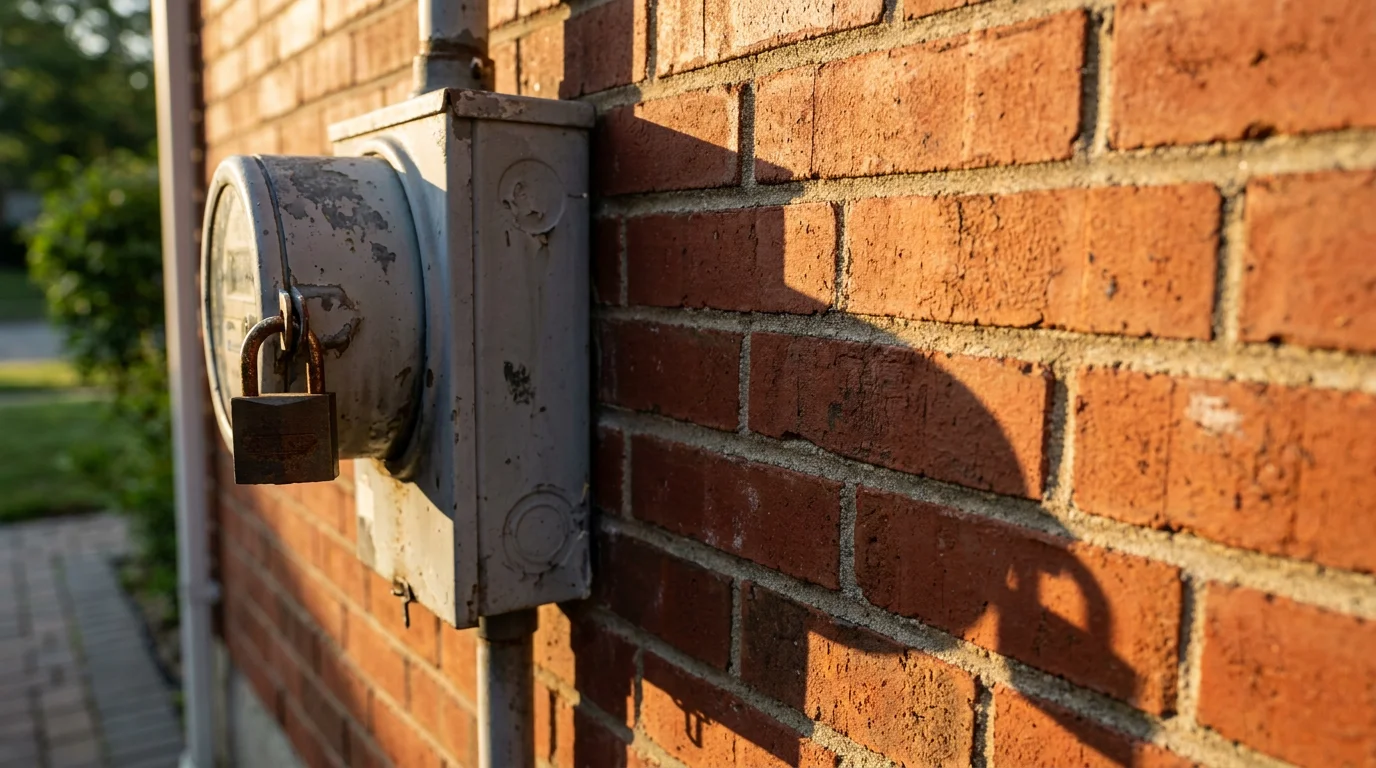
One wrong move on utilities or a security deposit can cost you real money and eat directly into your cash flow. Shut off a tenant's water to force a move-out and you face a criminal fine under O.C.G.A. § 44-7-14.1. Keep a deposit without the required paperwork and you can owe three times the amount withheld plus attorney's fees. If you own rental property in Georgia, understanding GA tenant rights is how you stay on the right side of O.C.G.A. Title 44, Chapter 7 and the Safe at Home Act (HB 404), effective July 1, 2024, which added a non-waivable habitability warranty, a deposit cap, and a mandatory pre-eviction notice.
Georgia landlord-tenant law at a glance
Title 44 governs residential rentals in Georgia. Georgia enacted the Safe at Home Act, HB 404 (Act 392), on April 22, 2024, with an effective date of July 1, 2024. HB 404 applies to residential leases that landlords and tenants enter into or renew on or after that date.
- Habitability warranty: Every residential lease now includes an express, non-waivable warranty that the premises are fit for human habitation.
- Deposit cap: Security deposits may not exceed two months' rent.
- Pre-eviction notice: A nonpayment eviction filing requires three business days' written notice first.
- Utility definition: HB 404 redefined "utilities" for the utility-shutoff prohibition.
The DCA handbook (revised 08/29/24) is the state's plain-language reference for both sides.
Prohibited landlord actions in Georgia
Georgia bans self-help eviction in all its forms: without a court order you cannot force a tenant out, even for unpaid rent.
- Suspending utilities: Section 44-7-14.1 makes it a crime to cut light, heat, cooling, or water before final disposition of a dispossessory.
- Lockouts and forcible ejection: No statute authorizes self-help, and Georgia case law treats it as trespass.
- Retaliation: Section 44-7-24 presumes retaliation for adverse action within three months of protected tenant activity.
- Discrimination: 42 U.S.C. § 3604 and O.C.G.A. § 8-3-202 bar discrimination in rental decisions based on the protected classes.
Shutting off utilities
Cutting off a tenant's light, water, heat, or cooling to pressure a move-out is a crime. O.C.G.A. § 44-7-14.1(b) states: "It shall be unlawful for any landlord knowingly and willfully to suspend the furnishing of utilities to a tenant until after the final disposition of any dispossessory proceeding by the landlord against such tenant." Conviction carries a fine of up to $500. HB 404 updated the definition of "utilities" to mean cooling, heat, light, and water service, so disabling the air conditioning in August counts. The DCA handbook says a separate rule applies when a landlord receives electric service from a PSC-regulated provider such as Georgia Power: the landlord must make sure the power company gives the tenant at least five days' written notice before a shutoff.
Changing locks or removing doors
Lockouts are illegal in Georgia regardless of how far behind the tenant is on rent. Without a court order, Georgia Legal Aid explains, "a landlord is prohibited from changing locks, forcing a tenant to move, or shutting off utilities." Georgia courts have treated forcible self-help as trespass for decades: Forrest v. Peacock (1987) (trespass for ejecting a tenant without legal process) and Swift Loan (trespass for changing the lock while the tenant still had possession). Section 44-7-14.1 does not itemize pulling off doors or windows, but doing it to force a move-out takes possession without a court order and carries the same trespass exposure.
Retaliatory and wrongful eviction
Since July 1, 2019, O.C.G.A. § 44-7-24 has prohibited landlord retaliation. It protects tenants who, in good faith, exercise a legal right, give notice to repair, complain to a code-enforcement agency or public utility, or organize with other tenants over habitability problems. If you file a dispossessory, cut services, raise rent, terminate the lease, or interfere with the tenant's rights within three months of that protected activity, the law presumes retaliation.
- Rebuttal: You may rebut the presumption with an inspection within the prior 12 months by a federal, state, or local code-compliance certification program or by a licensed building inspector that certified compliance.
- Still-permitted evictions: You may still file for delinquent rent, property damage, threats to safety, or holding over after notice.
A losing retaliation claim costs one month's rent plus $500 and court costs. If your conduct was willful, wanton, or malicious, it also costs attorney's fees. Retaliation is also an affirmative defense the tenant can raise in your eviction case.
Discriminatory practices
You cannot refuse to rent, set different terms, advertise a preference, or screen applicants differently based on race, color, religion, sex, disability, familial status, or national origin. That applies to listing language, application criteria, deposit amounts, and lease clauses alike. The fair housing section below covers protected classes and the local ordinances that add to them.
Habitability standards landlords must meet
HB 404 added O.C.G.A. § 44-7-13(b), which imposes a duty of habitability on every residential landlord by deeming every lease to include a provision "that the premises is fit for human habitation." That duty of habitability is not optional: O.C.G.A. § 44-7-2(b)(1) bars waiving any of the rights, duties, or remedies in § 44-7-13, so a waiver clause in your lease buys you nothing.
What "fit for human habitation" means in practice is still open. A Law Review article confirms the term "is currently undefined," and the Georgia Appleseed bench card advises magistrate judges to consult state minimum codes, local housing and property maintenance codes, or nuisance laws in the meantime. Until appellate courts fill in the standard, the defensible practice for an owner is keeping heat, plumbing, water, electrical systems, smoke detectors, and the structure in working order and fixing code violations promptly.
Security deposit rules
HB 404 capped deposits and left Georgia's older deposit-handling rules intact:
- Two-month cap: Under new O.C.G.A. § 44-7-30.1, "No landlord shall demand or receive a security deposit in an amount that exceeds the equivalent of two months' rent." The cap is non-waivable, and § 44-7-30 defines "security deposit" to include damage deposits and other deposit-like charges, including advance rent and pet deposits, so you cannot stack a pet deposit on top.
- Escrow account: O.C.G.A. § 44-7-31 requires deposits to sit in a dedicated escrow account at a regulated bank, with the tenant informed in writing of its location, or a bond posted with the superior court clerk. It applies to landlords owning more than ten rental units (counting units owned by a spouse and minor children) or using a management agent; § 44-7-36 exempts natural persons who own ten or fewer and do not pay a third party to manage them.
- Move-out inspection: Under § 44-7-33, you must inspect within three business days of termination and vacation and compile a damage list with estimated costs. The tenant may inspect within five business days and sign the list or note disagreements.
- 30-day return: § 44-7-34 gives you 30 days after regaining possession to return the deposit. Landlords may not retain any deposit for ordinary wear and tear unless negligence, carelessness, accident, or abuse caused the damage. Any retention requires a written statement of exact reasons plus payment of the difference; first-class mail to the last known address satisfies delivery.
Under § 44-7-35, missing the statutory lists and deadlines forfeits your right to withhold anything or to sue the tenant for damages. Wrongful withholding costs three times the sum improperly held plus reasonable attorney's fees, reduced to the actual amount only if you prove a bona fide error. A $2,000 deposit mishandled becomes a $6,000-plus liability.
Rent increases and rent control
Georgia law does not provide a statewide rent-control cap for private residential leases. What the law regulates is notice.
For a tenancy at will (month-to-month, or any arrangement without a defined term under § 44-7-6), O.C.G.A. § 44-7-7 requires 60 days' notice from the landlord to terminate, and the Consumer Protection Division applies the same rule to changes: "a landlord must provide at least 60 days' notice before making any changes to the rental agreement, including increasing the monthly rent."
During an active fixed-term lease, the rent is locked. The DCA Handbook states: "Rent can only be increased during a lease if the lease says that may happen." Once a fixed term expires and you keep accepting monthly rent, a tenancy at will forms and the 60-day rule takes over.
The eviction process in Georgia
Georgia's only lawful eviction path is the dispossessory action in magistrate court. The sequence, updated by HB 404, HB 1203, and SB 450 in 2024, runs in five steps:
- Pre-filing notice: For nonpayment, § 44-7-50(c) requires a 3-day eviction notice: a written notice giving the tenant three business days to pay all past-due rent, late fees, utilities, and other charges. The notice must be posted in a sealed envelope conspicuously on the door and delivered by any additional method the lease specifies. For a tenancy at will, give the 60-day termination notice required by § 44-7-7 first. After that notice expires, demand possession; if the tenant refuses, you may file a dispossessory. For a holdover after lease expiration, demand possession; if the tenant refuses, you may file.
- Filing and service: You file a dispossessory affidavit under oath in the magistrate court of the county where the property sits. § 44-7-51 allows service by personal delivery, delivery to a competent adult in the unit, or "tack and mail."
- Answer and hearing: The tenant has seven days from actual service to answer, extended to the next business day if day seven falls on a weekend or legal holiday. In the answer, the tenant can raise any legal or equitable defense or counterclaim, including retaliation and repair claims. If the tenant files a valid defense, the court usually holds a hearing within seven days.
- Judgment and writ: The court enters judgment for possession and rents due. Under § 44-7-55(a), the writ of possession takes effect seven days after the judgment date. You must apply for execution within 30 days of writ issuance or obtain a new writ.
- Appeal: Either side may file within seven days of judgment under § 44-7-56. A timely appeal blocks execution of the writ, but the tenant must pay rent found due into the court registry and keep paying future rent there.
Tenant remedies when a landlord breaks the law
Georgia tenants cannot lawfully withhold rent. Georgia Legal Aid is blunt: "Georgia law does not permit you to withhold your rent." A tenant who stops paying risks a dispossessory filing even when the landlord is violating habitability duties. The remedies Georgia does recognize:
- Repair and deduct: Georgia courts, not the legislature, created this remedy. The Georgia Supreme Court held that where a landlord neglects repairs after notice, the tenant, "after waiting a reasonable time, may make such suitable and necessary repairs himself and recover the expense from the landlord." The DCA Handbook requires written notice of the problem, written notice of intent to repair and deduct, a reasonable wait, a licensed professional at reasonable cost, no upgrades beyond the defect, and deduction from the next rent payment.
- Constructive eviction: If disrepair makes the unit unfit and it cannot be restored by ordinary repairs, the tenant may move out and stop paying rent. Both conditions are required; a tenant who stays cannot claim it.
- Damages suits and counterclaims: Tenants can sue for repair-related damages or raise those claims in a dispossessory. Lockouts can also support a trespass claim.
Lease agreements and tenant responsibilities
Your lease is the foundation of the tenancy. Georgia's lease agreement laws leave many terms open, and the lease fills those gaps. The lease controls under what conditions you may enter the unit, whether you can raise rent mid-term, and any additional notice methods required before eviction beyond the statutory defaults. Because so much of Georgia landlord-tenant law defers to lease language, a clear, detailed written agreement is your most important tool as an owner.
On rent increases, the rule is straightforward: a fixed-term rent is locked for the duration of the lease unless the lease itself authorizes a mid-term increase. If you want the flexibility to adjust rent before renewal, your lease must say so explicitly. Plan that language carefully before the tenant signs, because you cannot impose an increase mid-lease without that contractual authority.
Your tenant's core duty under Georgia law is to pay rent on time, and that obligation does not pause because repairs are delayed. Georgia does not permit tenants to withhold rent, even when maintenance issues go unaddressed, so you should not expect a repair dispute to excuse a missed payment. Keeping your lease precise about entry conditions, rent-change triggers, and notice methods gives you a clear, enforceable framework if a dispute arises.
Fair housing and anti-discrimination protections
The federal Fair Housing Act, 42 U.S.C. § 3604, protects seven classes: race, color, national origin, religion, sex, familial status, and disability. HUD's February 2021 memorandum interprets the Act's sex-discrimination provisions to prohibit discrimination because of sexual orientation and gender identity, citing Bostock v. Clayton County. Georgia's state fair housing law, O.C.G.A. § 8-3-202, mirrors the federal list and adds nothing on source of income, marital status, or age.
Several Georgia localities have adopted broader ordinances despite O.C.G.A. § 8-3-220, which says political subdivisions "may not expand or reduce the rights granted by this article." Atlanta's Ordinance 20-O-1155 adds sexual orientation, gender identity, source of income, and other classes, though Atlanta Civic Circle has reported that the state preemption statute puts its enforceability in question. The Athens-Clarke ordinance, Savannah code, and DeKalb ordinance add classes such as sexual orientation, gender identity, age, and marital status.
For screening and leases, the exposure is concrete: refusing to rent to a family with children violates the familial-status protections in 42 U.S.C. § 3604. The federal Fair Housing Act covers all seven protected classes (race, color, national origin, religion, sex, familial status, and disability), and its reach extends beyond the lease itself to your advertising, application criteria, deposit amounts, and lease clauses. A single inconsistent screening decision, such as requiring a larger deposit from one applicant than another without a documented, neutral reason, can trigger liability even if no discriminatory intent is proven. Apply one written screening standard to every applicant and keep records showing you did.
Required landlord disclosures
Georgia's disclosure list is short, and each item on it carries liability:
- Flooding history: O.C.G.A. § 44-7-20 requires written notice before lease signing if flooding has damaged the living space at least three times in the preceding five years. Failure creates tort liability for damage to the tenant's personal property caused by flooding during the lease.
- Owner and manager identity: O.C.G.A. § 44-7-3 requires written disclosure, at or before the tenancy begins, of the owner of record (or authorized agent for service of process) and the person authorized to manage the premises, with updates within 30 days of any change. Skip it and whoever signed the lease becomes the owner's agent for service.
- Lead-based paint: For housing built before 1978, 42 U.S.C. § 4852d requires the EPA pamphlet, disclosure of known lead paint and hazards, available records, a Lead Warning Statement in the lease, and a signed acknowledgment kept at least three years. Knowing violations carry treble damages, a TSCA civil penalty up to $10,000 per violation, and attorney's fees.
- Death on the premises: O.C.G.A. § 44-1-16 creates no duty to volunteer that a property was the site of a homicide, suicide, or other death, but you must answer a direct question truthfully, unless answering would violate fair housing law.
Special situations
A few tenant categories carry termination rights that override your standard lease terms.
Domestic violence lease termination
Domestic violence survivors can terminate under O.C.G.A. § 44-7-23, effective for leases entered or renewed on or after July 1, 2021. Termination takes effect 30 days after the tenant gives written notice with a copy of a civil or criminal family violence or stalking order (an ex parte temporary protective order also requires the police report). The tenant owes no fees, rent, or damages for the early exit, and the statute cannot be waived by agreement. VAWA protections reach only federally assisted covered housing programs, so the Georgia statute governs private-market rentals.
Active-duty military tenants
Under the SCRA, 50 U.S.C. § 3955, a servicemember who signed the lease before entering service, or who receives PCS or deployment orders of 90 days or more, may terminate by delivering written notice with a copy of the orders, and a monthly lease ends 30 days after the next rent due date. Georgia's parallel statute, O.C.G.A. § 44-7-22, covers active duty members on ordered federal duty of 90 days or longer, with termination effective at least 30 days after the landlord receives the notice and either the orders or a commanding officer's verification. Neither path allows an early termination charge. Under the SCRA the servicemember still owes unpaid sums and reasonable charges for excess wear; under Georgia's statute the tenant is not liable for other rent or damages.
Foreclosure
After foreclosure, the federal Protecting Tenants at Foreclosure Act (permanently restored in 2018) requires the new owner to give bona fide tenants at least 90 days' notice to vacate, and Georgia Legal Aid confirms a tenant "can stay for at least 90 days or the remainder of the lease, whichever is greater." The Georgia Attorney General says that while the tenant remains, the new owner cannot raise the rent or demand a new security deposit, and even a purchaser who will occupy the home as a primary residence must give 90 days' notice. Self-help eviction stays illegal for foreclosure purchasers too.
Landlord entry and tenant privacy
Georgia has no statewide statute requiring advance notice before a landlord enters an occupied unit; nothing in Title 44, Chapter 7 addresses entry notice, so the lease controls. The DCA Handbook explains that "the lease will establish under what conditions a landlord may enter a unit," and that without a lease right of entry the tenant "can legally refuse to allow the landlord to come in, except in cases of emergency."
Entering at unreasonable times can still breach the lease and expose you to liability, and tenants hold a right of quiet enjoyment they can assert as a counterclaim when your entries interfere with their use of the unit. Write an entry clause into every lease that states when you may enter and what notice you will give for non-emergencies, then follow it.
How landlord insurance fits in for Georgia property owners
A burst pipe in January can leave a unit unrentable for months, and a dispossessory takes weeks even when nothing goes wrong. A standard homeowners' policy typically stops covering the property once it becomes a rental, which is why landlord-specific dwelling fire policies exist. Tenant-caused damage beyond what the deposit covers can be covered under a landlord dwelling policy depending on the form and peril, and a DP1 covers fewer perils than a DP3; a homeowners' form generally will not respond once a renter occupies the property.
Landlord insurance in Georgia closes that gap. Steadily writes DP1 through DP3 policies covering the structure, liability from $100K to $1M+, and loss of rental income for up to 12 months when a covered loss makes the property uninhabitable. Steadily also writes property types many carriers decline, including short-term rentals, vacant and restoration properties, and multifamily. Get a quote in minutes through Steadily's online quote tool.
Where to get help
Georgia Legal Aid publishes free plain-language guides to GA tenant rights, covering illegal evictions, security deposits, repairs, and answering a dispossessory, and the Atlanta Legal Aid Society handles metro-Atlanta cases. The DCA handbook from the Department of Community Affairs covers both parties' obligations, and Georgia Courts' court self-help resources cover magistrate-court procedure.
FAQ
These answers cover the landlord actions that most often lead to fines, deposit liability, or a failed dispossessory. Use them as quick checks before you send a notice, withhold a deposit, or change lease terms.
Can a Georgia landlord shut off utilities or change the locks to remove a tenant?
No. A Georgia landlord may do neither. Suspending cooling, heat, light, or water before final disposition of a dispossessory is a criminal offense carrying a fine up to $500, and a lockout without a court order exposes you to trespass liability.
What does the habitability warranty under HB 404 require?
Leases entered or renewed on or after July 1, 2024 carry a non-waivable warranty that the premises are fit for human habitation. No court has defined the phrase, so judges look to state minimum codes and local housing codes.
How much can a landlord collect as a security deposit, and when must it be returned?
Two months' rent is the ceiling, counting pet and damage deposits. The landlord must inspect within three business days of move-out and return the deposit with a written statement of any deductions within 30 days of regaining possession. Improper withholding costs three times the amount plus attorney's fees.
How much notice does a tenant get before an eviction is filed for nonpayment?
Tenants get three business days. Written notice must be posted in a sealed envelope on the door, plus any method the lease specifies, before a dispossessory affidavit can be filed.
Can a tenant withhold rent if the landlord refuses to make repairs?
Georgia tenants cannot withhold rent. The lawful options are repair-and-deduct after proper written notices and a reasonable wait, a damages suit or counterclaim, or moving out under a constructive-eviction theory when the unit is unfit and ordinary repairs cannot fix it.
Does Georgia have rent control?
No statewide rent-control cap applies to private residential leases in Georgia. Month-to-month tenants get 60 days' written notice of an increase, and fixed-term rents cannot change mid-lease unless the lease itself allows it.
What protected classes apply to Georgia rentals?
Federal and Georgia law both protect race, color, national origin, religion, sex, familial status, and disability, and HUD reads "sex" to include sexual orientation and gender identity. Atlanta, Athens-Clarke County, Savannah, and DeKalb County list more classes, though state preemption raises enforceability questions.


.jpg)




.png)