
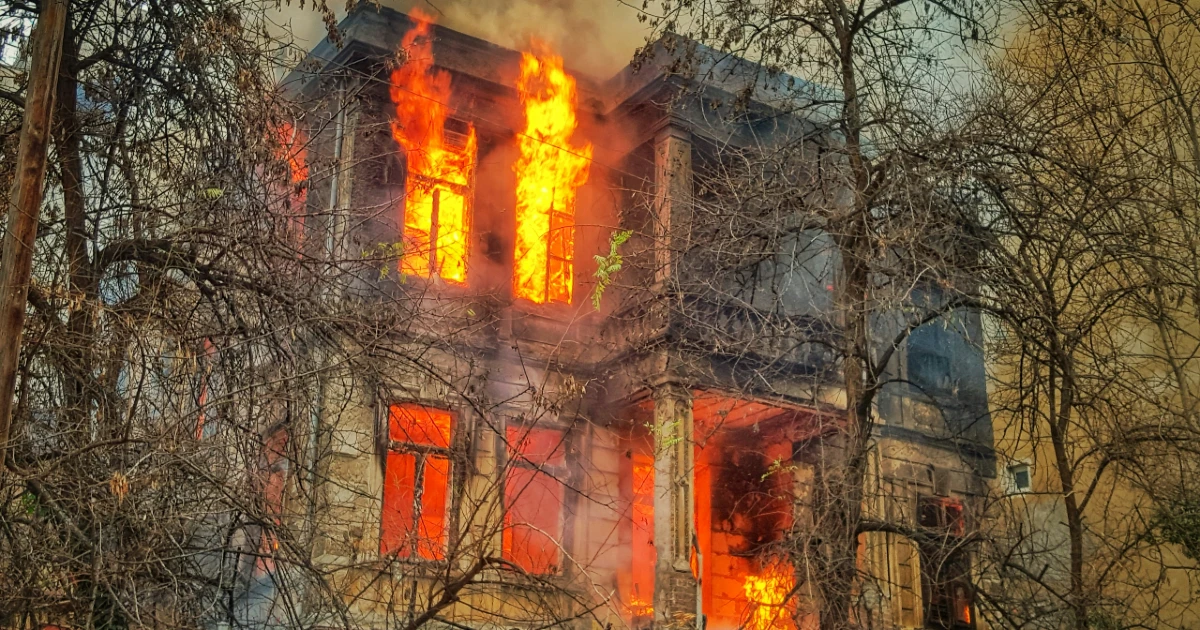
A major part of landlord insurance coverage is fire damage protection, especially at Steadily. Fire can cause catastrophic damage to your rental property, even if it starts as small as a grease fire in your kitchen. But, in both insurance and legal terms, there is a difference between a fire that starts by accident and one that is started intentionally; the latter would be considered arson.
Many landlords wonder whether arson would be covered by landlord insurance in the same way it would cover an accidental fire. While the legal intricacies get a lot more complicated, the answer is that yes, landlord insurance will cover damage to your dwelling caused by arson – with a notable exception if you, the landlord, deliberately set fire to your property yourself.
Arson can get extremely tricky from an insurance perspective, and it's important to know how providers and investigators deal with arson claims.
What arson actually means, legally and practically
Arson is the intentional, malicious setting of fire to a structure or property. In most states, it's classified as a felony, carrying serious criminal penalties including prison time. That legal definition matters a lot when you're dealing with an insurance claim, because the question isn't just "was there a fire?" but "who started it, and why?"
Fires happen for all kinds of reasons: faulty wiring, unattended stoves, candles left burning, lightning strikes. Those are accidents. Arson is different. It's a deliberate act, and that distinction shapes everything about how your insurer responds to the claim.
The general rule: landlord insurance does cover fire damage
Standard landlord insurance policies include dwelling coverage, which pays for physical damage to your rental property caused by fire. Whether it's a kitchen fire, an electrical fire, or a fire that guts an entire unit, your policy is designed to step in and cover repair or rebuilding costs, up to your coverage limits.
Fire is one of the most common covered perils across all property insurance types. So if your rental burns down, the starting assumption is that your policy covers it. But arson complicates that assumption significantly, because coverage depends on one critical factor: who set the fire.
Tenant arson: the landlord is an innocent party
If a tenant sets fire to your rental property, your landlord insurance will typically cover the damage. This is true even though the fire was intentional, because you, the insured, had nothing to do with it; you're an innocent third party.
Insurance law generally draws a clear line here. The policy protects the landlord's financial interest in the property. When a tenant commits arson, they've committed a crime against you. Your insurer should pay out just as they would for any other covered fire loss.
That said, it's rarely completely simple. The insurer will almost certainly investigate before cutting a check, particularly when arson is suspected. They need to confirm you weren't involved. But if the investigation confirms the tenant was responsible and you had no role in it, coverage should apply.
One thing to keep in mind: your policy covers your property, not the tenant's belongings. If the tenant destroyed their own possessions in the process, that's their problem. Renters insurance (if they had it) might address their personal property, but that's a separate conversation entirely.
Owner arson: fraud with serious consequences
Here's where things get stark. If you, as the property owner, intentionally set fire to your own rental and then file an insurance claim, that's insurance fraud. Full stop.
Your policy will be voided. You won't receive any payout. And more seriously, you'll face criminal charges for both arson and insurance fraud, which can result in significant prison time and fines. Insurers and prosecutors take this combination of crimes seriously; there's no gray area here.
This scenario, sometimes called "torch jobs" in the industry, is not uncommon enough that insurers don't know to look for it. Investigators are trained to detect the signs. If a landlord is struggling financially, facing foreclosure, or dealing with a property they can't sell, those are red flags that adjusters are trained to notice.
Even if you hired someone else to set the fire, you're still considered the responsible party under the law and under your policy terms. The intent to commit fraud doesn't disappear just because someone else held the match.
How insurance investigations work when arson is suspected
When a fire loss is reported, insurers don't simply take your word for what happened. For significant claims, especially those involving total losses or substantial damage, they'll assign an adjuster and potentially a special investigations unit (SIU) to look into the cause.
Here's what that process typically involves:
- Fire marshals or investigators from the local fire department will examine the scene, looking at burn patterns, origin points, accelerant residue, and other physical evidence. If they determine the fire was intentionally set, they'll file an official report. That report goes to your insurer and, depending on findings, to law enforcement.
- Insurance adjusters look at financial records, your relationship with the tenant, recent policy changes (like a sudden increase in coverage amounts before the fire), and your whereabouts at the time. They interview neighbors, check security footage, and review prior claims history.
This process takes time. Arson investigations can stretch from weeks to several months. During that period, your claim may be in limbo. Your insurer isn't required to pay until they've finished their investigation.
When arson is suspected but not proven
This is one of the most frustrating situations a landlord can face. The fire marshal's report comes back inconclusive, and the insurer suspects arson but can't prove it. What happens then?
Insurers don't need a criminal conviction to deny a claim. They operate under a civil standard of proof, which is lower than the criminal standard. If they believe, based on available evidence, that arson is more likely than not, they can deny the claim.
That doesn't mean you're out of options. If your claim is denied and you believe it was wrongfully denied, you can:
- Request a written explanation of the denial
- Hire a public adjuster to conduct an independent review of the evidence
- Consult with an attorney who handles insurance disputes
- File a complaint with your state's department of insurance
- Ultimately pursue litigation if the denial was unjustified.
It's a long road, and litigation is expensive. But if the property was genuinely damaged by an arsonist who wasn't you, pursuing the claim is worth doing. Insurance companies make mistakes, and they're not above wrongful denials.
Why cooperation matters when arson is suspected
If your insurer suspects arson, your instinct might be to get defensive or stop communicating. That's understandable, but it's also likely to hurt you.
Most policies include a cooperation clause, which requires you to cooperate with the insurer's investigation. That means submitting to recorded statements, providing financial records, granting access to the property, and answering questions honestly. Failure to cooperate can give the insurer grounds to deny your claim independent of any arson finding.
If you're nervous about the investigation, especially if you had any prior issues with the tenant or property, consider consulting an attorney before giving statements. An attorney can help you understand your rights and ensure you're not inadvertently saying something that could be misinterpreted.
Being cooperative doesn't mean being naive. It means engaging with the process while protecting your legal interests.
Loss of rent coverage during investigations and restoration
One under-appreciated part of landlord insurance is loss of rent coverage, sometimes called fair rental value coverage. This reimburses you for rental income you lose while the property is being repaired or rebuilt after a covered loss.
When arson is the cause, the timeline can be longer than usual. Between the investigation, any criminal proceedings, and the actual construction process, you could be without rental income for many months. If your policy includes loss of rents coverage, it should apply during this period, assuming the underlying claim is approved.
Some policies cap the coverage period at 12 months; others offer longer windows. Check your declarations page to understand exactly what you're entitled to. And if you haven't reviewed your policy limits recently, now is a good time to make sure the amounts reflect current rental rates.
Note that loss of rents coverage typically kicks in for covered perils. If the arson claim itself is denied, the loss of rents portion will likely be denied too.
A realistic scenario: the eviction fire
Consider this situation. A landlord in Ohio has been going through a difficult eviction process with a long-term tenant who stopped paying rent. The eviction is nearly complete. Three days before the tenant is required to vacate, a fire starts in the kitchen. By the time firefighters arrive, the kitchen and two adjacent rooms are heavily damaged.
The fire marshal determines the fire was intentionally set, likely using accelerants. The tenant is identified as a suspect. The landlord files a claim with their insurer.
The insurer assigns a special investigations unit to the case. The landlord is asked to provide financial records, a timeline of the eviction, and records of any communications with the tenant. The landlord cooperates fully, provides all requested documentation, and gives a recorded statement.
Six weeks later, the tenant is charged with arson. The insurer, satisfied that the landlord was an innocent party, approves the claim. Dwelling coverage pays for the structural damage and repairs. Loss of rents coverage kicks in while the unit is being restored, covering approximately four months of lost income.
The process wasn't fast or easy. But the landlord's cooperation, clean financial history, and clear documentation made the difference. They were made whole. The tenant faced criminal charges.
What typically isn't covered
Even when the overall arson claim is valid, some things fall outside your coverage:
Personal property belonging to the tenant is not covered by your landlord policy. If they destroyed their own furniture or belongings in the fire, that's not your insurer's problem. Your policy covers the structure and, if you have contents coverage, your own furnishings in the unit.
If you had any involvement in planning or executing the fire, coverage is void entirely. There's no partial credit for being "somewhat involved." Your entire claim becomes fraudulent.
Damage that existed before the fire, unrelated to the arson, also won't be covered. Insurers sometimes see fire claims as an opportunity for landlords to get pre-existing deferred maintenance paid for. Adjusters look for this.
Finally, if you let your policy lapse or had insufficient coverage, those gaps remain. Arson doesn't expand your coverage beyond what you actually paid for.
How arson claims can affect future insurability
Even a legitimate, approved arson claim can affect your future insurance situation. Large fire claims show up in the CLUE (Comprehensive Loss Underwriting Exchange) database, which insurers consult when underwriting new policies. A major fire loss on your record can lead to higher premiums or difficulty finding coverage for other properties.
If you were investigated for arson, even without being charged or convicted, some insurers may view you as a higher risk. This is one reason why maintaining clear records, cooperating with investigations, and keeping good documentation matters beyond just the current claim.
For landlords who own multiple rental properties, one arson incident can affect the pricing and availability of insurance across their entire portfolio. It's worth talking to an independent insurance agent who can help you shop the market if you've had a major fire claim.
Key takeaways and frequently asked questions
Can I be denied coverage if my tenant committed the arson?
Not if you're an innocent party. If a tenant set the fire without your knowledge or involvement, your dwelling coverage should apply. Your insurer may investigate first, which can delay the payout, but a legitimate claim by an innocent landlord should be covered. Cooperate fully, document everything, and consult an attorney if you feel the investigation is going sideways.
What if arson is determined but the perpetrator is never identified?
If the fire origin is determined to be arson but the responsible party is never identified, your claim is still typically covered. The key question is whether you, the insured, were involved. If investigators clear you, coverage should apply. Unknown arsonists are unfortunately common in certain types of fire investigations, and insurers generally can't deny a claim just because the perpetrator wasn't found.
Does an arson incident affect my loss of rents coverage?
Yes, but in your favor if the claim is approved. Loss of rents coverage applies during the restoration period after a covered loss. Arson-related fires often mean longer timelines, so that coverage becomes even more valuable. Make sure your policy limits are high enough to cover extended vacancies.
Will an arson claim raise my insurance premiums?
Possibly. Major fire claims of any kind can affect your premiums at renewal, even if the cause was completely outside your control. Shopping your coverage with multiple carriers after a claim is resolved can help you find competitive rates.
What should I do immediately after a fire if I suspect my tenant was responsible?
Call 911 and ensure everyone is safe. Don't enter the property until it's cleared by fire officials. Contact your insurer to report the loss as soon as possible. Photograph anything you can from a safe distance. Preserve all communications with the tenant. And avoid making public statements about what you believe happened until you've spoken with your insurer and, if warranted, a lawyer.
Arson is a serious crime that puts landlords in a difficult position. Knowing how your policy works, who it protects you from, and what to expect during an investigation can make a hard situation at least manageable.


.jpg)




.png)