
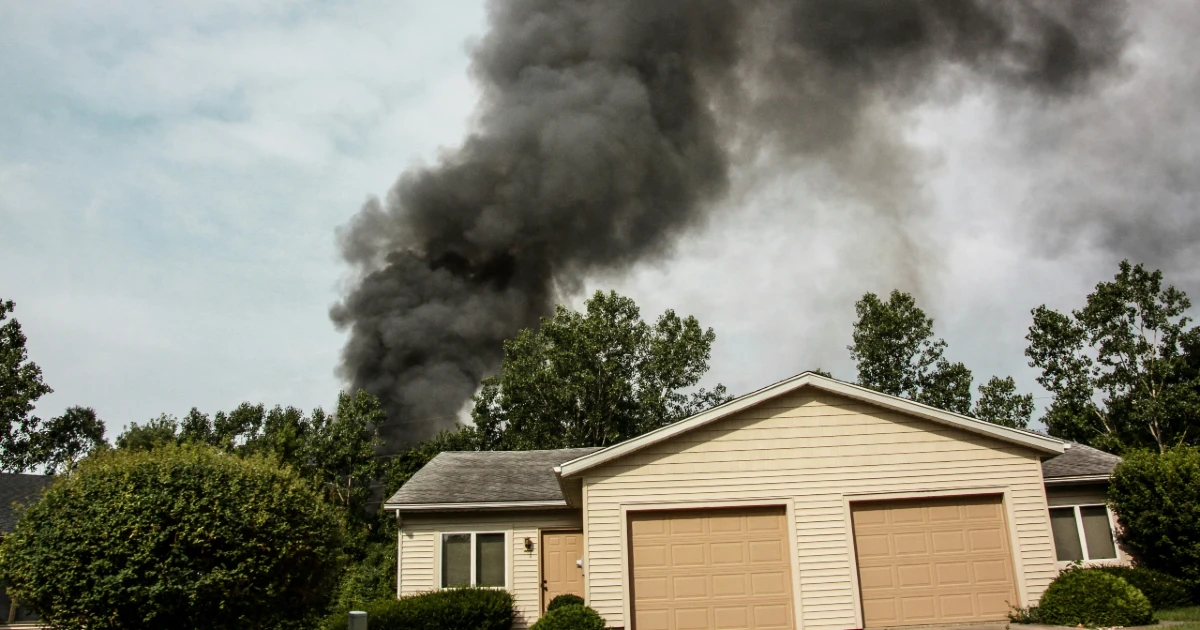
Smoke damage is sneaky. A fire can be extinguished in minutes, but the soot, odor, and chemical residue it leaves behind can saturate walls, ductwork, carpets, and furniture for weeks. Remediation often costs more than repairing the fire damage itself. Before you find yourself staring at a blackened kitchen and wondering what your policy actually covers, it helps to understand exactly how landlord insurance treats smoke damage, and where the coverage stops.
The short answer: smoke damage from a covered fire event is generally covered under landlord insurance. But that answer comes with real caveats, especially when tenants are smokers or when wildfire smoke drifts in from outside.
Types of smoke damage landlords actually deal with
Not all smoke damage looks the same, and the source matters a lot when it comes to insurance coverage.
- Fire-related smoke. This is the most common scenario. A kitchen fire, a dryer fire, or an electrical fire produces thick smoke that spreads through the home within minutes. Even a small fire can leave soot on every surface in adjacent rooms.
- Wildfire smoke infiltration. In states like California, Oregon, and Colorado, wildfire smoke can seep into a rental property without any fire ever touching the structure. The air quality inside can drop to hazardous levels, and surfaces can develop a thin but persistent film of ash and chemical particles.
- Tenant smoking damage. Cigarette smoke is a slow burn. A tenant who smokes indoors for one to three years can leave nicotine stains on walls, ceilings, and window trim, along with a deeply embedded odor that standard cleaning won't touch. This type of damage is categorized differently from fire or wildfire smoke, and the coverage rules are completely different.
- Marijuana and other smoking. The same logic applies to marijuana smoke. Prolonged indoor smoking causes staining and odor that falls under the same tenant-caused damage category.
Does landlord insurance cover smoke damage? The general answer
Yes, with conditions. Standard landlord insurance policies cover smoke damage when it results from a covered peril, which almost always includes fire. If a fire breaks out at your rental property and the resulting smoke damages walls, ceilings, flooring, and personal property you own inside the unit (like appliances), those damages are covered under the same fire claim.
The logic here is straightforward: smoke is an extension of the fire event. You don't file a separate smoke claim. The adjuster treats the fire and smoke damage as one incident. Your landlord fire insurance coverage is what pays out, covering both the burn damage and the smoke and soot that traveled through the rest of the property.
Where things get complicated is when the smoke has no fire attached to it, or when a tenant's lifestyle choices caused the damage over time.
Fire-related smoke damage: how coverage works
When a fire occurs at your rental property, the claims process covers smoke damage as part of the broader fire event. Here's what that typically includes:
- Soot removal from walls, ceilings, and floors
- Duct cleaning to remove smoke particles from the HVAC system
- Odor remediation using ozone treatment or thermal fogging
- Repainting affected rooms
- Replacing carpet, flooring, or cabinetry that absorbed smoke and can't be adequately cleaned
- Structural repairs if smoke infiltrated insulation or framing
The key requirement is that the fire itself must be a covered peril under your policy. Most standard landlord policies cover accidental fires. Intentional fires, or arson by the property owner, are excluded. If a tenant intentionally starts a fire, coverage depends on your policy language, but many policies do cover landlord losses from tenant-caused fires because the landlord is not the party who committed the act.
It's also worth reading your policy to confirm there's no sub-limit on smoke damage specifically. Some policies have separate caps for smoke-related losses, which can catch landlords off guard when remediation costs run high.
Wildfire smoke infiltration: a gray area
Wildfire smoke infiltration is trickier. If a wildfire is actively burning nearby and smoke enters the property, whether that's covered depends on two things: whether your policy includes wildfire as a covered peril, and whether actual physical damage occurred.
Policies in high-risk wildfire zones sometimes include wildfire exclusions or require separate wildfire endorsements. If your policy excludes wildfire damage, smoke infiltration tied to a wildfire event may also be excluded. Check your policy declarations page carefully if your rental property is in a wildfire-prone area.
Even with wildfire coverage, the damage has to be measurable and documentable. A faint smoke smell from a distant fire probably won't meet the threshold for a claim. But significant ash infiltration, contaminated air ducts, or staining on walls and ceilings from prolonged wildfire smoke exposure can constitute a valid claim in many cases.
Document everything. Air quality test results, photos of ash accumulation, and a professional remediation estimate all strengthen a wildfire smoke claim.
Tenant smoking damage: not covered by landlord insurance
This is the part that surprises a lot of landlords. Cigarette smoke damage caused by a tenant over the course of their tenancy is considered tenant-caused damage, not an insured peril. It's treated similarly to how insurance treats holes in walls or broken fixtures: it's a tenant responsibility, not an insurance event.
Landlord insurance is designed to cover sudden, accidental losses. A tenant smoking in the unit every day for two years is neither sudden nor accidental from the insurer's perspective. It's gradual deterioration caused by someone's behavior, and it falls outside what property insurance is meant to cover.
Your options for recovering tenant smoking damage costs:
- Security deposit. If your lease prohibits smoking and you have documented evidence, you can deduct remediation costs from the security deposit. Keep receipts and itemized estimates.
- Tenant's renters insurance. Some renters insurance policies include personal liability coverage that could apply if the tenant is found liable for property damage. Don't count on this, but it's worth exploring.
- Small claims court. If the damage exceeds the deposit and the tenant won't pay, small claims court is a practical option for amounts under each state's threshold.
The best prevention is a clear no-smoking clause in the lease and regular property inspections to catch the problem early.
What smoke remediation actually involves
People underestimate how involved smoke remediation is until they get the quote. Professional restoration companies use a combination of methods depending on severity:
- HEPA vacuuming and dry sponge cleaning remove loose soot from surfaces. This is typically the first step before any wet cleaning begins, because wet-cleaning soot can smear it deeper into porous materials.
- Chemical sponge cleaning follows to address staining on walls and ceilings. In severe cases, multiple passes are required.
- Ozone treatment or thermal fogging addresses odor by chemically neutralizing smoke particles embedded in soft surfaces, framing, and ductwork. This requires vacating the property for safety reasons during treatment.
- Duct cleaning removes smoke particles from the HVAC system, which can otherwise recirculate odor and contamination throughout the home indefinitely.
- Repainting is almost always necessary after smoke damage. Smoke-stained surfaces need a stain-blocking primer before any finish coat, or the smell and staining bleed through.
- Replacing flooring and soft materials is sometimes unavoidable. Carpet, drapes, and even drywall can absorb smoke to the point where cleaning isn't cost-effective.
Costs range widely. Minor smoke damage from a contained fire in one room might cost $1,000 to $3,000 to remediate. A severe whole-house smoke event, especially one involving older construction with lots of porous materials, can exceed $30,000 to $50,000.
A realistic scenario: kitchen fire with whole-house smoke spread
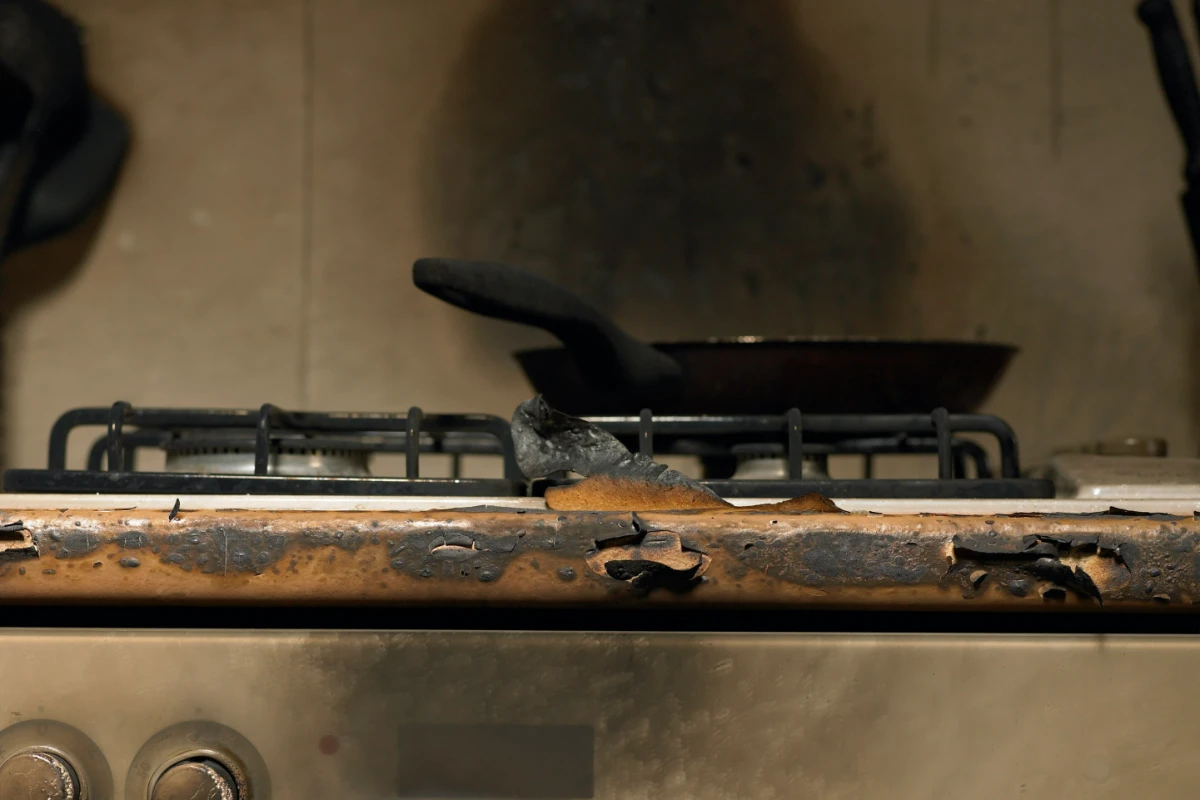
Here's how a real claim might unfold. A tenant is cooking and leaves a pan of oil on a burner. The oil ignites, the fire spreads to the cabinets before the tenant gets the extinguisher out, and smoke fills the entire house before the fire department arrives. The fire itself is contained to the kitchen. But smoke has traveled through the open floor plan and into every room, including the upstairs bedrooms and bathrooms.
The landlord files a fire claim. The adjuster visits and scopes both the fire damage in the kitchen and the smoke damage throughout the rest of the house. The remediation estimate includes cabinet replacement, wall and ceiling repainting in the kitchen, HEPA cleaning in all rooms, ozone treatment for odor, duct cleaning, and carpet replacement in two bedrooms where the smoke odor won't come out.
Total remediation estimate: $28,000. The landlord's policy has a $2,500 deductible. The insurer pays $25,500 after reviewing the estimate and confirming the fire was accidental.
The tenant's belongings (furniture, clothing, electronics damaged by smoke) are not covered under the landlord's policy. That falls to the tenant's renters insurance. This is exactly why landlords should require tenants to carry renters insurance as a lease condition.
How to document smoke damage for a claim
Good documentation makes a smoke damage claim go faster and reduces the chance of a dispute with the adjuster. Here's what to gather:
- Photos and video. Capture every affected room before any cleaning begins. Show soot on walls, ceilings, and surfaces. Include close-ups of staining and wide shots showing the extent of spread.
- Air quality testing. A certified industrial hygienist can test for smoke particulates and produce a written report. This is especially useful for wildfire smoke claims where visible damage may be minimal but air quality is compromised.
- Professional remediation estimates. Get at least two estimates from licensed restoration companies. Adjusters may use their own pricing, but having third-party estimates protects you if there's a dispute.
- Inventory of damaged items. List any landlord-owned property inside the unit (appliances, window treatments, fixtures) that was damaged by smoke.
- Fire department report. If the fire department responded, request a copy of the incident report. It confirms the cause and timeline of the event.
What landlord insurance doesn't cover for smoke damage
Knowing the exclusions saves you from unpleasant surprises:
- Tenant's belongings. Smoke-damaged furniture, clothing, and electronics belonging to the tenant are not covered by your policy. That's what renters insurance is for.
- Pre-existing smoke damage. If a property you just purchased has embedded smoke odor from a previous owner or tenant, that's a pre-existing condition. It won't be covered under a new policy.
- Cosmetic staining without functional damage. Light surface discoloration that doesn't affect the structural or functional integrity of the property may not meet the threshold for a covered loss, depending on your insurer.
- Gradual tenant smoking damage. As covered above, this is a tenant liability issue, not an insurance event.
- Wildfire smoke in exclusion zones. Properties in high-risk fire zones may have wildfire exclusions that knock out wildfire-related smoke claims.
Understanding what causes electrical fires in rental properties is also useful context, since electrical fires are one of the more common sources of smoke damage landlords encounter.
How smoke claims affect your premiums
Filing a smoke or fire claim does affect your insurance history and can raise your premiums at renewal. Insurers track claims through a database called CLUE (Comprehensive Loss Underwriting Exchange). Multiple fire or smoke claims on a property in a short period can make the property harder to insure and push premiums higher. You can use a landlord insurance calculator to estimate your own premium in a couple of minutes.
This doesn't mean you shouldn't file legitimate claims. That's what insurance is for. But for very minor smoke damage where remediation costs are close to your deductible, it may be worth calculating whether a claim is worth the long-term premium impact. Talk to your agent before deciding.
It's also a reason to invest in prevention: working smoke detectors, fire extinguishers in kitchens, proper tenant screening, and clear no-smoking lease terms all reduce the probability of a claim in the first place.
Key takeaways
- Smoke damage from a covered fire event is covered under landlord insurance as part of the fire claim. You don't file a separate smoke-only claim.
- Wildfire smoke damage may be covered, but only if your policy includes wildfire as a covered peril and you can document measurable physical damage.
- Tenant smoking damage is not covered by landlord insurance. It's a tenant liability issue addressed through security deposits, renters insurance, or legal action.
- Smoke remediation is expensive. Even a single-room fire can produce whole-house smoke damage costing tens of thousands of dollars to fully remediate.
- Document everything before any cleaning begins: photos, air quality tests, and professional estimates.
- Tenant belongings damaged by smoke are not your policy's responsibility. Require renters insurance in your lease.
- Repeated smoke or fire claims affect your CLUE report and can raise premiums. Weigh small claims carefully against long-term cost.
- Review your policy for wildfire exclusions, sub-limits on smoke damage, and how tenant-caused fire events are treated before you ever need to file a claim.


.jpg)




.png)