
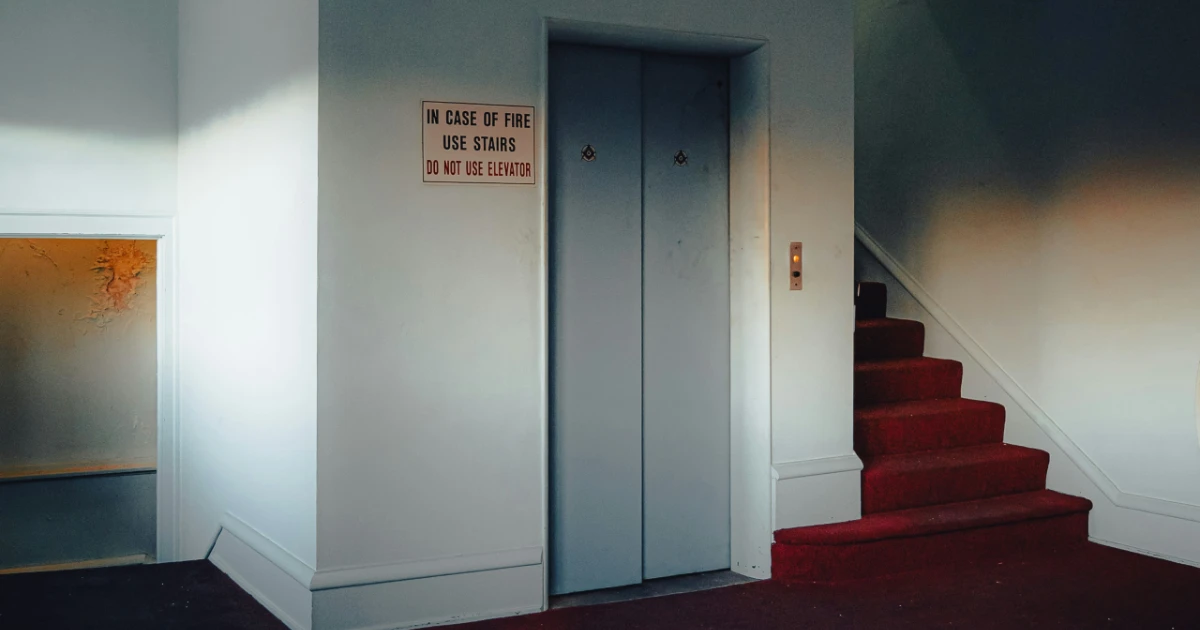
The elevator in your seven-story building goes down on a Friday afternoon. By Saturday morning you have four voicemails — one from a tenant who uses a wheelchair and lives on the sixth floor, two from residents in their seventies who can't reliably do stairs, and one from your property manager asking what the plan is. The elevator company says the control board needs to be replaced. Parts are three to four weeks out.
So how long, legally, do you actually have to fix it as the landlord? The honest answer is that there's no federal number. No law says seven days, or thirty days, or any specific days. What exists instead is a web of federal disability protections, state habitability codes, local ordinances, and a deliberately elastic legal standard called "reasonable time" — and how you behave while the elevator is broken is, in many ways, more legally consequential than how quickly you fix it.
There's no federal deadline — and that's where landlords get into trouble
Neither the Americans with Disabilities Act nor the Fair Housing Act tells you how many days you have. What they tell you is what you're obligated to do: act promptly, pursue repairs in good faith, and provide reasonable accommodations to disabled residents for as long as the elevator is out. The absence of a specific day count isn't a gap in the law; it's a deliberate choice that gives courts flexibility to look at the full picture rather than a stopwatch.
The ADA's Section 407 sets operational and accessibility standards for elevators. A breakdown isn't automatically a violation. Failing to respond to a breakdown (ignoring maintenance, not pursuing repairs, refusing to accommodate a mobility-impaired tenant who can't reach their unit) is where ADA exposure starts. The Fair Housing Act adds a parallel track: housing providers have an affirmative obligation to maintain accessible conditions and provide reasonable accommodations when they fail.
You've probably seen "30 days is the norm" cited in online forums and legal Q&A sites. That figure comes from general habitability repair frameworks that many states apply to maintenance issues broadly — it's not a federal ceiling, and it's not a floor. The "7 days" figure that shows up even more frequently in legal advice threads is similarly borrowed from state habitability laws and tenant remedy statutes, not from any elevator-specific federal rule.
Both figures are signals, not deadlines. If you're past seven days without meaningful progress or communication, something has gone wrong in your process. Past thirty days without a repair in sight or accommodations in place, you have a legal exposure problem.
The thread tying all of this together is the implied warranty of habitability. In any multi-story building where the elevator is the primary or only practical means of access to upper floors, elevator service is almost certainly a habitability obligation, not a luxury amenity. Removing access to it triggers that warranty, and the warranty doesn't have a grace period built in.
What "reasonable time" actually means in practice
Courts and housing agencies evaluate elevator repair timelines the way they evaluate most habitability issues: by looking at the totality of circumstances rather than counting calendar days. Several factors consistently show up in how these cases are decided:
- Severity and alternatives. A completely inoperable elevator in a building with no working alternative is categorically different from an intermittently slow elevator in a building with two working elevators. If residents have no practical way to access their units, the window for "reasonable" is compressed substantially.
- Who's affected. A tenant who uses a wheelchair and lives on the eighth floor is not in the same legal situation as an able-bodied tenant on the third floor. Disability status accelerates every timeline and raises the stakes on every accommodation decision. Courts take this seriously.
- Landlord behavior. This is the factor most landlords underestimate. How quickly did you contact a repair company? Are you providing written updates to tenants? Have you reached out to disabled or elderly residents proactively? Do you have documentation of your efforts? The behavioral record often matters more than elapsed time — a landlord who can produce contractor communications, parts orders, and weekly tenant updates is in a fundamentally different legal position than one who can't.
- Parts availability. Elevator components are highly specialized, and backordered parts are a genuine, well-documented problem in the industry — not an excuse landlords invented. Courts and agencies recognize this. A documented backorder can legitimately extend what's "reasonable" for completing the repair. It does not, however, extend your obligation to provide accommodations or communicate with affected residents while you wait.
State rules — where the specific timelines actually live
Federal standards set the floor. State and local codes are where landlords start to see concrete obligations.
New York
New York is among the most specific jurisdictions in the country, especially New York City. Landlords must maintain an active service contract with a licensed elevator company — not just when something breaks, but as an ongoing condition of operating a building with an elevator. Emergency repairs carry no grace period under the NYC Department of Buildings, which treats residential elevator outages as priority violations.
There's also a rule that often catches building owners off guard: landlords must give tenants at least 10 business days' advance notice before any planned shutdown for modernization or scheduled maintenance. Under the NYC Human Rights Law, an extended outage affecting a resident with a disability can constitute a failure to provide reasonable accommodation. A prolonged outage can also qualify as a "reduction of services" entitling tenants to rent abatement, which is a real financial consequence for landlords who delay repairs.
California
California ties elevator maintenance directly to its habitability code. Landlords are required to maintain all building systems that are part of the premises, elevators included. There's no statutory day count for repairs, but local code enforcement agencies can issue citations and fines, and tenant advocates cite $50–$100 per month as a reasonable rent reduction benchmark during extended outages. That figure isn't in the statute, but it shapes settlements.
Texas
In Texas, the Texas Property Code applies a "reasonable time" standard to habitability repairs, which covers elevator service. The Texas Department of Licensing and Regulation (TDLR) oversees elevator safety statewide and maintains a public database of elevator inspection records.
Tenants can look up their building's inspection history, which means they sometimes have information about maintenance lapses that landlords don't expect them to have. Documented TDLR non-compliance significantly strengthens a tenant's legal position in any dispute.
Florida
Florida's implied warranty of habitability covers elevator service in buildings where elevators are the primary means of access. The 7-day framework Florida applies to habitability repairs generally is the relevant benchmark.
Landlords who receive written notice and don't respond meaningfully within a week are in a vulnerable position. Local code enforcement in Miami-Dade and other counties can issue violations independently of any tenant complaint.
Massachusetts
Massachusetts builds elevator maintenance obligations into the regulatory framework itself. The Board of Elevator Regulations requires building owners to maintain an ongoing service contract — not just respond to failures, but actively maintain the equipment.
Under MGL Chapter 186, Section 14, landlords have a duty to provide elevator service as part of the covenant of quiet enjoyment. Failure to repair, particularly when the landlord can't demonstrate a service contract and maintenance history, gives tenants grounds to seek rent abatement or, in some cases, lease termination.

Condos vs. apartments — who's actually responsible?
Most coverage of elevator repair obligations focuses on traditional rental buildings. Condo buildings add a layer of complexity that almost nobody covers well.
In a condo building, the elevator is a common element, owned and maintained by the HOA or condo association, not by individual unit owners. On its face, this seems to put elevator repairs outside a landlord's control, but it doesn't eliminate a landlord's obligations to their tenant.
If you own a condo unit and rent it to a tenant, you are that tenant's landlord regardless of how the building is structured. Landlord-tenant law governs your relationship with your tenant; HOA governance documents govern your relationship with the association. Those are two separate relationships. When the elevator is broken and your tenant can't access their unit, your tenant's legal claim runs against you, not against the HOA directly.
What this means in practice: you need to advocate actively with the HOA. Document every communication with the board in writing. Attend meetings. Put pressure on record. If the association is slow-walking repairs, explore whether the condo documents give individual owners any rights to escalate or compel action. Communicate every update to your tenant in writing. Consider proactive rent concessions if the outage stretches into weeks — not because you're legally required to in every jurisdiction, but because it demonstrates good faith and substantially reduces the likelihood the situation escalates into a formal complaint or lawsuit.
"The HOA is handling it" is not a defense; courts look at the landlord-tenant relationship, not the internal structure of building management.
When a broken elevator becomes a disability rights issue
For most tenants, a broken elevator is an inconvenience. For a tenant who uses a wheelchair or has a serious mobility limitation, it can mean being physically confined to their unit — and that's the factual basis for how the FHA and ADA treat these cases, not rhetorical framing.
Under both laws, landlords and building owners must provide reasonable accommodations to residents with disabilities during elevator outages. Reasonable accommodations may include temporary relocation to an accessible unit on a lower floor, assistance with groceries and essential errands, priority scheduling on the repair, and advance notice of any future scheduled maintenance affecting access. The duty to provide reasonable accommodations is a legal obligation under the FHA and ADA, not an optional courtesy (though, what constitutes a "reasonable" accommodation is determined case by case).
A formal accommodation request from a disabled tenant triggers a legal response requirement. If you receive one and don't respond — or respond by saying repairs are ongoing without addressing the accommodation itself — you've potentially created a Fair Housing Act violation that's separate from any habitability claim. Tenants in this situation can file complaints with HUD, state fair housing agencies, or the Department of Justice. They don't have to sue to create a significant regulatory problem for a building owner.
There's also a lease termination risk that's specific to this population. In jurisdictions with strong habitability protections such as New York, Massachusetts, California, a tenant with a disability who faces a prolonged outage with no accommodations and no visible repair progress may have grounds to terminate their lease without penalty in some jurisdictions. This is a fact-specific determination; tenants should consult a local attorney before taking that step. That's a tenant you lose, a unit that needs to be re-rented, and a potential complaint on record. All of it is avoidable.
"Broken elevator tenant rights" as a search term exists because tenants are specifically looking for what leverage they have. The more serious answer, from a landlord's perspective, is that the leverage primarily materializes when landlords go quiet or fail to accommodate.
What to actually do when the elevator goes down
Speed and documentation matter more here than in almost any other routine maintenance situation.
Within the first 24 hours, notify all tenants in writing. You don't need a repair date to do this. "The elevator is out of service. We have contacted [company name] and will provide an update within 48 hours" is sufficient and far better than silence. Contact your elevator maintenance contractor immediately. If you don't have an active service contract, you're already behind and that fact can come up in any future dispute.
At the same time, identify tenants with disabilities or mobility limitations. Don't wait for them to call you; reach out proactively. Ask what accommodations would help. Get those requests and your responses documented in writing. If the repair timeline is uncertain, start the conversation about temporary floor reassignment or other assistance now rather than after a week of avoidance.
As the repair progresses, document everything: service calls, parts orders, backorder confirmations, contractor invoices, and every written communication with tenants. Weekly updates to the building are not excessive; they're a paper trail that demonstrates ongoing good-faith effort.
If a parts backorder extends the timeline significantly, get written confirmation from the elevator company. That document can matter in any regulatory inquiry.
If repairs will stretch past two to three weeks, consider a proactive rent concession. The legal requirement varies by state, but the math is usually favorable: a modest reduction offered voluntarily costs less than defending a "reduction of services" claim or negotiating with a tenant who's already angry enough to file a complaint. It also helps retain tenants who pay rent reliably rather than looking for a reason to leave.
Elevator-related liability claims and legal defense costs are also worth reviewing against your policy terms; standard landlord insurance coverage may not automatically extend to elevator-related incidents, and gaps often surface at the worst moment.

Can a tenant sue over a broken elevator?
Yes, under the right conditions — though the bar is higher than most tenants expect when they're frustrated and looking for immediate relief.
The legal theories available to tenants include negligence (failure to maintain equipment or respond to a known problem), breach of the implied warranty of habitability, breach of a lease that explicitly includes elevator service, and ADA or FHA violations where disability is involved. Any of these can support a lawsuit or, more commonly, a successful settlement demand.
The harder question is what actually crosses the line. A temporary outage during an active repair, with regular communication and accommodations offered, is unlikely to result in successful litigation. Months of non-communication, no documented repair efforts, and a disabled tenant who couldn't leave their apartment for weeks: that's the kind of fact pattern that generates verdicts and regulatory findings. The cases that go badly for landlords almost always involve a combination of delay and silence, not delay alone.
Tenants also don't have to sue to create problems. Filing a complaint with local building code enforcement, HUD, or a state licensing agency like Texas's TDLR costs tenants nothing, and triggers an investigation that costs landlords time and management attention regardless of how it resolves. Documentation is your best protection against both: if you can show you acted promptly, communicated regularly, and addressed accommodation requests formally, you're in a defensible position even when a repair took longer than anyone wanted.
The clearest path through a broken elevator situation — legally, operationally, and practically — is the same path: move fast, document everything, communicate more than you think you need to, and treat disability accommodation requests as legal obligations rather than requests you'll get to eventually.
Frequently asked questions
Is a broken elevator an ADA violation?
Not automatically. The ADA doesn't require elevators to work 100% of the time — mechanical failures are a recognized reality. A violation occurs when a landlord or building owner fails to respond promptly to a breakdown, fails to provide reasonable accommodations to disabled residents during the outage, and fails to pursue repairs in good faith. The breakdown itself isn't the violation; the failure to act on it is.
Can I get a rent reduction if my apartment elevator is broken?
It depends on your state and city. In New York, an extended elevator outage can qualify as a "reduction of services" entitling tenants to rent abatement under local law. In California, legal guidance supports rent reductions in the range of $50–$100 per month during extended outages, even where no specific statute mandates it. In Florida and Texas, the habitability framework can support similar claims if the landlord isn't taking visible action. Check your local landlord-tenant laws or consult a tenant rights attorney to understand what applies in your jurisdiction.
Who is responsible for elevator repairs in a condo building?
The HOA or condo association owns and maintains the elevator as a common element in most condo buildings — but if you're renting a condo unit, your landlord (the individual unit owner) still has obligations to you under landlord-tenant law. Your landlord can't defer entirely to the HOA. They're responsible for advocating with the board, communicating timelines to you, and offering accommodations when the outage affects your access. The HOA's slow response is the landlord's problem to solve, not a reason for your landlord to go silent.
Can a tenant break their lease over a broken elevator?
Potentially, particularly where the outage is prolonged, the landlord isn't taking visible action, and the tenant has a disability that makes the situation especially severe. In jurisdictions with strong habitability protections — New York, Massachusetts, California — tenants may have grounds to terminate without penalty when habitability conditions aren't being addressed. This is a fact-specific analysis; tenants considering this option should consult a local tenant rights attorney before taking action, and landlords concerned about this risk should redouble communication and accommodation efforts before it gets to that point.
How often should a building elevator be inspected?
Most jurisdictions require annual inspections by a licensed elevator inspector, and building owners are typically required to maintain an ongoing service contract for routine maintenance in addition to responding to breakdowns. Massachusetts, New York, and California all have detailed inspection and maintenance contract requirements. Failing to keep current with inspections doesn't just create safety risk — it signals to courts and regulators that the building wasn't being properly maintained before the breakdown occurred, which can significantly complicate any subsequent legal dispute.



.png)
.jpg)
.jpg)


.png)