
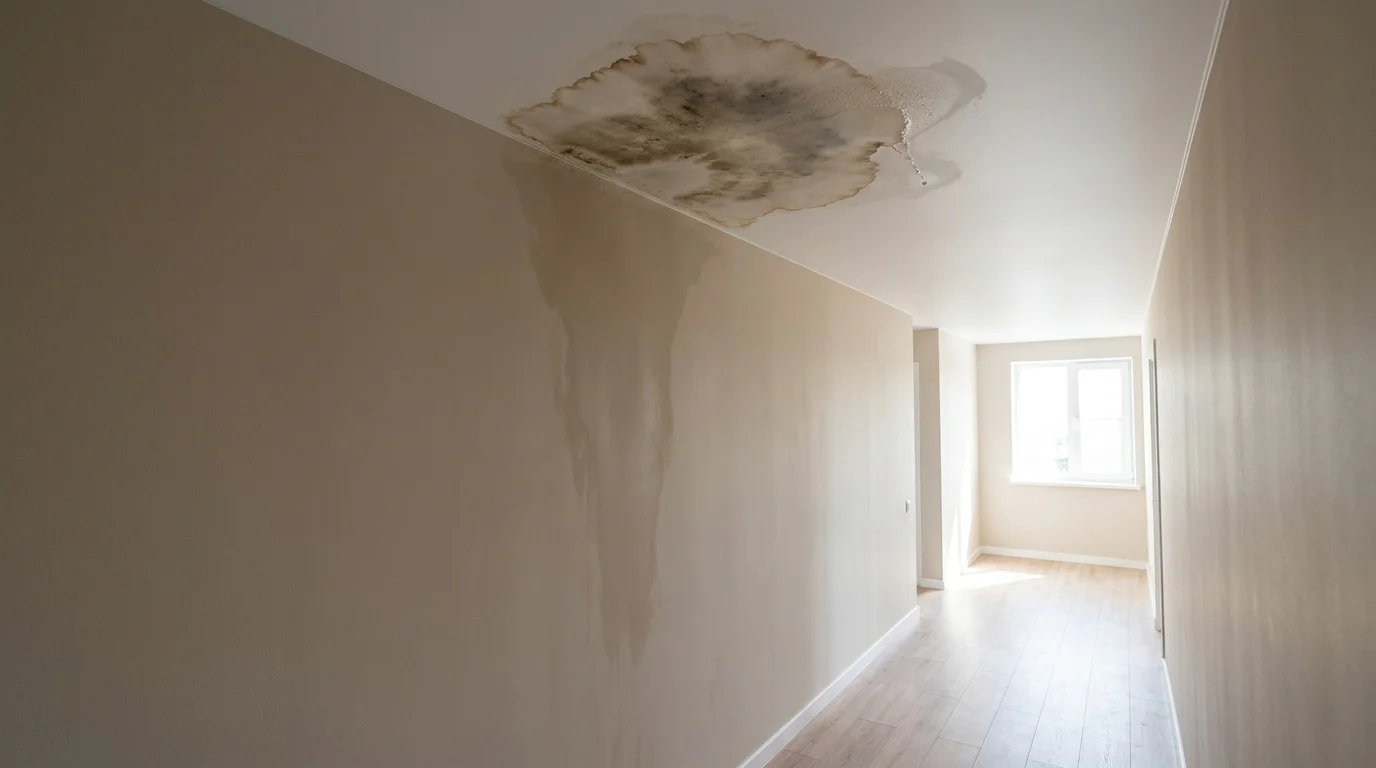
The implied warranty of habitability attaches to every residential lease in 49 states and the District of Columbia, whether or not your lease mentions it. Breach it, and your tenant can withhold rent, pay it into a court escrow, deduct repair costs, break the lease, or sue, and courts will strike any clause you drafted to avoid the duty. This guide covers what the warranty requires you to maintain, the remedies tenants can raise against you, and how to build a record that defeats claims before they reach a courtroom.
What is the implied warranty of habitability?
The implied warranty of habitability is an automatic legal duty that courts and legislatures impose on every residential lease, requiring the landlord to deliver and maintain a unit that is fit for human habitation, meaning safe and sanitary, throughout the tenancy. You cannot negotiate it away, and it applies from move-in through the end of the tenancy. A National Housing Law Project survey found 22 states adopted it through statutes based on the Uniform Residential Landlord and Tenant Act, 23 through other statutes, and four states plus the District of Columbia through common law alone.
The doctrine comes from Javins v. First National Realty Corp., 428 F.2d 1071 (D.C. Cir. 1970), where the D.C. Circuit reframed the residential lease as a contract for a package of goods and services rather than a conveyance of land. That shift made the tenant's rent obligation and the landlord's maintenance obligation mutually dependent, so a landlord's breach can excuse or reduce rent.
Arkansas is the outlier. Its 2021 statute, Ark. Code § 18-17-502, applies six residential quality standards when landlords and tenants enter or renew leases after November 1, 2021, but those standards stop well short of guaranteeing a unit fit for human habitation the way a true warranty does. The tenant's sole remedy after a 30-day uncured notice is lease termination and refund of any recoverable deposit, and the act does not establish a true implied warranty of habitability. The act states that a tenant "shall not offset or withhold rent from the landlord for any alleged or actual violation," and a 2026 Arkansas Law Notes analysis concludes it "does not establish a true implied warranty of habitability."
The warranty covers residential leases only. Commercial tenants in nearly every jurisdiction rely instead on the covenant of quiet enjoyment and constructive eviction, where the bar is higher. Texas is the main exception: Davidow v. Inwood North Professional Group (1988) recognized an implied warranty of suitability for commercial leases, though Gym-N-I Playgrounds v. Snider (2007) lets commercial parties waive it by express disclaimer. Courts uniformly void residential waivers in the states that recognize the warranty.
What landlords are legally required to maintain
Courts read the warranty's content out of housing and building codes. Javins anchored the standard to the D.C. Housing Regulations, and most states follow the same approach: substantial compliance with code provisions that materially affect health and safety defines a habitable unit. In California, Civil Code § 1941.1 lists what makes a unit "untenantable," and starting January 1, 2026, working stoves and refrigerators join that list for leases that landlords and tenants enter, amend, or extend on or after that date. In New York, Multiple Dwelling Law § 78 requires owners to keep every multiple dwelling and its lot in good repair.
The core obligations recur across nearly every code:
- The 2024 International Property Maintenance Code, which 40 states and D.C. use or have adopted, requires heating facilities capable of maintaining 68°F in all habitable rooms. Inspectors measure the temperature 3 feet above the floor.
- Hot-water minimums run from 110°F to 120°F depending on jurisdiction, and Texas Property Code § 92.052 treats a failed 120°F water-heating device as a condition materially affecting health or safety.
- Building systems must remain operational. Kansas's K.S.A. 58-2553 is typical, requiring electrical, plumbing, sanitary, heating, and HVAC systems kept in good and safe working order.
- IPMC § 304.7 requires the roof and flashing to be "sound, tight and not have defects that admit rain," and structural members must safely support imposed loads. When roofs develop leaks, the repair duty is generally yours unless the tenant or a person under the tenant's control caused the condition.
- Under IPMC § 309.2 the owner must eliminate pests before renting the unit; § 309.4 extends that duty to shared areas in buildings with two or more units.
- California requires deadbolts with a bolt extending at least 13/16 inch, although qualifying existing half-inch deadbolts may satisfy the statute; Texas requires landlords to rekey exterior doors no later than the 7th day after each tenant turnover. Beyond locks and rekeying, many jurisdictions also require landlords to install and maintain working smoke detectors as part of their broader habitability and safety-device obligations.
Numeric minimums vary sharply by jurisdiction. Representative standards look like this:
- Jurisdiction | Heating season | Minimum temperature | Hot water minimum
- New York City | Oct 1 to May 31 | 68°F daytime (when outdoors is below 55°F); 62°F at night regardless of outdoor temperature | 120°F (6 a.m. to midnight)
- California | Functional standard, no fixed season | 70°F at 3 feet above the floor | 110°F
- Chicago | Sep 15 to Jun 1 | 68°F daytime; 66°F overnight | 120°F (6 a.m. to 10:30 p.m.)
- Texas | No fixed season | No numeric minimum in Chapter 92 | 120°F device minimum
- Massachusetts | Sep 15 to May 31 | 68°F daytime; 64°F overnight | 110°F minimum, 120°F maximum at tub/shower
Cities set stricter rules than their states. In Philadelphia, heat must hold 68°F continuously from October 1 through April 30, with the season extending into May and September when outdoor temperatures drop below 60°F. Heating outages draw the shortest tolerance of any habitability defect; see How long can a landlord leave a tenant without heat? for the state-by-state timelines.
Conditions that breach the implied warranty of habitability
Walk your units against this list, because these are the conditions courts and code inspectors cite most often:
- Rodent or insect pest infestations. A New York court called persistent bedbugs an intolerable condition as far back as Streep v. Simpson (1913).
- Severe mold. A New York appellate term affirmed a constructive eviction spanning October 2000 to June 2002 over a "severe mold condition" in 157 E. 57th St. LLC v. Birrenbach (2007).
- Lead-based paint hazards in pre-1978 housing.
- No heat during the heating season. Indoor temperatures of 45 to 55°F from a cracked furnace heat exchanger supported constructive eviction in Copeland v. Lincoln (Colo. App. 2007).
- A lack of hot water for extended periods, or any extended loss of running water or electricity, as well as loss of gas.
- Sewage backups. A Pennsylvania Superior Court affirmed constructive eviction after a major sewage pipe eruption combined with long-term lack of heat.
- Failures of structural integrity: open foundation cracks, exterior walls with holes, roofs admitting rain, and stairs, decks, balconies, or railings that cannot bear normal loads.
- Broken exterior locks or missing required security devices.
The warranty does not require a perfect unit. Green v. Superior Court (Cal. 1974) held that "minor housing code violations standing alone which do not affect habitability must be considered de minimis and will not entitle the tenant to reduction in rent." Peeling interior paint in a unit with working systems may be de minimis under Green, though IPMC § 305.3 still requires the landlord to repair or remove peeling, chipping, flaking or abraded paint, or cover it. Pre-1978 units carry lead-hazard exposure on top of that. A dead furnace in January is a breach.
Can a landlord waive the implied warranty of habitability in a lease?
Courts and legislatures uniformly void waiver clauses. New York Real Property Law § 235-b states that any tenant waiver "shall be void as contrary to public policy." California Civil Code § 1942.1 voids waivers of the repair statutes, with one narrow exception for a genuine agreement that the tenant will perform specific repairs as part of the rental consideration. Javins itself held that "the duties imposed by the Housing Regulations may not be waived or shifted by agreement," and the Kansas Court of Appeals reaffirmed the principle as recently as 2025 in Washburn South Apartments v. Hession.
A discounted rent does not buy a waiver either. In Knight v. Hallsthammar, the California Supreme Court held that a tenant who keeps living in substandard premises has not exempted the landlord from the warranty, even with knowledge of the defects at move-in.
Some states now require you to affirmatively disclose the warranty. Colorado's SB24-094 requires rental agreements that landlords and tenants enter on or after January 1, 2025 to include a bold, 12-point-type statement that "every tenant is entitled to safe and healthy housing under Colorado's warranty of habitability." If your Colorado lease template predates 2025, it is out of compliance today.
What happens when a tenant reports a habitability problem?
Courts date your repair obligation from the notice you receive. Courts universally require that you have actual or constructive notice of a defect, plus a reasonable opportunity to repair, before any remedy attaches. That makes the notice itself the most important document in any future dispute, for both sides.
Most states require or strongly favor written notice, and delivery method matters. Texas Property Code § 92.056 generally requires the tenant to send two notices before pursuing remedies, unless the tenant sent the first by certified or registered mail. Illinois's statewide repair statute requires the tenant to send notice by registered mail, certified mail, or restricted delivery. California law permits oral notice, and the state's tenant guide strongly recommends written notice.
What counts as a reasonable repair time depends on the defect. Texas presumes seven days is reasonable, but under § 92.0561 a sewage backup or flooding entitles the tenant to act immediately, and loss of potable water or adequate heat shortens the window to three days. California presumes 30 days is reasonable while expressly allowing shorter periods "if all the circumstances require." In Chicago, the RLTO gives you 24 hours to restore heat, water, hot water, electricity, gas, or plumbing before the tenant may withhold rent, and 72 hours before the tenant may terminate. Massachusetts requires landlords to begin repairs within 5 days and substantially finish within 14 after officials certify the violations under M.G.L. c. 111 § 127L. Massachusetts caps tenant deductions at four months' rent in any 12-month period.
When a report lands, acknowledge it in writing the same day. Schedule the repair with proper entry notice and keep every receipt. Judges use that paper trail to decide whether to dismiss a claim or award a rent abatement.
Tenant remedies for breach of the implied warranty of habitability
A tenant with a documented breach has a menu of remedies, each with its own procedural prerequisites:
- Forty-one states have established some form of rent-withholding mechanism by statute or court decision, but some require court escrow rather than unilateral withholding. Even in jurisdictions that allow withholding, the tenant is not off the hook entirely; Green v. Superior Court held the tenant "remains liable for the reasonable rental value of the premises," and courts may order tenants to pay rent into court while the case proceeds.
- Maryland's rent escrow track has tenants pay rent into a court registry, and if you make no good-faith repair effort within 6 months of the escrow decision, the court can disburse the money to the tenant. Ohio requires the tenant to be current in rent and to deposit with the court clerk; you can apply for release, with trial required within 60 days. In Pennsylvania, the statutory track requires official certification that the dwelling is unfit, and "no tenant shall be evicted for any reason whatsoever while rent is deposited in escrow."
- Courts calculate rent-abatement damages one of two ways. The differential method, from Mease v. Fox (Iowa 1972), subtracts the unit's as-is fair rental value from its warranted value during the breach. The Pennsylvania Supreme Court adopted the percentage method in Pugh v. Holmes (Pa. 1979); it reduces the contract rent by the degree to which defects diminished habitability. New Jersey courts have awarded 15% and 25% reductions this way. New York's statute expressly says courts "need not require any expert testimony," so abatement claims are cheap for tenants to bring.
- Repair-and-deduct caps vary widely. California allows up to one month's rent, no more than twice in 12 months. Texas allows the greater of one month's rent or $500 per month. In Arizona, the cap is $300 or half a month's rent, whichever is greater, after 10 days' notice. Illinois caps the statewide remedy at the lesser of $500 or half the monthly rent.
- Florida permits lease termination after 7 days' written notice without repair. In Arkansas, termination is the tenant's only statutory remedy.
- To claim constructive eviction, the tenant must show substantial interference with use and enjoyment and notice to you with a failure to cure. The tenant must also abandon the unit within a reasonable time. In Ludlow Props. v. Young (2004), a five-month bedbug infestation was "an intolerable condition," but the claim failed because the tenant stayed. The court awarded a 45% rent abatement instead.
- Beyond abatement, tenants can sue for damages. Texas § 92.0563 adds a civil penalty of one month's rent plus $500, on top of actual damages. The statute also awards court costs and attorney's fees.
Landlord defenses against habitability claims
Each of these defenses depends on documentation you create before the dispute starts.
Tenant-caused damage
State law often excuses repairs for tenant-caused conditions. Texas Property Code § 92.052(b) says the landlord "does not have a duty to repair a condition caused by: (1) the tenant; (2) a lawful occupant; (3) a member of the tenant's family; or (4) a guest or invitee," unless it resulted from normal wear and tear. California's § 1941.2 excuses the repair duty when the tenant's substantial violation of cleanliness and waste-disposal obligations or fixture-use obligations contributes substantially to the defect, and New York's § 235-b says tenant misconduct "shall not constitute a breach." Move-in inspection photos are what prove causation later.
Denial of access
A tenant who unreasonably denies access may lose or reduce available remedies. Maryland's escrow statute makes denied entry "a sufficient defense," Washington's RCW 59.18.060 eliminates tenant remedies when the tenant unreasonably refuses access, and a New York Civil Court awarded a 0% abatement for the periods the tenant denied access. In Renewal Realty Corp. (2019), letters scheduling five access dates were not enough, because the landlord offered no testimony from anyone who went to the apartment and was turned away. Send entry notices that comply with your state's rules. California's § 1954 requires 24 hours and requires the notice to include the date and approximate time. It must also state the purpose. Then log who showed up and what happened at the door.
Lack of notice
Liability generally requires actual or constructive notice and a reasonable repair opportunity. Wade v. Jobe (Utah 1991) requires the tenant to give "actual or constructive notice of the defects and a reasonable time in which to make repairs" before any abatement, and the Ohio Supreme Court in Sikora v. Wenzel excused a landlord who "neither knew nor should have known" of the violation. A city inspection report is strong evidence you knew about the defect. Green credited an 80-violation inspection report as key proof.
Tenants raise the warranty far less often than landlords expect. An Emory Law Journal study found less than 2 percent of New York City tenants with meritorious claims received rent abatements, and of more than 40,000 Essex County, New Jersey eviction proceedings in 2014, only 80 tenants raised the warranty as a defense.
Proactive compliance: inspections and recordkeeping
You build a defensible record between disputes. Run routine inspections at turnover and on a set schedule during the tenancy, always with compliant entry notice, and respond to every repair request in writing.
Keep these records for every property:
- Date-stamped move-in and move-out inspection reports with photos of floors, walls, fixtures, and appliances.
- Every repair request and your same-day written acknowledgment, plus the vendor invoice and completion date.
- Entry notices you served and a contemporaneous note of what happened when your contractor arrived. Include any refusal by name and date.
- Lead disclosure acknowledgments for pre-1978 units, retained for at least 3 years from lease commencement.
For pre-1978 housing, you must deliver the EPA's Protect Your Family From Lead in Your Home pamphlet and disclose known lead hazards. You must also attach the Lead Warning Statement with signatures before you bind the tenant to the lease. Penalties reach $22,263 per violation under HUD's schedule effective July 14, 2025, up to $49,772 per violation under EPA's TSCA authority, plus treble damages to the tenant. EPA rules require an EPA-certified firm for renovation work in pre-1978 units, and as of January 12, 2026, any reportable level of dust lead on floors or window sills counts as a hazard in EPA-administered jurisdictions, replacing the old 10 µg/ft² floor threshold.
Habitability failures often begin as insurable losses: fire damage that guts a kitchen, or storm-related roof failures that let rain into a bedroom. Review your landlord insurance coverage with habitability exposure in mind. Landlord liability insurance may respond to a covered injury claim arising from a property condition, and Loss of rent coverage replaces rental income for up to 12 months of fair rental value when a covered loss makes the unit uninhabitable. Insurance will not backfill deferred maintenance, though. Wear and tear and pest infestations are standard exclusions. Most mold scenarios are also excluded, which is one more reason routine upkeep pays.
Get a quote in minutes at quote.steadily.com, no phone call required.
Retaliatory eviction: what landlords cannot do after a complaint
Filing eviction proceedings or raising rent inside a protected window after a tenant's habitability complaint gives the tenant grounds to raise an affirmative defense. Cutting services during that window has the same effect and, in many states, also supports a damages claim against you. As of 2012, 40 states and D.C. had anti-retaliation statutes, with four more recognizing the doctrine at common law.
The protected windows vary. California's Civil Code § 1942.5 bars retaliation for 180 days after a complaint or inspection, or after a lawsuit, so long as the tenant is not in default on rent; punitive damages run $100 to $2,000 per retaliatory act where the tenant shows fraud or oppression, or proves malice. Texas uses a six-month window under § 92.331 and attaches the same one-month's-rent-plus-$500 penalty it applies to repair violations. New York's § 223-b creates a one-year rebuttable presumption, and the landlord must establish a non-retaliatory motive by a preponderance of the evidence. New York also voids any lease clause charging a fee for filing a bona fide complaint; a landlord who tries to collect one owes the tenant triple the amount.
None of this freezes legitimate enforcement. Texas § 92.332 expressly permits eviction for rent delinquency, intentional property damage, material lease breach, or holdover during the protected period, along with rent increases under a lease escalation clause or increases that you apply project-wide. If you raise rent on one complaining tenant while leaving neighbors untouched, expect to explain that in court, with documentation.
How habitability laws vary by state
Habitability standards and enforcement procedures differ enough state to state that a compliance routine built for one market can leave you exposed in another. Here is how representative states compare:
- State | Notice method | Repair window after notice | Rent withholding allowed?
- California | Written recommended (oral valid) | 30 days presumed reasonable; shorter if circumstances require | Yes; tenant still owes reasonable rental value
- New York | Written; rent-regulated tenants file DHCR complaints 10 to 60 days after notice | Reasonable time, varying with severity | Yes
- Texas | Written if the lease requires it; certified mail avoids a second notice | 7 days presumed reasonable | No general right
- Illinois (statewide) | Written, by registered or certified mail | 14 days; sooner in emergencies | Not under the statewide act
- Florida | Written | 7 days | Only if the unit is wholly untenantable, the lease assigns the repair duty to the landlord, and the tenant gives at least 20 days' notice
- Massachusetts | Written | Begin within 5 days; substantially complete within 14, after official certification | Yes, as a defense in eviction; deductions capped at four months' rent per 12 months
- Washington | Written | 24 hours for heat, water, or electricity; 72 hours for plumbing or major appliances; 10 days otherwise | Escrow after local government certification
- Arkansas | Written | 30 days | No; lease termination is the sole remedy
City ordinances stack on top of state law. Chicago's RLTO adds shorter essential-service deadlines and its own repair-and-deduct cap beyond the statewide statute, so owners there carry both tighter repair deadlines and the loss-of-rent exposure that comes with them; Illinois landlord insurance should reflect that. State rules apply across cities within each state, subject to statutory coverage and property exemptions. Illinois's statewide repair-and-deduct act, for example, excludes owner-occupied rental properties containing six or fewer units. Washington's 24-hour essential-service window governs every Seattle lease, and California's untenantability list governs every San Francisco unit. Insurers charge different premiums by location: landlord insurance in Florida can run $2,200 to $4,600 or more per year in higher-risk, hurricane-exposed locations against a national average near $1,478, so a Florida acquisition changes both your compliance checklist and your premium math.
FAQ
These answers summarize the notice, repair, remedy, and defense rules landlords encounter most often. State and local procedures still control each case.
What notice must a tenant give before withholding rent?
In most states, the tenant must provide written notice describing the specific condition and send it to the address where the tenant normally pays rent. A reasonable repair period must follow. Several states add prerequisites: Texas tenants must be current on rent and generally need two notices unless the first went certified mail, Connecticut tenants must complain to a municipal agency at least 21 days before filing, and Washington tenants need local government certification before escrowing rent.
How long does a landlord have to fix a problem after notice?
It scales with severity. Emergency conditions like no heat or a sewage backup can require action within 24 hours to 3 days depending on the state, while Texas presumes 7 days reasonable for general health-and-safety defects and California presumes 30. Illinois gives 14 days statewide, and Massachusetts expects landlords to start repairs within 5 days and substantially finish within 14.
What remedies can a tenant pursue for a breach?
Depending on the state: withholding rent or paying it into court escrow, a rent abatement measured by lost fair rental value or a percentage of contract rent, repairing the defect and deducting the cost up to a statutory cap, terminating the lease, claiming constructive eviction after vacating, or suing for damages and statutory penalties.
What defenses does a landlord have against a habitability claim?
Most cases turn on whether the tenant caused the condition or whether a family member or guest did. They also turn on whether the tenant unreasonably refused you entry to make repairs or whether you ever received actual or constructive notice of the defect. Minor defects that do not materially affect health and safety are also non-actionable, since courts require only substantial code compliance, not perfection.
Does the implied warranty of habitability apply in every state?
Every state except Arkansas recognizes a full version of it, by statute or case law. Arkansas historically followed the caveat lessee doctrine, the principle that a tenant takes the premises as-is, and its 2021 statute did not fully abandon that posture: it sets quality standards but limits the tenant to lease termination, with rent withholding expressly barred, reflecting the same caveat lessee philosophy that the Arkansas Supreme Court preserved in Propst v. McNeill (1996). Specific temperature minimums and notice methods differ in every jurisdiction where you own. Remedy caps also vary by jurisdiction.
Where did the implied warranty of habitability come from?
From Javins v. First National Realty Corp., decided by the D.C. Circuit in 1970. Judge J. Skelly Wright tied the warranty's content to local housing codes and made rent contingent on the landlord keeping the unit habitable. By 1979 at least 31 jurisdictions had adopted it, and it now governs nearly every residential lease in the country.



.jpg)




.png)