
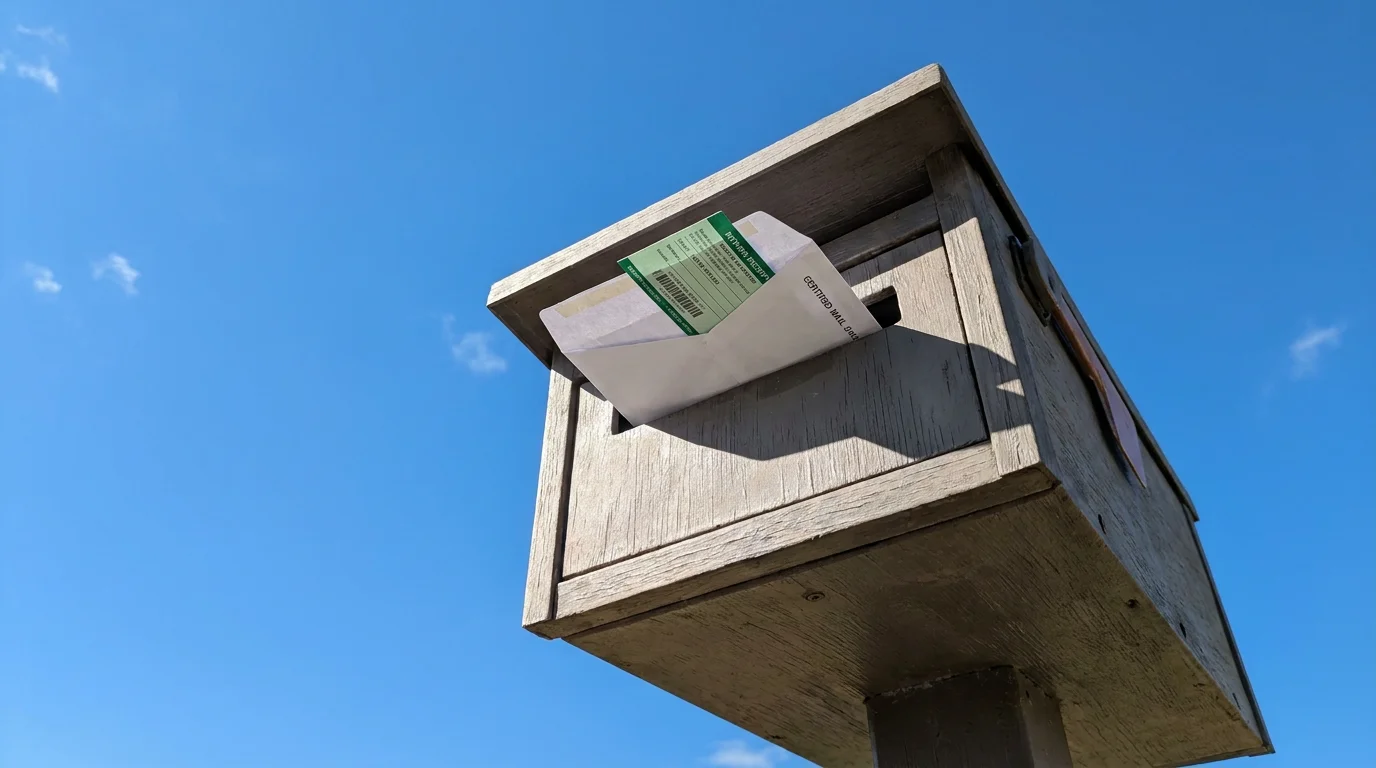
Kansas rent increase laws put no ceiling on the dollar amount you can charge, and K.S.A. 12-16,120 stops every city and county from adding one. What the state does regulate is timing and form: a month-to-month tenant gets written notice before a new rent takes effect, while a mobile home park tenant gets 60 days. A fixed-term tenant keeps the rent in the lease until the term ends. Most 2026 rent decisions for Kansas landlords turn on how and when to serve that notice, and on avoiding the two kinds of increases the law does prohibit.
Does Kansas have rent control?
K.S.A. 12-16,120 provides that no "county, municipality or township" may "enact, maintain or enforce any ordinance or resolution that would have the effect of controlling the amount of rent charged" for privately owned residential or commercial property. The Legislature passed the statute in 2001 (Senate Bill 89) and broadened it in 2016 (Senate Bill 366). It remains in force in the 2026 Kansas Statutes, and no bill in the 2025-26 session amended or repealed it.
The preemption reaches past direct rent caps, meaning a city or county cannot enact rent control or rent stabilization measures of any kind. Subsection (d) bars a local government from conditioning a building permit, plat, zoning change, or conditional use permit on your agreement to limit rents. Two exceptions survive: a city or county may control rents on property it owns, and you may voluntarily accept rent restrictions in exchange for grants or incentives. Neither touches an ordinary private lease in Wichita, Kansas City, Topeka, or Lawrence, and the University of Kansas Douglas County Tenant Experiences Report (October 2024) states outright that "Kansas state law currently prohibits rent control."
Local governments lost more ground in April 2026. Senate Bill 391 became law after the Senate and House overrode the governor's April 8 veto on April 9 and April 10. It prohibits cities and counties from requiring landlords to accept housing voucher tenants or from restricting the use of credit reports and eviction history in screening. It also protects the use of criminal history and voids conflicting ordinances adopted before July 1, 2026, including Lawrence Ordinance No. 9960. SB 391 says nothing about rent amounts; it removes a local lever that had constrained how some Kansas landlords set lease terms.
How much can a landlord raise rent in Kansas?
There is no statutory cap. Kansas Legal Services' tenant handbook states: "Kansas has no laws limiting the amount or frequency of rent raises." Kansas State University's tenant handbook goes further: "The landlord can raise rent as much as he or she wants as long as the landlord gives the required thirty (30) days written notice, unless the tenant can show retaliatory conduct." Kansas also has no just cause eviction requirement limiting when a landlord may decline to renew a tenancy. The market and the lease term are the only practical limits. Landlords must provide a separate 30-day notice for each periodic increase, and they may make back-to-back increases provided they deliver each notice before the increase takes effect. The Kansas Residential Landlord and Tenant Act (K.S.A. 58-2540 et seq.) sets deposit caps and habitability duties. It also sets notice rules, but nothing in it limits how much you can raise rent.
Prospective tenants and competing landlords set the practical limit through market conditions, and recent Apartment List and Zillow figures indicate that rent growth has slowed after a long run-up. That slowdown gives prospective tenants more bargaining power and makes large increases harder for landlords to sustain. Wichita rents rose 32.63% between February 2021 and February 2026, the 14th-largest increase among 100 U.S. cities, according to the Wichita Eagle's analysis of Zillow data. Current asking rents tell a flatter story:
- Market | Source and period | Rent | Change vs. prior year
- Wichita | Apartment List median, September 2026 | $1,039 | -0.4%
- Wichita | Zillow ZORI (city), June 2026 | $1,146 | +5.4%
- Kansas City, KS | Apartment List median, September 2026 | $1,180 | +2.6%
- Kansas statewide | Zillow Rental Manager average, June 2026 | $1,349 | +$49
The Wichita figures differ because Apartment List tracks asking rents on vacant units while Zillow's ZORI includes renewals. Both sit well below the $1,843 average across the 100 largest U.S. cities that the Kansas City Star reported in May 2026. Prospective tenants may reject rent that substantially exceeds comparable asking rents, increasing the landlord's vacancy risk. For comparison with states that do cap increases, see this guide to allowable increase amounts.
Required notice before a rent increase in Kansas
A month-to-month tenancy in Kansas is a tenancy at will that either party can end on a rent-paying date, and a tenant must receive written notice at least 30 days before the rent-paying date on which the new rent starts. The rule comes from K.S.A. 58-2570(b), which lets either party end a month-to-month tenancy "by a written notice given to the other party stating that the tenancy shall terminate upon a periodic rent-paying date not less than 30 days after the receipt of the notice." K.S.A. 58-2570 sets termination timing. Kansas State University's tenant handbook supplies the bridge: "If the landlord wants to change the rules or increase the rent, it must be accomplished by the same notice which is required for termination." Kansas Legal Services reads it the same way and tells tenants their landlord "must inform you of a rent raise IN WRITING at least 30 days in advance of the rent date when it is supposed to go into effect."
Two details in that text catch landlords. The clock runs from the tenant's receipt, not from the date you mail or sign the notice. And the increase has to land on a rent-paying date. If rent is due on the first and your tenant receives the notice on March 5, April 1 is fewer than 30 days out, so the earliest lawful effective date is May 1. No Kansas appellate court has ruled on the sufficiency of a rent-increase notice as distinct from a termination notice, so the safe course is to follow the termination timing exactly. Our guide to month-to-month agreements covers how these tenancies arise and end, and this overview of how much notice before increasing rent a landlord owes compares Kansas to other states.
Week-to-week tenancies are less settled. K.S.A. 58-2570(a) requires seven days' written notice to terminate one, and no statute, case, or legal aid guide expressly states the notice period for a week-to-week rent increase. Applying the KSU principle, seven days by analogy is the best available reading, but you are relying on an inference rather than a rule.
Rent increases during a fixed-term lease vs. at renewal
You cannot raise rent in the middle of a fixed-term lease unless the lease itself allows it. The KSU handbook puts it bluntly: "If the rental agreement is for a specific term, even if the agreement is oral, an increase in rent or a substantial change in regulations is illegal without the tenant's consent." Kansas Legal Services agrees that a long-term lease protects the tenant against increases for the period covered unless the lease expressly permits one. If your rental agreements contain no escalation clause, the new rent waits for lease renewal or a new lease.
What happens at expiration depends on paperwork. In Schartz v. Foster, 15 Kan. App. 2d 213 (1991), a one-year lease expired, the tenant stayed and kept paying monthly, and the Court of Appeals held the tenancy had become month-to-month under K.S.A. 58-2545(d). The court found a 60-day written notice legally sufficient under 58-2570(b). Once a holdover tenant is month-to-month, the 30-day framework from the previous section governs any increase.
A workable lease renewal timeline for a 12-month lease ending June 30, with the higher rent to start July 1 at lease renewal:
- Confirm the lease end date and check for any clause that already sets renewal rent or an automatic escalation.
- Deliver a written renewal offer or rent-increase notice so the tenant receives it no later than May 31, which is 30 days before the July 1 rent-paying date. Send the offer in early May, near the 60-day window the Schartz court upheld, so delivery delays do not disrupt the schedule.
- State the new rent and the effective date. Explain whether the tenant is signing a new fixed term or continuing month-to-month.
- If the tenant stays past June 30 without signing, treat the tenancy as month-to-month and keep any further changes on the 30-day, rent-paying-date schedule.
How often can a landlord raise rent in Kansas?
Kansas sets no limit on frequency. The same Kansas Legal Services passage that disclaims any limit on the amount of a raise disclaims any limit on how often you may do it. For a month-to-month tenant, the only constraint is that each increase carries its own written notice and takes effect on a rent-paying date. For a fixed-term tenant, the lease term is the constraint.
Once a year at renewal is the interval most Kansas leases already impose on themselves, and it aligns with the costs you can point to. K.S.A. 58-2572(c) names the increases a landlord may make in good faith even after a tenant complaint: "acts of God, public utility service rate increases, property tax increases or other increases in costs of operations." Property tax bills and insurance renewals arrive annually, so an annual increase tied to them is easy to document. Tenants in Douglas County are already absorbing this pattern: the KU report found two-thirds of surveyed renters had received an increase in the prior 24 months, 48% by $100 or more a month and 22% by $200 or more. Several small increases in a year, each with a new 30-day notice, cost you more in paperwork and goodwill than a single documented raise at renewal. Goodwill, in this context, is another word for tenant retention. Renters who feel nickeled-and-dimed are renters who start browsing listings, so consolidating adjustments into one transparent, well-timed conversation at renewal is both the lower-paperwork and the lower-turnover path.
Special rules for mobile home park rent increases
Mobile home park tenants get 60 days, and the statute says so expressly. K.S.A. 58-25,109(f) reads: "Each tenant shall be notified, in writing, of any rent increase at least 60 days before the effective date. Such effective date shall not be sooner than the expiration date of the original rental agreement or any renewal or extension thereof." This is the only Kansas statute that directly addresses rent-increase notice by name; every other Kansas rule on the subject comes from guidance that applies termination provisions.
The Mobile Home Parks Residential Landlord and Tenant Act (K.S.A. 58-25,100 through 58-25,126) applies when you rent a space in a park with two or more occupied mobile homes. If you rent both the home and the space to the same tenant, the general Residential Landlord and Tenant Act applies instead and the 30-day rule returns. Two related provisions round out the park framework:
- K.S.A. 58-25,105 makes park rental agreements month-to-month unless the agreement says otherwise, and a month-to-month park tenancy requires 60 days' written notice to cancel.
- K.S.A. 58-25,125 prohibits raising rent or cutting services in retaliation after a tenant complains to a code agency about a health or safety violation or complains under K.S.A. 58-25,111. It also protects a tenant who joins a tenant union.
Subsection (f) names no delivery method, so the service methods in K.S.A. 58-2510 (covered below) are the practical guide for park notices too.
Prohibited rent increases: retaliation and discrimination
Two categories of rent increase are unlawful in Kansas regardless of the amount or notice given: increases that punish a tenant for a protected action, and increases that treat tenants differently because of a protected characteristic.
Retaliatory increases under K.S.A. 58-2572
K.S.A. 58-2572 bars you from increasing rent or decreasing services in response to these tenant actions:
- Complaining to a governmental agency that enforces building or housing codes about a violation "materially affecting health and safety," or complaining to you about a violation of K.S.A. 58-2553, your duty to comply with such codes
- Organizing or joining a tenants' union
Kansas landlords have specific duties under the act, and the retaliation rule exists to keep tenants from paying a price for enforcing them.
A tenant who proves retaliation can recover under K.S.A. 58-2563: possession, or termination of the lease plus the greater of 1½ months' periodic rent or actual damages. The tenant also gets a defense in an eviction case, so a retaliation finding can derail otherwise legal evictions. The statute leaves you room to operate. Subsection (c) allows you to increase rent when the increase does not conflict with an existing lease and you make it in good faith to cover the cost categories quoted in the frequency section above. Subsection (d) allows a possession action when the tenant's lack of reasonable care primarily caused the code violation or when the tenant is in default in rent. It also allows an action when code compliance requires alteration or demolition that would deprive the tenant of the unit. A tenant behind on rent cannot use retaliation as a shield against a nonpayment 3-day notice; Kansas Legal Services tells tenants they must be "paid up in your rent" and stay current throughout a complaint to keep the protection.
A tenant can cite timing as evidence of retaliation, but must provide additional evidence. A raise that follows a code complaint by days, with no cost documentation behind it, invites the claim. Keep the tax bill or the utility increase that justified the number. Keep the insurance renewal too.
Discriminatory increases under fair housing law
The federal Fair Housing Act, 42 U.S.C. § 3604(b), prohibits discrimination "in the terms, conditions, or privileges of sale or rental of a dwelling" based on race, color, national origin, religion, sex, familial status, or disability. HUD's regulations at 24 C.F.R. Part 100 name the conduct directly: "Imposing different sales prices or rental charges for the sale or rental of a dwelling upon any person because of race, color, religion, sex, handicap, familial status, or national origin." Because § 3604(b) covers post-acquisition conduct, a discriminatory raise on an existing tenant is actionable, and HUD's 2023 discriminatory-effects rule reaches practices with "an unjustified discriminatory effect, regardless of whether there was an intent to discriminate." Kansas adds one class: the Kansas Act Against Discrimination, K.S.A. 44-1016, also protects ancestry.
Kansas enforcement history includes a rent increase specifically. In Kansas Human Rights Commission v. Dale (1998), a landlord raised an African-American tenant's rent by $20 a month to cover the utilities of extra occupants, but "a white family of four was not charged the additional rent until after Townsend filed her complaint." The Court of Appeals affirmed the discrimination finding and $7,500 in actual damages. In United States v. Cao (2020), Wichita landlords who allegedly conditioned rent reductions on sex agreed to pay $155,000 to aggrieved persons plus a $5,000 civil penalty. The Kansas Human Rights Commission accepts complaints for one year after the alleged act and charges no filing fee. It must finish its investigation within 100 days. Source of income is not a protected class under state or federal law, and after SB 391 no Kansas city can make it one.
How to deliver a rent increase notice in Kansas
Written notice is mandatory for month-to-month tenants, and K.S.A. 58-2510 lists the ways to serve it. Email is not on the list.
The statute allows these service methods:
- Serve the tenant personally.
- If you cannot find the tenant, leave a copy at the tenant's usual residence.
- If you cannot find the tenant, deliver a copy to a person over 12 who lives there.
- If you find no one on the premises, post a copy in a conspicuous place.
- Send the notice by registered or certified mail, return receipt requested, addressed to the tenant's usual residence.
Proof of certified mail service "may be by the return receipt," and proof of registered mail "may be by the affidavit of the person mailing such notice or by the return receipt." Kansas appellate courts have been strict elsewhere about mailed notice: where certified mail went to a business address, actual service on the defendant or an authorized agent was "an essential matter," and service on an office secretary did not count. In Karst v. Blehm, a district court accepted an emailed notice that "may have not met the terms of the lease that required written notice," but the Court of Appeals decided the case on other grounds, so no Kansas appellate decision establishes that email satisfies the statute. Send the email as a courtesy copy and serve a paper notice by a listed method.
Because the 30-day clock runs from receipt, hand delivery with a signed acknowledgment or certified mail with a return receipt gives you a date you can prove. Your notice should contain:
- Notice field | Required information
- Tenant and property | Tenant name and the rental address
- Rent amount | Current rent and the new rent
- Effective date | The effective date, which must be a rent-paying date at least 30 days after the tenant receives the notice (60 days for a mobile home park space, and no earlier than the agreement's expiration)
- Signature | The date you signed the notice and your signature
- Delivery record | A line recording how and when you delivered it
Because Kansas calculates the deposit cap as a multiple of periodic rent, a higher rent also raises the statutory maximum deposit. K.S.A. 58-2550 caps deposits at one month's periodic rent for an unfurnished unit and 1½ months' rent for a furnished unit. It permits an additional half month's rent for pets, so a $100 rent increase raises the maximum deposit by $100 on an unfurnished unit. The statute contains no clause that expressly authorizes demanding the difference mid-tenancy. The only guidance in the Kansas Legal Services handbook on adding to an existing deposit concerns a property sale, where the new owner may request more within the caps after "at least a full rent-period's written notice." The cleaner moment to reset the deposit is a new lease. When you do, document property condition with move-in and move-out inspections, because a landlord cannot deduct normal wear and tear from the security deposit, and a landlord who wrongfully withholds deposit money owes it back plus damages of 1½ times the amount under 58-2550(c).
Tenant options after receiving a rent increase notice
Expect acceptance or a counteroffer. The tenant may instead give notice to vacate. A month-to-month tenant who declines the increase can end the tenancy with the same 30-day written notice to a rent-paying date that you used, and when a landlord offers a fixed-term tenant a higher renewal rent, the tenant can let the lease expire. Tenants who negotiate often ask for a smaller increase or a longer term in exchange for the new rent. They may also ask for a repair. Nothing in Kansas law obliges you to negotiate, but an informed tenant will bring the comparable rent figures from earlier in this article to the conversation.
Tenants who believe an increase is retaliatory or discriminatory have places to turn, and knowing them tells you what a dispute looks like from the other side. Kansas Legal Services takes intake by phone at 316-267-3975 or toll-free at 800-723-6953, Monday through Friday from 8:00 a.m. to 4:30 p.m., and through an online application; an intake specialist typically follows up within two to three business days. Kansas Legal Services bases eligibility partly on income, with the 2026 Legal Services Corporation guideline at 125% of the federal poverty level ($19,950 for one person, $41,250 for a household of four). Tenants above those limits can submit questions to Kansas Free Legal Answers or ask a district court clerk for the Access to Justice Advice Line. They can also file a discrimination complaint with the Kansas Human Rights Commission. A fuller explanation of what your tenants can and cannot demand is in this guide to Kansas tenants' rights.
Key Kansas statutes governing rent increases
The following sections do the work described above:
- Statute | What it does
- K.S.A. 12-16,120 | Prohibits any Kansas city, county, or township from controlling rents or purchase prices on private property, and from conditioning permits or zoning on rent limits
- K.S.A. 58-2501 et seq. | Chapter 58, Article 25, the general landlord and tenant article; K.S.A. 58-2510 within it lists the authorized methods for serving notices
- K.S.A. 58-2540 et seq. | The Kansas Residential Landlord and Tenant Act, covering deposits and landlord and tenant duties, as well as remedies; contains no cap on rent amounts or frequency
- K.S.A. 58-2550 | Caps security deposits at one month's rent (unfurnished) or 1½ months (furnished), with another half a month for pets; sets return deadlines and a 1½-times penalty
- K.S.A. 58-2570 | Sets termination notice at 7 days for week-to-week and 30 days to a rent-paying date for month-to-month tenancies; Kansas legal aid guidance applies those periods to rent increases
- K.S.A. 58-2572 | Bars rent increases or service cuts in retaliation for code complaints or tenant organizing; allows good-faith cost-based increases
- K.S.A. 58-25,109(f) | Requires 60 days' written notice of any mobile home park rent increase, effective no sooner than the agreement's expiration
- K.S.A. 44-1016 | Kansas Act Against Discrimination; adds ancestry to the seven federal Fair Housing Act protected classes
Protect your Kansas rental with the right coverage
A rent increase that pushes a tenant out creates the same exposure as a fire or a burst pipe: months with no rent coming in. Loss of rental income coverage pays when a covered physical loss makes the property uninhabitable; it excludes vacancy caused by a tenant declining renewal. Steadily's landlord insurance pays up to 12 months of fair rental value when a covered loss, such as a fire or a tenant's overflowing bathtub ruining the subfloor, makes your Kansas property uninhabitable. That loss of rental income coverage does not apply when a tenant declines your renewal offer, so price your increases with that gap in mind.
For the losses insurance does cover, a DP3 policy pays for accidental tenant damage to the structure and carries liability coverage from $100K to $1M+ for injuries on the property. The policy excludes intentional tenant damage and normal wear and tear. It also excludes flood and vacancy beyond the policy's set window without a vacant coverage add-on. A Kansas single-family rental with $300K in dwelling coverage typically runs $900-$1.8K a year, and raising the deductible from $1K to $5K cuts the premium about 12-15%. Demotech rates Steadily Insurance Company A (Exceptional), and A.M. Best rates its partner carriers A- or higher. Get a quote in minutes at quote.steadily.com, no phone call required.
FAQ
These answers summarize Kansas notice periods and legal limits. They also cover the tenant remedies landlords most often need to check.
Can a Kansas city like Wichita or Kansas City cap rent increases?
K.S.A. 12-16,120 bars every political subdivision in the state from enacting or enforcing any ordinance that controls the rent charged on private property, and the 2025-26 Legislature left the statute untouched.
Is there a maximum percentage a landlord can raise rent in Kansas?
Kansas has no statutory cap by percentage or dollar amount. The lease term and the market limit what is practical. Kansas also bans retaliatory and discriminatory increases.
How much notice does a Kansas landlord have to give before raising rent?
For a month-to-month tenant, written notice must reach the tenant at least 30 days before the rent-paying date on which the new rent starts. Week-to-week tenancies have a seven-day termination notice under K.S.A. 58-2570(a), and seven days is the best reading for increases, though no Kansas authority confirms it.
Can rent go up in the middle of a fixed-term lease?
Only if the lease expressly allows it. Otherwise the increase is unlawful without the tenant's consent until the term ends, at which point you can offer a new lease or serve notice on a month-to-month holdover.
How many times a year can a landlord raise rent in Kansas?
There is no statutory limit. Each increase on a periodic tenant needs its own written notice on the proper schedule, and the practical norm is once at renewal, backed by documented cost changes.
What makes a rent increase retaliatory or discriminatory in Kansas?
An increase is retaliatory under K.S.A. 58-2572 when it follows a tenant's code complaint or union activity and is not a good-faith response to cost increases. It is discriminatory when the amount or terms differ because of race, color, national origin, religion, sex, familial status, disability, or, under Kansas law, ancestry.
Do mobile home parks follow the same notice rules?
K.S.A. 58-25,109(f) requires at least 60 days' written notice for any rent increase on a mobile home park space, and the increase cannot take effect before the rental agreement or any renewal expires.
What can a tenant do after getting a rent increase notice?
A tenant can accept the new rent or negotiate. The tenant may instead give written notice to move out on the same 30-day schedule. A tenant who suspects retaliation or discrimination can contact Kansas Legal Services at 316-267-3975 or file a complaint with the Kansas Human Rights Commission within one year of the increase.




.jpg)




.png)