
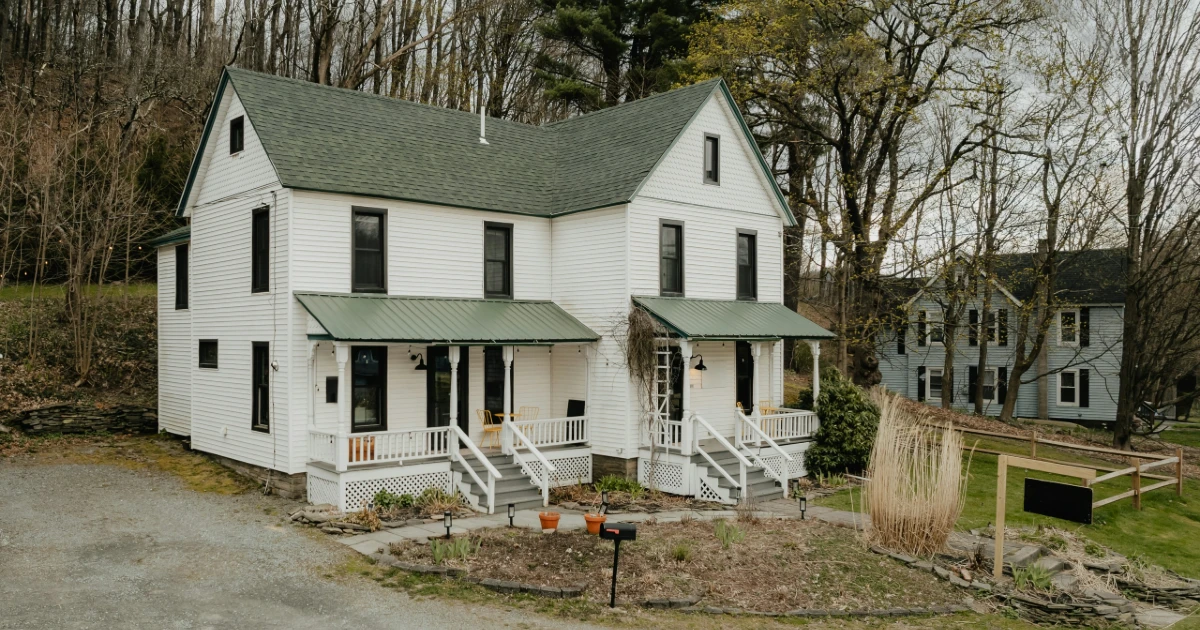
Investing in multifamily rental properties is an underutilized strategy that can be a strong revenue driver if done correctly. While they are pricier and require more upkeep than a single-family home, they do provide multiple opportunities for positive cash flow with multiple tenants. Once you own a multifamily building, multifamily insurance covers the whole property, all of its units, your liability, and lost rent under one policy.
But if you're at the beginning of your real estate investment journey, you're probably asking yourself the same question every investor faces: where should I actually buy?
For starters, the US multifamily market is massive, and not all cities are created equal when it comes to rental property performance. Some markets are seeing strong rent growth, while others are dealing with oversupply and stagnant returns.
The good news? There's real data that can help you narrow down your search. We've pulled together the latest market reports, occupancy rates, and rent growth figures from industry sources like CBRE, Yardi Matrix, Berkadia, and other authoritative commercial real estate firms to identify the markets that are actually performing well into 2026.
Before we dive into specific cities, let's talk about why multifamily properties have become such a popular investment vehicle in the first place.
Why investors consider multifamily rental properties
Multifamily properties – think duplexes, triplexes, and apartment buildings with multiple units – offer some compelling advantages over single-family rentals. For one thing, they let you scale your portfolio faster. Instead of buying five separate houses to get five rental incomes, you're managing one property with five units under the same roof.
That efficiency extends to property management too. When you need to handle maintenance, collect rent, or deal with tenant issues, everything's in one location. You're not driving across town to fix a leaky faucet at five different addresses. If you're thinking about how to handle all these units effectively, our guide on how to effectively manage a multi-unit rental property breaks down the systems that make it work.
There's also a vacancy buffer that gives many investors peace of mind. With a single-family rental, you're either 100% occupied or 0% occupied; there's no middle ground. But with a six-unit building, if one tenant moves out, you're still collecting rent from the other five while you find a replacement. That cash flow stability can make a real difference, especially when you're first getting started.
The numbers back this up too. According to recent data from CBRE Research, multifamily rents are expected to grow by 3.1% annually over the next five years, outpacing the pre-pandemic average. With average newly originated mortgage payments running 35% higher than average apartment rents as of mid-2025, a lot of Americans who might have bought homes are choosing to rent instead, and that trend isn't going away anytime soon.
Now, let's look at where those rental dollars are actually flowing.
The top 5 multifamily markets for 2026
1. Chicago, Illinois

Chicago might not be the first city that comes to mind when people think about hot real estate markets, but the data tells a different story. The Chicago multifamily market is quietly outperforming most of the country, and investors are starting to pay attention.
Chicago's rent growth led the nation in early 2025, with effective rents jumping 8.1% year-over-year according to Berkadia (sourced in CRE Daily). By mid-year, the market was still showing annual rent increases around 4.4%, nearly triple the national average. That's not a fluke; it's the result of Chicago not overbuilding like many growing US cities have.
The city's construction pipeline has slowed dramatically, with only about 8,100 units under construction as of Q2 2025, representing just 1.4% of total inventory – the slowest pace in over a decade. Meanwhile, demand has stayed strong, with occupancy rates climbing to 95.6%, which puts Chicago among the tightest markets in the country.
The supply-demand imbalance is working in investors' favor. Over the past year, Chicago renters absorbed nearly 11,000 units while only 6,700 new units were delivered. That gap is why rents keep climbing even as other major metros struggle with flat or negative growth.
One more thing working for Chicago: it's not just about raw population growth. The city attracts high-income earners working in finance, healthcare, and technology. About 43% of Chicago residents hold a bachelor's degree, compared to the national average of 25%, and average household incomes are just under $90,000. In affluent areas like Downtown and the North Shore, household incomes can reach $250,000. These are the kinds of tenants who can afford rising rents and tend to stay put.
For investors looking at Illinois properties, Chicago represents one of the strongest plays in the Midwest right now. Construction is expected to drop 40% in 2025 compared to 2024, which should keep the market tight and support continued rent growth through the year.
Be sure to invest in landlord insurance in Illinois if you purchase a rental in the Windy City.
2. Columbus, Ohio

Columbus is flying under the radar for a lot of investors, but it shouldn't be. This Ohio city has been posting steady rent growth around 3-4% annually, according to a 2025 MMG report, significantly outperforming the national average. And it's done so with way less volatility than the boom-and-bust Sun Belt markets.
What's driving Columbus? Strong fundamentals. The metro area has been gaining new residents at a healthy clip, according to Colliers, particularly in fast-growing counties like Delaware County. Net absorption exceeded 6,000 units in recent quarters, well above the 10-year historical average, which shows genuine demand for rental housing.
The job market is solid, too. Education and health services have been leading employment growth, which makes sense given Columbus's position as a major medical and research hub. The area's unemployment rate sits at 4.0%, right below the national average, and the market has added tens of thousands of jobs over the past year. You'll rarely have to worry about vacancies, as
Here's the interesting part: Columbus has managed its supply growth much better than many other cities. While some markets delivered enough apartments to push vacancy rates into dangerous territory, Columbus has been more measured. Annual rent gains are projected to approach 4.0% by early 2026. And with construction starts now at their lowest levels since 2014, the delivery pipeline is finally slowing down. That means less new competition for existing properties moving forward.
Vacancy did tick up to around 8-9% in some recent quarters as new units came online, but absorption has been strong enough to suggest the market can handle the supply. And here's the kicker: Columbus rents are still about 22% below the national average, which gives the market room to grow as more people discover its affordability and quality of life.
For investors considering buying in Ohio, Columbus offers a compelling mix of steady growth, reasonable valuations, and improving fundamentals as the delivery pipeline tapers off in 2026.
3. Northern New Jersey

If you want to understand Northern New Jersey's multifamily appeal, just look at a map. This region, including Hudson, Bergen, Essex, and surrounding counties, sits right across the river from Manhattan. For renters who want access to New York City's job market without paying Manhattan's eye-watering rent prices, Northern New Jersey is the obvious answer.
And the price difference is real. Average asking rents in Manhattan hit $5,596 in August 2025, according to a recent report from Lument, compared to $4,518 in Hoboken, $3,791 in Jersey City, and $2,623 in Hackensack. That gap creates natural demand from New Yorkers looking to stretch their budgets—whether they're young professionals tired of shoebox apartments, high earners seeking better amenities, or young families who need space but can't crack New York's housing market.
The numbers reflect this steady influx of renters. Northern New Jersey finished Q2 2025 with effective rents of $2,715 per unit, up 6.5% year-over-year—making it one of the top rent growth markets in the country. The region has maintained an occupancy rate around 95%, with an impressive 14 prospective renters for every vacant apartment unit according to some reports.
What's particularly interesting is the lease renewal rate. Northern New Jersey posted a 77.9% renewal rate—the best among the top 20 metros. When tenants are staying put at that rate, it tells you they value what they're getting, and it means less turnover costs for property owners.
The region benefits from more than just proximity to Manhattan. Northern New Jersey hosts a diverse mix of high-paying industries including financial services, life sciences, and technology. These sectors attract highly educated workers who can afford rising rents and tend to value the combination of suburban space and urban access.
Yes, there's been a wave of new luxury apartment construction, and the higher-end Class A segment has seen vacancy rates creep up. But overall market fundamentals remain strong, with rent growth projected at 2.7% over the next year – outpacing most of the country.
4. Charlotte, North Carolina

Charlotte is in the middle of an unprecedented apartment building boom, and if you're the type who gets nervous about oversupply, that might sound like a red flag. But here's what makes Charlotte interesting: demand has actually kept pace with the massive supply wave.
The city delivered over 4,700 units in just the first quarter of 2025, more than triple the historical average, and over 10,700 additional units are projected for the full year. That's a lot of apartments. Yet vacancy rates have actually declined for three consecutive quarters, and absorption hit all-time highs in 2024 at approximately 12,700 units absorbed, according to MMG's Charlotte forecast.
What's driving all this demand? Charlotte has become one of the fastest-growing metros in the country. The city was ranked the #2 U-Haul Growth City in 2024, which is basically a proxy for in-migration. People are moving here for jobs – particularly in finance, where Charlotte has established itself as the second-largest banking center in the US after New York.
The job market has been solid, with over 30,000 net jobs added in a recent 12-month period. Professional and business services led the gains. And with unemployment at 3.6%, well below the national average, there's genuine economic momentum supporting rental demand.
Now, let's be honest about the challenges. Vacancy did climb to around 8.2% in recent quarters, and rents have been flat or slightly negative year-over-year in some submarkets as landlords prioritize filling units. About 27% of properties have been offering concessions. This isn't a market where you're going to see aggressive rent growth in the immediate term.
But here's the opportunity: the construction pipeline is starting to contract. New construction starts dropped 40% in 2024, which means the delivery wave will slow significantly in 2026 and beyond. For investors with a longer time horizon, buying in Charlotte now—while there's still some softness—could position you well as supply-demand dynamics rebalance and rent growth resumes.
Certain submarkets are particularly attractive. Gaston County and Lake Norman areas show occupancies above 94% with minimal new supply in the pipeline, offering less competition and solid rents. Meanwhile, submarkets like South Charlotte and East Charlotte have seen strong absorption and are expected to drive investment sales activity.
For investors considering buying in North Carolina, Charlotte represents a classic "buy when there's blood in the streets" opportunity—or at least when there are concessions on the streets. The fundamentals suggest this market will tighten up.
5. Columbus, Ohio (suburban markets)

Wait, didn't I already cover Columbus? I did, but it deserves a second mention because the suburban ring around Columbus is performing even better than the metro as a whole and represents a different investment profile.
While the downtown core has dealt with higher vacancy from the 2023-2024 delivery cycle, outlying areas like Gaston County/Concord and Lake Norman maintain occupancies above 94% with virtually no new construction pipeline. These submarkets offer rents in the $1,400-$1,450 range—lower than urban cores but with way less competition and more stable fundamentals.
The appeal is straightforward. As housing costs have risen nationwide, Columbus's affordability has become a major selling point. The metro is projected to grow by over one million residents by 2050, adding approximately 40,000 people annually. A lot of that growth is happening in suburban counties where families want more space, good schools, and reasonable costs.
Delaware County is one of Ohio's fastest-growing counties and a focal point for development, but even with about 2,500 units under construction (representing 18% of the submarket's inventory), occupancy rates are expected to rise because population growth is so strong. Areas like Southern Columbus and Upper Arlington have seen heavy development activity but continue to perform well as absorption keeps pace.
For suburban Columbus specifically, you're looking at markets that combine steady job growth (particularly in healthcare and education), population gains, and measured supply growth. It's not the flashiest market, but that's kind of the point—boring can be profitable in real estate.
The CBRE 2025 outlook notes that shrinking construction pipelines, strong renter demand, and rising occupancies are expected across all markets in 2026, but secondary markets like suburban Columbus are particularly well-positioned because they avoided the worst of the oversupply wave.
Are multifamily rentals a smart investment?
So after looking at all these markets and their data, are multifamily properties actually a smart investment right now? The honest answer is: it depends on what you're looking for and your personal situation.
On the positive side, the fundamentals supporting multifamily demand remain strong. Mortgage rates have stayed elevated, with average newly originated mortgage payments still running 35% higher than average apartment rents. That gap keeps homeownership out of reach for millions of Americans, which means they're going to keep renting. National occupancy hit 95.7% in Q2 2025, a three-year high, and rent growth has held steady even after the massive supply wave of the past few years.
The construction pipeline is also shrinking. Multifamily construction starts are expected to be 74% below their 2021 peak and 30% below pre-pandemic averages by mid-2026. Less new supply in future years should support better fundamentals for existing properties.
But there are legitimate challenges too. Many markets are still working through the delivery wave from projects started in 2022-2023, which means near-term rent growth could be muted. Operating expenses have climbed across the board – property taxes, landlord insurance coverage, maintenance costs – eating into margins. And if you're buying at current prices with current interest rates, your cap rates might be tighter than you'd like.
Market selection matters enormously. As we've seen, some cities like Chicago and Columbus are posting strong rent growth with tightening fundamentals, while others are dealing with oversupply and stagnant or negative rent growth. The gap between the best and worst performing markets is wider than usual right now.
Property type matters too. Class A luxury properties have generally faced higher vacancy rates than workforce housing in many markets, as the luxury segment saw the heaviest construction activity. Meanwhile, affordable workforce housing has maintained tighter occupancy and more stable rent growth in most metros.
Your personal situation matters most of all. Can you handle a few years of flat or minimal rent growth while the market rebalances? Do you have the reserves to cover higher expenses and potential vacancy? Are you investing for cash flow, appreciation, or both?
What I can say is that the long-term outlook for rental housing remains strong. The Urban Land Institute's 2026 Emerging Trends report ranks rental housing's investment outlook "head and shoulders above its peers," driven by structural supply constraints and steady demand growth. The fundamental shortage of housing in America isn't going away.
The key is to go into any multifamily investment with your eyes open. Do your homework on the specific market, understand the competitive dynamics, run conservative underwriting scenarios, and make sure you have the financial cushion to weather any near-term softness. If you've done that work and the numbers still make sense, there are definitely opportunities out there—particularly in markets where supply is coming under control and demand fundamentals are strong.
And of course, make sure you've got proper insurance coverage in place before you close on anything. Whether you're investing in Illinois, Ohio, New Jersey, or North Carolina, protecting your investment is just as important as finding the right property in the first place.




.jpg)




.png)