
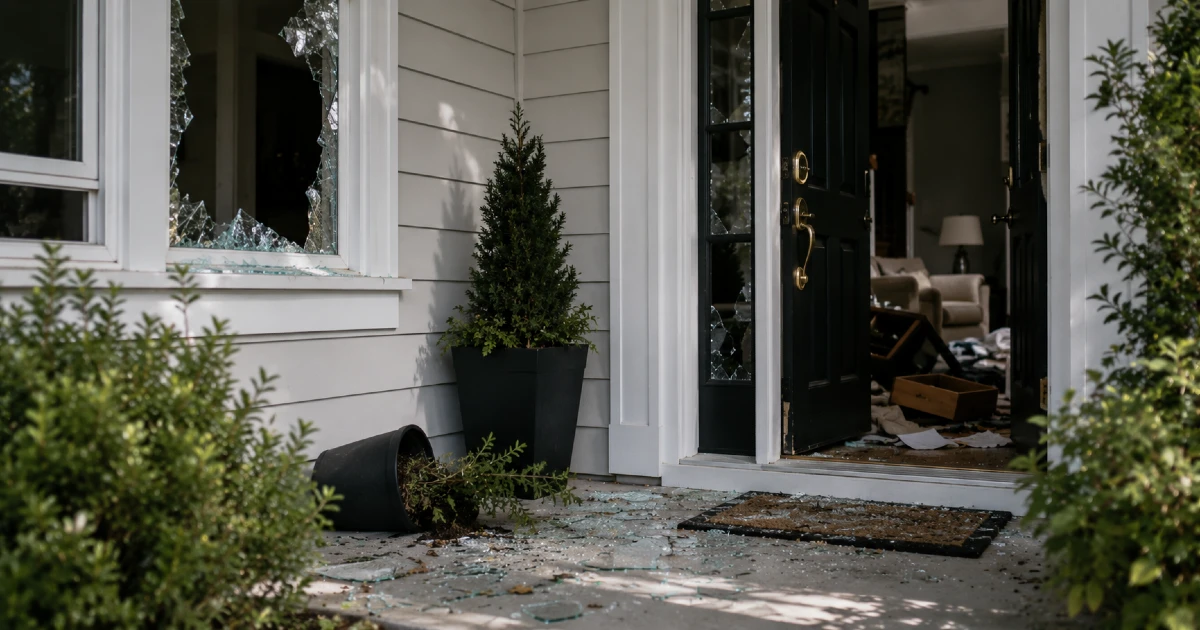
Limited theft coverage is one of the more confusing pieces of a landlord policy, partially due to the name. "Limited" sounds like a downgrade, but the reality is more specific than restrictive.
Limited theft coverage pays for items the landlord owns at the rental, the appliances, furniture and fixtures that aren't part of the structure itself but aren't tenant property either, when those items are stolen or damaged during a break-in. The "limit" part is the dollar cap, which on most landlord policies sits at the Personal Property amount on the declarations page, not the full dwelling limit.
This piece walks through what limited theft coverage actually pays for, the scenarios it's built around, the exclusions that catch landlords off guard, and how it lives inside the broader burglary coverage on a landlord insurance policy.
What does limited theft coverage mean?
Short answer: it's the part of a landlord insurance policy that covers theft of landlord-owned personal property at the rental. Not the structure itself if it gets damaged; that sits in Coverage A (Dwelling) and gets paid out at the full dwelling limit. Not tenant belongings, those belong on a renters policy. Limited theft sits in between, the layer of stuff the landlord brought to the unit: the refrigerator, the stove, the washer/dryer, the water heater, the smart locks installed at turnover, the HVAC compressor sitting outside.
The "limited" descriptor exists for two reasons. First, theft has always been the peril most prone to fraud and tenant misuse in landlord policies, which is why the standard ISO forms most carriers including Steadily start from treat it as a capped peril rather than a wide-open one. Second, the dollar limit is tied to the Personal Property coverage on the policy, not the full Coverage A limit. A policy with $500,000 in dwelling coverage might only have $5,000 to $10,000 of Personal Property, and limited theft pays out within that ceiling.
None of that makes it bad coverage; rather, it makes it specific. For most landlords, the appliances and furniture they own at a unit add up to well under the typical Personal Property limit. The coverage does exactly what it's built to do when someone kicks in a door and walks out with the fridge.
What does limited theft coverage include?
Limited theft coverage applies when three things are true at once:
- Something the landlord owns at the rental is stolen or damaged
- The cause is a break-in or attempted break-in (forced entry with intent to commit a crime)
- The property isn't in a state the policy excludes (under construction, vacant beyond the vacancy window, and so on)
The kinds of losses that fit the form:
- Appliances stolen during a forced entry, refrigerators, stoves, microwaves, dishwashers, washer/dryer when landlord-owned
- HVAC compressor or condenser unit stolen from outside the building, a common copper-theft scenario in vacant or rural units
- Water heater stolen from a vacant unit during turnover
- Furniture in a furnished short-term rental, taken during a break-in
- Smart locks, security cameras, smart thermostats, or other landlord-installed tech damaged or removed
- Damage to the structure during the theft itself, broken doors, smashed windows, cut wiring, usually paid under the vandalism portion of the same coverage section
What is not covered by limited theft coverage?
A handful of scenarios look like theft from a distance but fall outside the form:
- Theft by the tenant. Never covered. Insurance won't write you a check for items your own tenant took. This is a civil and sometimes criminal matter, handled with police reports, small-claims filings, eviction, and what you can deduct from a security deposit. The policy doesn't enter the conversation.
- Tenant's personal property. Their stuff. Their renters policy. Not yours, and not your policy's problem either way.
- Mysterious disappearance. If items go missing without evidence of forced entry, the claim usually dies on the police-report or evidence requirement. The break-in is the trigger. Without a police report, no claim.
- Items not part of the covered property. The DP1 (named-peril) form draws a tight line around what counts as "covered property." A tool stolen from an unlocked shed in the backyard may not qualify unless the shed itself is named on the policy or covered under an Other Structures endorsement.
- Theft during construction. Almost always excluded. A property under renovation needs a Builder's Risk policy or a specific endorsement on the landlord policy to cover theft during the work.
- Theft from a vacant property beyond the vacancy window. Once a unit has been vacant for 30 or 60 days (the specific number depends on the policy), theft coverage usually drops or disappears entirely. This is one of the most common reasons theft claims get denied, and it's worth knowing your vacancy clock before a unit sits empty between tenants.
- Punitive damages. Some states allow them in tenant-misconduct cases. Insurance doesn't pay them either way.
DP1 vs DP3: where limited theft lives on each form
The form of the landlord policy decides how theft works. DP1 vs DP3 is the underlying choice for most landlord coverage.
DP1 (Dwelling Fire Form 1, named-peril) doesn't include theft as a covered peril at all. The DP1 form covers nine specific perils, fire, lightning, internal and external explosions, windstorms, hail, riots, smoke, aircraft, vehicles, and volcanic explosions, and that's it. Theft isn't on that list. If you want theft on a DP1, the Limited Theft endorsement has to be added explicitly.
DP3 (Dwelling Fire Form 3, open-peril) flips the logic. Instead of listing what's covered, the DP3 form lists what's excluded. Theft isn't on the standard exclusions list, which means DP3 covers theft baseline, subject to the Limited Theft sublimit on the declarations page.
So the rule of thumb is:
- DP1 baseline = no theft. Must endorse.
- DP3 baseline = theft covered up to the Personal Property limit.
The dollar amount varies by policy. The trigger (break-in) and the exclusions (tenant theft, mysterious disappearance, vacancy, construction) stay the same across both forms.
Steadily offers DP1 and DP3 in all 50 states. Get a free quote in minutes:
Examples of limited theft coverage in practice
A few scenarios that show the form doing what it's designed to do, and a couple where it doesn't.
The vacant property between tenants. The previous renter moved out on the 5th, the new lease starts on the 25th, and on the 17th someone breaks the back-door lock and walks out with the refrigerator and microwave. Limited theft pays for the appliances (landlord-owned, forced entry, within the vacancy window assuming the carrier's vacancy clock is 30+ days). Vandalism pays for the broken door. The whole loss files as one event.
The short-term rental in season. The unit is furnished, occupied by guests, and a thief breaks in through a sliding glass door and takes the TV and a couch. The TV is landlord-owned and came with the unit, so limited theft covers it. Any guest belongings stolen the same night belong on the guest's homeowners or travel policy, not yours. The broken sliding door rolls into the same claim under the vandalism part of the section.
The disappearing washer. A tenant moves out at the end of a lease, and the landlord arrives to find the washer/dryer gone. No broken locks. No forced entry. No evidence of a third party. This is the scenario limited theft was specifically designed to not cover. There's no break-in, just a missing appliance and a former tenant who probably took it. The remedies are: deduct from the security deposit, file a small-claims case, or both. The insurance policy isn't the right tool.
The copper theft from a vacant unit. The property has been vacant for two months while undergoing minor renovations. Someone strips out the copper wiring and the HVAC compressor. If the carrier's vacancy clock is 30 days, the claim is likely denied under the vacancy exclusion. If it's 60 days, it's borderline. The lesson is that vacancy plus theft is one of the easiest combinations for a carrier to refuse, and securing a property between tenants is the cheapest insurance there is.
Limited theft coverage vs full theft coverage
In the homeowners market, "full theft" coverage means theft of personal property pays out up to the full Coverage C limit with no separate sublimit and no narrow trigger. That's the standard on an HO3 (homeowners) policy.
In the landlord market, "full theft" is rarely how it works. Most landlord forms either exclude theft entirely or apply a sublimit, because the use case is different: landlords aren't living at the property, and the items being protected are usually a smaller list (appliances, fixtures, landlord-installed equipment) rather than a household's worth of personal goods. The "limited" framing is just an honest reflection of that. The form is calibrated to the things landlords actually own at their units, not to a full house of furniture and electronics.
If you're comparing landlord quotes and one carrier markets theft "with no sublimit," read the policy language carefully. There's usually either a different exclusion in play (often a tighter vacancy clause or a tenant exclusion) or the limit is hidden inside the dwelling limit rather than improved on it.
How does limited theft coverage work after a break-in?
The order that protects the claim:
- Tenant safety first. Anyone present should leave the property and call the police. Nothing about the claim matters more than this.
- Police report. Non-negotiable. Almost every landlord policy requires a police report for any theft claim, and the report number goes on the claim form. Some carriers won't open a claim without it.
- Document before cleanup. Photos of damaged doors, missing items, the scene as it was. Adjusters look for evidence of forced entry, the photos are what the claim ultimately rests on.
- Notify the carrier within the reporting window. For most landlord policies that window is 72 hours to 30 days. Earlier is always better. Reporting late is a real reason theft claims get denied, on top of any policy issue.
- Separate landlord property from tenant property. Anything the tenant owns goes on their renters policy. Anything you own goes on yours. The adjuster wants this clean before they pay.
- Don't replace items before the adjuster inspects. Hold receipts, hold proof of original purchase if available, let the carrier see what's gone. Replacing the fridge before the adjuster shows up sometimes hurts the claim more than the timing would suggest.
Steadily and most carriers settle theft losses at actual cash value or replacement cost depending on the form and any endorsements on the policy. ACV (the depreciated value) is the default on DP1; RCV (the cost to replace with new) is more common on DP3 and on Steadily policies with the appropriate endorsement.
When the claim gets denied
The most common reasons a theft claim gets pushed back or denied:
- No police report
- No evidence of forced entry (the mysterious-disappearance issue)
- The items stolen aren't actually landlord-owned (the form covers what's yours, not what was there)
- The property had been vacant longer than the vacancy clock allowed
- Reported after the policy reporting window
- The location of the items stolen wasn't on the policy (e.g., from a detached shed without Other Structures coverage)
When a theft claim does get denied, there's an appeal process worth knowing in advance, especially if the denial hinges on something fixable (better documentation, a missing police report number, a misclassified item).
Reducing theft risk on rental properties
Limited theft coverage pays out when things go wrong. Most landlords would prefer not to use it. A short list of habits that meaningfully cut down on theft claims, all of which sit below the cost of a single denied claim:
- Re-key or change smart-lock codes between tenants, every single time
- Never leave appliances or HVAC components in a unit during long vacancies without securing the building
- Check the vacancy clock on your policy before any unit goes empty for more than 30 days, and adjust the policy if needed
- Add motion-activated exterior lighting at the back and side entries
- Pull or secure copper wiring on units undergoing renovation
- Document what's in the unit at every turnover with photos and a property inventory
For the longer breakdown of the most common burglary risks for rental properties, the prevention piece goes scenario by scenario.
Tax treatment when part of the loss isn't covered
If part of the theft loss isn't covered, the deductible, the portion above the Personal Property limit, items the policy excluded, the unreimbursed amount may be deductible as a casualty loss on Schedule E for the rental. The documentation has to be tight: police report, claim file from the carrier showing what was paid and not paid, original purchase records for the stolen items, and the photos taken at the scene.
This isn't tax advice. Talk to a CPA before filing. But the uncovered piece of a theft loss doesn't have to be a complete write-off either way.
Where limited theft sits in a Steadily policy
On a Steadily landlord policy, limited theft attaches to the Personal Property line on the declarations page. The dollar amount listed there is the limit, typically $2,500 to $10,000 depending on property type and the coverage selected at quote. The trigger and exclusions are the same as the industry-standard form: break-in required, no tenant theft, no mysterious disappearance, vacancy clock applies.
It's part of the broader landlord insurance coverage that includes the vandalism portion of the same section, which is what pays for the physical damage from a break-in (the broken doors, smashed windows, ripped-out fixtures). On most claims, the two coverages work together: vandalism for the damage to the structure, limited theft for the items removed. They file as one event, with one deductible.
The deeper breakdown of how the entire claim process works, including what to expect from the adjuster and how the carrier reaches a settlement number, sits in the landlord insurance claims process pillar.
Frequently asked questions
What does limited theft coverage mean?
Limited theft coverage means the policy covers theft of landlord-owned personal property at the rental (appliances, furniture, fixtures, equipment the landlord installed) up to the Personal Property limit on the policy declarations, when the theft is caused by a break-in. It doesn't cover tenant theft, tenant property, or mysterious disappearance.
What does limited theft coverage include?
Stolen or damaged appliances, furniture in furnished units, water heaters, HVAC components, smart locks, security cameras, and similar landlord-owned items, when those items are removed or damaged during a forced entry.
What is not covered by limited theft coverage?
Theft by the tenant, tenant personal property, mysterious disappearance (no evidence of forced entry), property under construction, theft from a vacant unit beyond the vacancy window, punitive damages, and items not part of the covered property on the declarations page.
Does landlord insurance cover stolen appliances?
Yes, when the appliances are owned by the landlord and the theft involved a break-in. This is exactly what limited theft coverage is built for. Tenant-owned appliances, or appliances that go missing without forced entry, are not covered.
Does DP3 cover theft?
Yes. Theft isn't in the standard DP3 exclusions list, so DP3 policies cover theft up to the Personal Property sublimit on the declarations page. DP1 policies don't cover theft baseline and require an endorsement.
How does limited theft coverage work after a break-in?
File a police report immediately, document the damage and missing items with photos, notify the carrier within the policy reporting window (usually 72 hours to 30 days), separate landlord-owned property from tenant property, and avoid replacing items before the adjuster inspects.
What's the difference between limited theft coverage and full theft coverage?
Full theft coverage, more common on homeowners policies, pays out for theft of personal property up to the full personal property limit with no separate sublimit and a wider trigger. Limited theft coverage, more common on landlord policies, is restricted to landlord-owned items, sits at a sublimit, and requires a break-in. The "limited" framing reflects that the use case (a rental, not a home) is narrower than a typical homeowners scenario.




.jpg)




.png)