
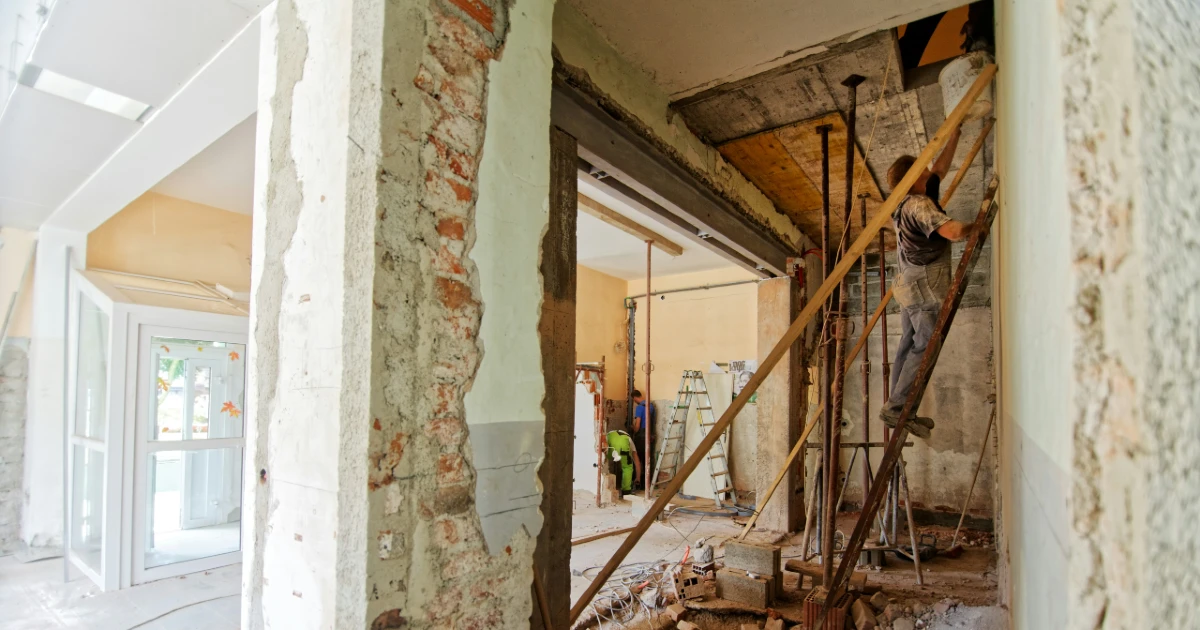
Ordinance or law coverage is the part of a landlord insurance policy almost nobody reads - that is, until they need it. The job is narrow but useful: when a covered loss damages a rental, current building codes will often require the rebuild to meet a higher standard than the property was originally built to. The base policy pays for restoring the property to its original condition.
Ordinance or law pays the difference between original-grade rebuild and current-code rebuild. Without it, the landlord pays that difference out of pocket. With the right limit on it, the policy covers it for you.
This piece walks through what ordinance or law actually covers, the Coverage A/B/C structure most policies use, the 10% / 25% / 50% question that decides whether the coverage actually works when called on, the state-by-state rules (Florida deserves its own paragraph), and where ordinance or law sits in a Steadily landlord insurance coverage form.
What ordinance or law coverage actually does
The core function is to bridge the gap between two numbers:
- The cost to rebuild the rental to the standard it was originally built to
- The cost to rebuild it to the building codes that apply now
Most landlord policies pay for the first number under Coverage A (Dwelling). They do not pay the second. Ordinance or law fills that gap, subject to a sublimit on the declarations page.
The gap is wider than most landlords expect. A few examples that show up routinely in claims:
- A 1980s rental loses a kitchen to a grease fire. Modern electrical code requires arc-fault breakers, GFCI outlets within six feet of any sink, and updated panel grounding. None of that was required when the unit was built. The contractor is legally obligated to rebuild to current code, the base policy pays the original-grade rebuild, and ordinance or law covers the upgrade differential.
- A 1960s single-family rental gets damaged by a tropical storm. Local code now requires hurricane straps, impact-rated windows in the wind-borne debris region, foundation tie-downs, and current-code stairs and railings during any meaningful repair. Same dynamic.
- A pre-1978 multifamily rental with lead paint or a pre-1985 building with asbestos has water damage repairs. EPA's lead RRP rule and federal asbestos handling rules require certified remediation during major work. The remediation cost is what ordinance or law is built to pay.
The base policy assumes you can rebuild what you had. Ordinance or law acknowledges that you usually can't, and makes up the difference.
Coverage A, B, and C: what the three parts do
Industry-standard ordinance or law endorsements split into three coverage parts. Each pays a different thing, and most policies write them as separate sublimits.
Coverage A: undamaged portion upgrades
Pays the increased cost of bringing the undamaged portion of the building up to code. This applies when a partial loss triggers code-required upgrades to the rest of the structure. Example: a kitchen fire damages 30% of a duplex, and current code requires a sprinkler system across the entire building, not just the kitchen. Coverage A pays for the sprinkler retrofit in the undamaged 70%.
Coverage B: demolition
Pays for the demolition of undamaged portions when local code requires them to come down. This is the "50% rule" in action. Many municipalities, especially across Florida and coastal hurricane-prone counties, require that if more than 50% of a structure is damaged, the entire structure has to be demolished and rebuilt rather than partially repaired. Coverage B pays the cost of tearing down the undamaged half the code is forcing you to demolish.
Coverage C: increased cost of construction
Pays the additional cost of rebuilding the damaged portion to current code. This is the most-used part of the endorsement on most claims. The base policy pays the original-construction-cost equivalent; Coverage C pays the upgrade differential on the damaged area.
Some carriers bundle these three parts under a single combined sublimit. Others write each separately at different percentages. Either way, the declarations page is what you read to know what you actually have.
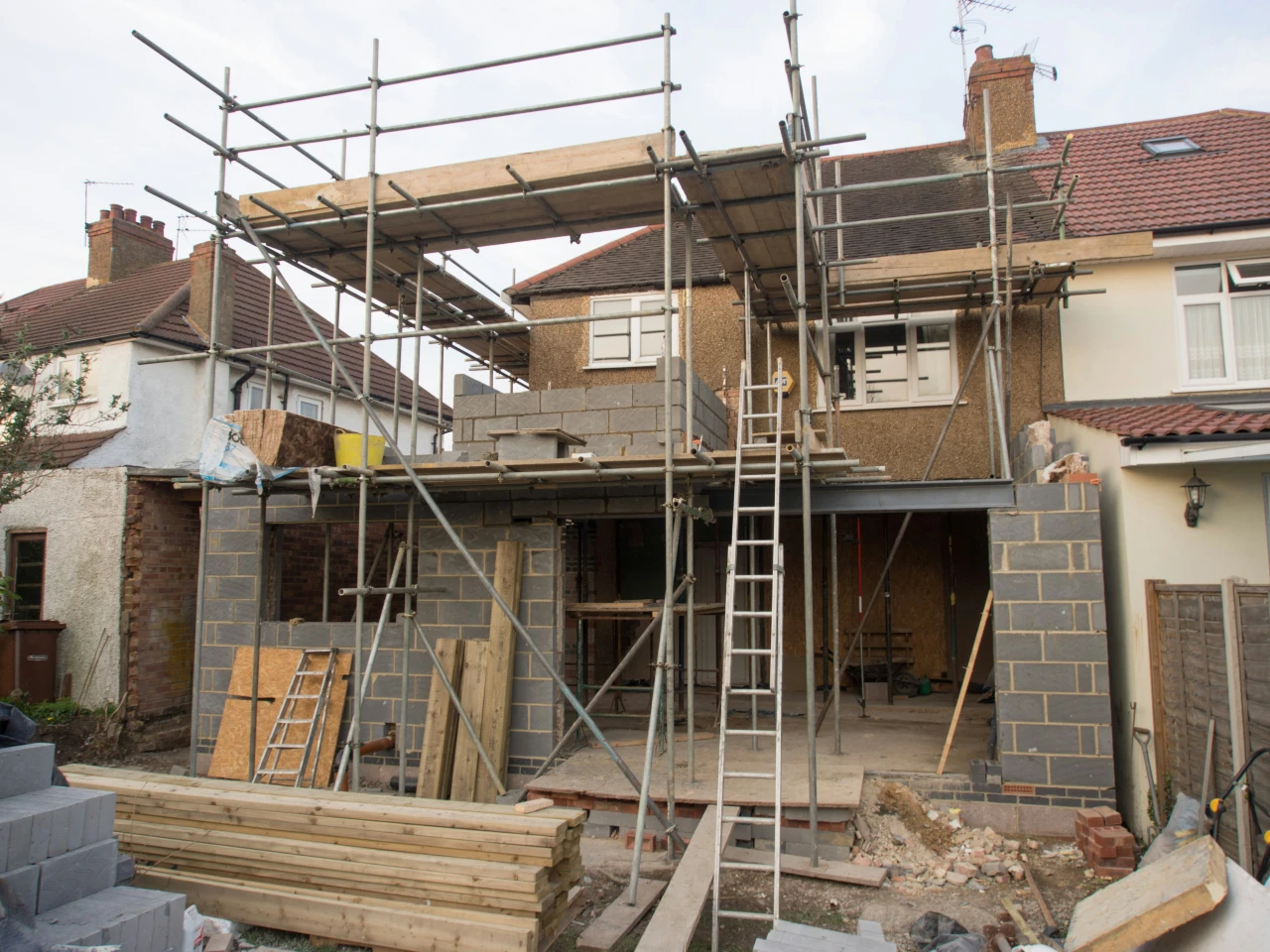
10%, 25%, or 50%: what percentage do you actually need?
The default ISO ordinance or law sublimit is 10% of Coverage A (the dwelling limit). For most landlords, that's not enough. The right percentage is a function of two things: how old the rental is, and how aggressive the jurisdiction is about updating its building codes.
10% (the default)
Appropriate for rentals built in the past 15 years, in jurisdictions that haven't moved their codes aggressively. The original construction is recent enough that current code is similar, and the rebuild upgrade differential is modest. New multifamily and most newer single-family construction fit here.
25% (the common upsold tier)
Appropriate for rentals built between roughly 1990 and 2010, or older rentals in jurisdictions that haven't aggressively updated their codes since. Also the Florida-mandated statutory minimum on most policies. Florida Statute 627.7011(6) requires every Florida policy to include ordinance or law coverage at no less than 25% of Coverage A, unless the policyholder opts out in writing. Most Florida landlords are at or above 25% by default.
50% (the older-property tier)
Appropriate for rentals built before 1990, in jurisdictions with strict modern codes (most of California, parts of Texas, hurricane-prone coastal areas, anything with snow-load requirements). Pre-1990 rentals are often 30% to 50% behind current code requirements, and a covered claim can trigger material upgrades that easily eat 50% of the dwelling limit.
The percentage decision is the single most consequential choice in this coverage section. Concrete version of the math: a covered fire claim on a 1960s California rental commonly carries $50,000 to $60,000 in code-upgrade costs (modern wiring, AFCI breakers, Title 24 energy upgrades, current-code stairs). With 10% ordinance or law on a $300,000 dwelling limit, the policy caps that piece at $30,000 and the landlord covers the rest out of pocket. With 50%, the policy absorbs all of it. The premium difference between 10% and 50% on that policy: usually $40 to $120 a year.
What ordinance or law does not cover
The endorsement is narrowly written. It only pays when all of the following are true:
- The underlying loss is a covered peril under the base policy
- The code requirement is a legal requirement, not a contractor recommendation
- The code was in effect at the time of the loss
- The repair work happens within the time the policy allows (usually two years from the date of loss, sometimes extended on request)
It does not cover:
- Voluntary upgrades the landlord wants to make for marketability or efficiency
- Cosmetic improvements during the rebuild
- Code upgrades on a non-covered loss (e.g., flood damage on a policy without flood coverage)
- Code upgrades to a property the landlord chooses not to rebuild
- "Functional obsolescence" (old equipment that needs replacement just because it's old, not because of a covered loss)
- HOA architectural requirements (those are not building codes)
- Code violations that existed before the loss
Each of those is a real reason ordinance or law claims get denied or partially paid. Reading the policy form once when binding the policy is significantly cheaper than reading it for the first time after a fire.
DP1 vs DP3: where ordinance or law lives on each form
The form your landlord policy is written on changes how ordinance or law shows up. DP1 vs DP3 is the underlying choice for most landlord coverage, and it affects ordinance or law as much as it affects every other section.
DP3 (Dwelling Fire Form 3, open-peril, replacement cost) is where most landlords end up, and most carriers including Steadily default ordinance or law on at the quote step at a 10% sublimit. It carries additional premium tied to the percentage chosen, but the dollar amount is modest relative to the claim exposure the coverage absorbs (more on the math below). The percentage can be adjusted up to 25% or 50% at quote, or declined entirely if the landlord chooses to skip it.
DP1 (Dwelling Fire Form 1, named-peril, actual cash value) sometimes includes it, sometimes doesn't. The default is often nothing or a lower sublimit, depending on the carrier. Landlords on DP1 should explicitly ask whether ordinance or law is included and at what percentage. If it isn't, the endorsement should be added.
The wider DP1 vs DP3 decision involves multiple factors. Settlement basis is the biggest one (the difference between actual cash value and replacement cost changes what a claim pays out by 30% to 50% on older buildings). Ordinance or law is one more reason most landlords end up on DP3.
State-by-state: where the rules diverge
Florida is the headline. Under Florida Statute 627.7011(6), every Florida policy must include ordinance or law coverage at a minimum of 25% of Coverage A. Some Florida carriers default to higher percentages on coastal counties. The statute allows a written opt-out, but the default is included. If you own a Florida rental, you almost certainly have at least 25%, and you should check whether you need more.
Texas has no statewide statutory mandate, but TWIA (Texas Windstorm Insurance Association) policies on the 14 coastal counties have specific ordinance or law provisions for wind damage rebuilds. Inland Texas policies usually default to 10% but the upsell is cheap.
California doesn't mandate a minimum, but the state's aggressive seismic code, Title 24 energy code, and the post-2017 fire codes (especially in WUI / wildland urban interface zones) make 25% or 50% almost essential for any rental built before 2010.
Montana takes the strongest position of any state. Montana mandates ordinance or law coverage on every dwelling policy, both DP1 and DP3, with no additional premium charged to the policyholder. Montana is one of the few landlord insurance markets where the coverage is universal rather than opt-in or upsold.
Utah sits in the middle. The state requires ordinance or law on DP3 policies (the open-peril replacement-cost form) at no additional premium, but doesn't extend the mandate to DP1. For most Utah landlord insurance shoppers, that's another reason DP3 is the default choice.
Massachusetts, New York, New Jersey, and other older-housing-stock states see frequent ordinance or law claims because the housing stock is genuinely old. The rule of thumb: older the housing stock, plus stricter the codes, plus more frequent claims, equals higher percentage needed.
If you own rentals across multiple states, the right percentage may be different for each property. Steadily and most multi-state landlord carriers let you set ordinance or law differently per policy.
Why ordinance or law matters more for landlords than homeowners
Two reasons most landlords don't think about until they have to.
First, landlords almost always own older properties than they live in. The investor-grade rental market is heavily weighted toward 1960s-to-1990s housing stock because the price-to-rent math works. Owner-occupied housing skews newer. That means the code-upgrade gap on a typical rental is wider than on a typical primary residence, and the dollar exposure is bigger.
Second, landlords have to rebuild. A homeowner who loses their house can choose to relocate, sell the lot, or take an extended insurance payout and start over somewhere else. A landlord can't really make that choice. There's a tenancy obligation, a mortgage on the property, an income stream tied to keeping it rented, and a depreciation schedule that goes sideways if the asset isn't put back into service. Walking away from the rebuild isn't a clean option. That means the code-upgrade cost is genuinely unavoidable for a landlord, and the policy either pays for it or the landlord does.
The math gets uncomfortable fast on older multifamily. A four-unit building from 1972 with a serious fire claim can easily generate $80,000 to $150,000 in code-upgrade costs (electrical, plumbing, fire safety, ADA accessibility on common areas, current insulation standards) on top of the base rebuild. 10% ordinance or law on a $400,000 dwelling limit caps out at $40,000, leaving the landlord covering the rest. 25% caps at $100,000. 50% caps at $200,000.
How ordinance or law works on a Steadily policy
Steadily defaults ordinance or law on at the quote step on DP3 policies across all 50 states, with the starting percentage set based on property type, age of construction, and state. Newer rentals default to 10%, older or higher-risk rentals to 25%, and the percentage can be moved up to 50% for older properties in high-code states, or declined if the landlord prefers to forgo the protection.
The coverage carries additional premium tied to the percentage chosen. The premium difference is modest relative to a single covered claim: on a $300,000 dwelling, 25% ordinance or law typically runs an additional $60 to $90 per year, which is meaningfully less than the average uncovered code-upgrade cost on a partial loss to an older rental. For pre-1990 rentals or properties in Florida, California, or other strict-code states, the math is straightforward enough that most landlords keep the default on and move the percentage up rather than down. For a figure specific to your property, get a landlord insurance estimate by zip code.
The structural details work the same as industry-standard ISO forms: Coverage A pays for undamaged-portion upgrades, Coverage B pays for demolition the code requires, Coverage C pays the increased cost of rebuilding the damaged portion. The claim handling, adjuster process, and settlement terms follow the same path as any other section of the policy, which we walk through in the broader landlord insurance claims process guide.
The Steadily quote tool shows the ordinance or law percentage explicitly on the declarations preview, not buried under a generic "endorsements" line. If the default doesn't match the property's age or jurisdiction, the percentage is adjustable (or removable) before binding. For older rentals or properties in Florida, California, or other high-code states, the higher percentage is usually the right call. The protection ceiling moves up by tens of thousands of dollars for an additional premium that lands in the cost of a few utility bills per year.
Steadily is built specifically for landlord coverage, not as an adapted homeowners product, which matters more on this endorsement than most. The default percentages, the upsell tiers, and the quote interface are calibrated for the older housing stock that landlord portfolios usually contain.
Steadily offers DP1 and DP3 in all 50 states. Get a free quote in minutes:
Frequently asked questions
Is ordinance or law coverage worth it?
For any rental built before 2010, yes. For any rental in Florida or California, almost certainly yes at the higher percentage. The premium impact is usually $40 to $120 per year for the 25% or 50% tier. The protection gap on a single claim can run five to six figures.
How much ordinance or law coverage should I have?
The rough rule: 10% for post-2010 construction in low-code-update jurisdictions. 25% for 1990-to-2010 construction, any Florida property, or older rentals in moderate-code jurisdictions. 50% for pre-1990 construction or rentals in California, coastal Florida, or other strict-code states.
Do I need ordinance or law coverage if my rental is new?
It's less of a priority for properties built in the past decade. New rentals were built to current or near-current code, so the upgrade gap on a covered claim is small. 10% is usually sufficient. Re-evaluate every few years as codes change.
Does landlord insurance cover code upgrades after a fire?
If the policy includes ordinance or law coverage and the fire is a covered peril, yes, up to the sublimit on the policy. Without ordinance or law on the policy, the carrier pays only the cost of rebuilding to the property's original code, leaving the landlord to fund the upgrade differential. On most older rentals, that gap is meaningful.
Can I add ordinance or law coverage mid-policy?
Most carriers including Steadily allow endorsement changes mid-term. The percentage can be increased at any point during the policy term with a small pro-rated premium adjustment. Decreasing it requires a written request and sometimes carrier approval.



.jpg)




.png)