
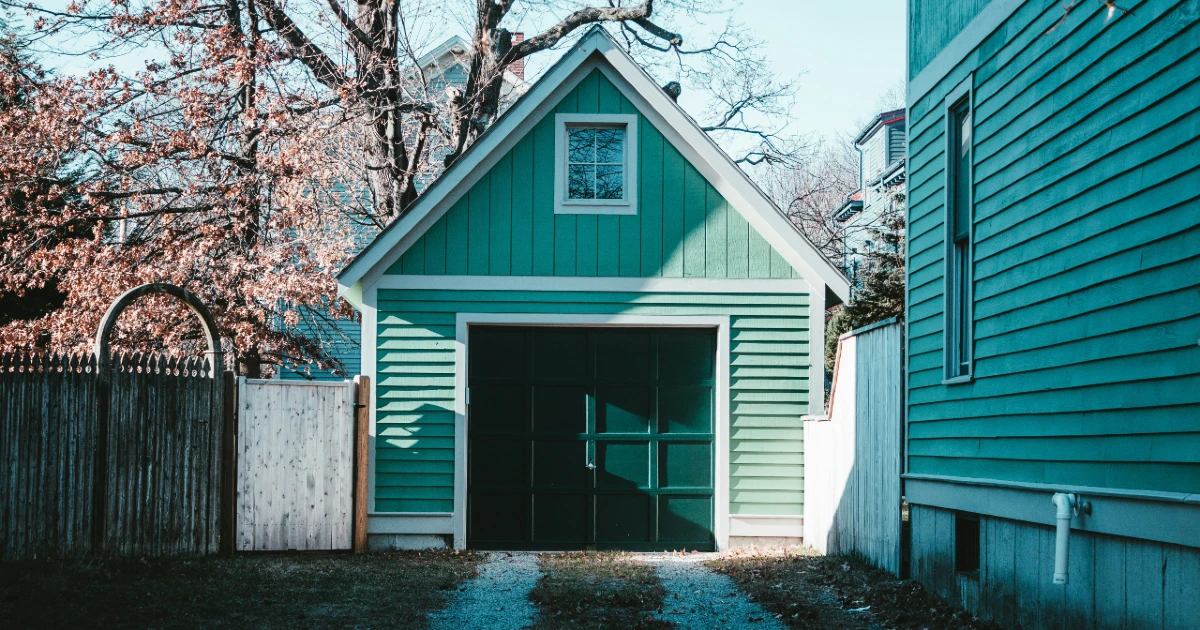
A tenant calls at 8am to report that a tree limb came down on the back fence overnight. By the time the landlord drives out, half the cedar privacy fence is on the ground, and the corner of the metal storage shed near the alley has caved in from the same falling branch.
The landlord pulls up the policy expecting to see the damage covered under the $350,000 dwelling limit and finds something different. The fence and the shed sit on a separate line called "Other Structures," with a much smaller limit and its own set of rules.
Other structures coverage, written on most landlord declarations pages as Coverage B, is the line that handles everything detached from the main rental: sheds, fences, detached garages, gazebos, driveways, retaining walls, even free-standing decks and pool surrounds. It's included automatically on most landlord policies, but the limit is much smaller than the dwelling limit, and which structures are in versus out trips up landlords more often than any other coverage line.
This article walks through what other structures coverage actually pays for on a Steadily landlord policy, how the limit gets calculated, the difference between DP1 and DP3 treatment, the ADU gray area, and a few scenarios with the dollars laid out. By the end, you'll know whether the default limit on your policy matches the structures actually on your property.
What other structures coverage actually is
Other structures coverage, often written as Coverage B on the dec page, applies to anything on the property that isn't physically attached to the main rental structure. It sits separately from Coverage A (the dwelling itself) and operates with its own limit, its own settlement rules, and its own list of what's in and what's out.
The simple test: if a structure shares a wall or a roof with the rental, the damage to it is paid under the dwelling line. If it sits somewhere on the lot by itself, the damage is paid under other structures. A detached garage that's connected to the house by a covered breezeway is a gray case and depends on how the policy is written. An attached garage with an interior door from the kitchen is Coverage A. A standalone garage at the back of the lot is Coverage B.
What's covered under other structures
The list of items that typically fall under Coverage B on a Steadily landlord policy:
- Detached garages and carports, whether one-car or larger, including the slab and the door mechanism
- Sheds of any common construction (metal, wood-frame, prefab)
- Fences: privacy, chain-link, decorative, wrought iron, masonry walls
- Gazebos, pergolas, arbors, trellises
- Driveways and sidewalks
- Retaining walls
- Mailboxes, standalone light fixtures, lampposts
- Free-standing decks that aren't attached to the house
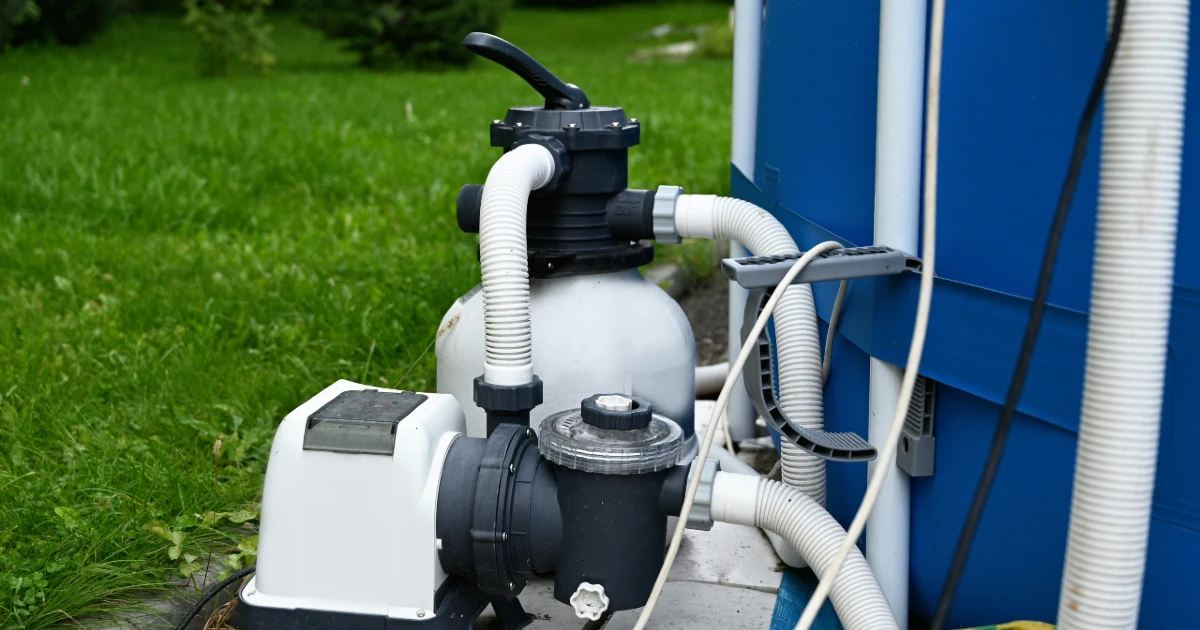
- In-ground pool surrounds and pool equipment in most states (configuration matters)
The coverage applies to the structures themselves and their permanent fixtures, not to personal property stored inside them. If a fire takes out the detached garage, the structure itself is covered under Coverage B. The tools, bikes, and lawn equipment inside the garage that belong to the landlord might be covered under personal property coverage if it was elected, but tenant-owned items inside the garage need their own renters insurance to recover.
What's not covered
The exclusions are mostly logical once you understand the principle that Coverage B is for non-dwelling, non-business detached structures:
- Anything attached to the house falls under Coverage A (the dwelling), not Coverage B. An attached garage, an attached carport, a sunroom that shares a wall.
- Structures used by the tenant for business purposes. If the tenant runs a workshop out of the detached garage and a fire damages business inventory inside, that's outside the policy.
- Land and landscaping beyond a small sublimit. Mature trees, hedges, and landscaping are typically covered only up to a small per-item and per-loss cap (often $500 per tree, $5,000 aggregate).
- Some in-ground pools depending on state and policy configuration. In some states pools are excluded by default and need to be specifically listed.
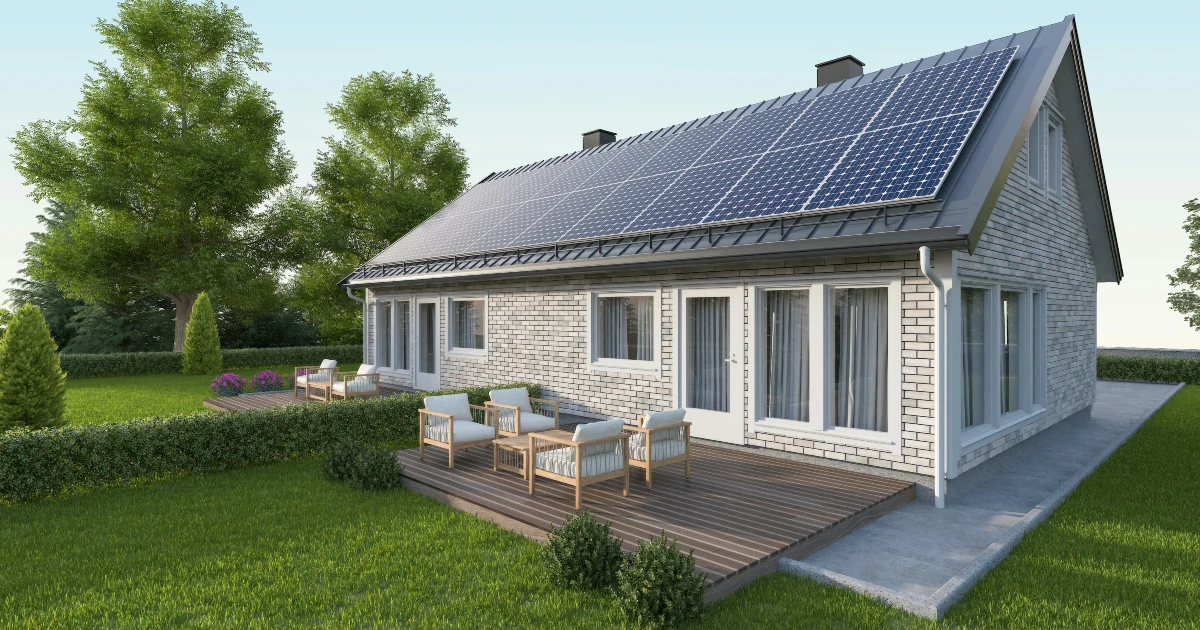
- Solar panels in some policies, depending on whether they're attached to the dwelling or freestanding. This one is worth checking explicitly.
- Detached structures that have been converted to dwelling units (an ADU rented out separately) often need their own treatment. More on that below.
How the limit is calculated
On a standard Steadily landlord policy, the Other Structures limit is set automatically as a percentage of the Dwelling limit. The default is 10%, which means a $350,000 Dwelling line generates a $35,000 Other Structures line.
For a typical suburban single-family rental with a basic fence and a small shed, $35,000 is usually adequate. The math works out when the detached structures on the property are minor and the dwelling is doing most of the work.
The math doesn't work out when the property has substantial detached structures: a high-end detached garage with finished interior, a corner-lot wrought iron fence around an acre, a pool house, an ADU. In those cases, the 10% default is often well short of the actual replacement cost of what's on the lot. Steadily allows the Other Structures limit to be raised at policy issuance or at renewal, and it's worth doing the math before the loss happens rather than after.
The ADU question
Accessory dwelling units sit in a gray area that depends on how the ADU is being used. The Steadily underwriting framework treats ADUs three ways:
ADU treated as Other Structures. If the ADU is small, unrented, and used for owner storage or as a guest space, it generally falls under Coverage B. The default 10% limit may or may not be enough depending on the ADU's value. A simple converted detached garage might fit. A finished 600-square-foot ADU with a kitchen and bathroom typically won't.
ADU treated as a separate dwelling unit on the same policy. When the ADU is rented out under a separate lease from the main rental, it's usually covered as a second dwelling on the same landlord policy, with its own Dwelling line, its own loss-of-rent calculation, and its own occupancy considerations. This is how most Steadily customers with rented ADUs end up structured.
ADU treated as its own policy. For higher-value ADUs or properties where the main rental and the ADU are managed separately, a standalone landlord policy on just the ADU sometimes makes more sense from both a coverage and underwriting standpoint. The ADU property coverage page covers the structural and rental-income mechanics in more depth.
The decision usually comes down to one question: is the ADU generating rental income under its own lease? If yes, it generally needs Dwelling-line treatment, not Other Structures treatment. If no, Other Structures with a possibly-raised limit is often the right path.
How Steadily's DP1 and DP3 packages handle other structures
Steadily writes landlord insurance on two policy forms, DP1 and DP3. Other structures coverage is included on both, but each package handles it differently on two dimensions: which perils trigger coverage, and how the loss is settled.
The Steadily DP1 package on other structures
Under DP1, the same nine named perils that apply to the dwelling apply to other structures: fire and lightning, explosion, windstorm and hail, riot and civil commotion, smoke, aircraft, vehicles, vandalism, and volcanic eruption. Anything outside that list isn't covered by default. The most common landlord-relevant gaps for other structures:
- Water damage to a detached structure: a burst pipe in the detached garage that floods the slab isn't covered under DP1 by default. Needs a water endorsement.
- Theft of items from a shed or detached garage: theft isn't on the nine-peril list. Tools or fixtures stolen out of the shed aren't covered without an endorsement.
- Most accidental damage that doesn't fit one of the nine perils.
On settlement, DP1 pays actual cash value on other structures, with depreciation taken off the top. A 15-year-old wood-frame fence damaged in a hailstorm will pay out at roughly half the cost to replace it, with the rest coming out of the landlord's pocket.
The Steadily DP3 package on other structures
Under DP3, other structures get the same open-peril treatment as the dwelling: covered for anything not specifically excluded. Burst pipes inside the detached garage are in. Theft of landlord-owned items from the shed is in. Vandalism, vehicle impact, falling objects are all in.
The exclusions that still apply: earth movement, external flooding, mold beyond a small sublimit, ordinance and law without endorsement, gradual damage and neglect and wear and tear, and intentional acts.
On settlement, DP3 pays replacement cost value on most other structures, with the same recoverable-depreciation holdback that applies to the dwelling. The exception many landlords hit: older fences and aging outdoor property often settle on actual cash value even under DP3, because the depreciation curves on those categories are short and steep. A 20-year-old wood fence is going to depreciate hard regardless of which form is on the policy.
Actual cash value vs replacement cost for landlords shows the depreciation math across multiple perils, including the line-by-line breakdown on a $42,000 kitchen fire where the gap between settlement methods runs $15,000 to $20,000. The DP1 vs DP3 comparison sits underneath both the dwelling-side and the other-structures-side mechanics, since the same payout logic applies to both lines.
Steadily offers DP1 and DP3 in all 50 states. Get a free quote in minutes:
Scenarios: what the math looks like on real other-structures claims
Scenario 1: privacy fence blown down in a storm
A 100-foot section of cedar privacy fence comes down in a microburst. The replacement quote is $4,500. The fence is 10 years old, with a useful life of about 20 years under typical depreciation tables. The deductible on the policy is $2,500.
Under DP1 (ACV), the depreciation is 50%, putting actual cash value at $2,250. That's less than the $2,500 deductible, which means the claim payout is zero. The landlord eats the full $4,500.
Under DP3 (RCV with the older-fence caveat), most carriers including Steadily will still settle a 10-year-old fence on ACV because of the short depreciation curve. So the practical math is similar to DP1 in this specific case. The fence example is where the form difference matters less than landlords expect.
The takeaway: small fence claims often don't justify filing in either form, because the deductible eats the depreciated payout. Storm and hail coverage mechanics apply identically whether the damage is on the dwelling or on the other structures line.
Scenario 2: detached garage fire
Faulty wiring in a two-car detached garage causes a fire that takes out the structure, the door mechanism, and the slab needs partial replacement. The full rebuild quote is $28,000. The detached garage is 15 years old.
Under DP1 (ACV), the 15-year-old garage depreciates roughly 40% on most tables. Actual cash value at $16,800, minus the $2,500 deductible, nets $14,300. The landlord is $13,700 short on the rebuild.
Under DP3 (RCV), the full $28,000 (less deductible) is paid out in two checks: $14,300 ACV upfront, then $11,200 in recoverable depreciation after the new garage is built and the invoice is submitted.
Key callout for limit math: $28,000 on a single garage fire uses up 80% of the $35,000 Other Structures limit on a $350,000 Dwelling policy. If the property had a larger detached structure (an ADU treated as Other Structures, a high-end finished garage, a pool house), the default 10% limit wouldn't have been enough. Landlord fire coverage on detached structures works through the same fire-damage mechanics as the main dwelling, but the limit is what fails first.
Scenario 3: shed vandalized after tenant turnover
A tenant leaves after a dispute and vandalizes the property's storage shed before vacating: doors kicked in, interior walls damaged, fixtures torn out. The repair scope is $3,200. The deductible is $2,500.
Under DP1, vandalism is one of the nine named perils, so the loss is covered. ACV settlement on a 5-year-old shed produces maybe a 20% depreciation hit, putting the payout at $2,560 minus the $2,500 deductible. Net payout: $60. The landlord effectively eats the loss.
Under DP3, the same vandalism is covered open-peril. RCV settlement pays the full $3,200 minus deductible, netting $700.
The honest takeaway on smaller other-structures claims: even when covered, the deductible often eats most or all of the payout. Vandalism and burglary coverage applies to detached structures the same way it does to the dwelling, but small claims rarely move the needle once the deductible is in play.
When to raise the other structures limit
The default 10% works for typical setups. It doesn't work for these:
- High-value detached garage (finished interior, electrical, plumbing, $40,000+ rebuild cost)
- Pool, pool house, or pool surround with substantial equipment value
- ADU treated as other structures rather than as its own dwelling line
- Premium fencing: wrought iron, masonry walls, ornamental hedge that approaches replacement-cost-as-fencing valuation
- Extensive hardscape: multiple retaining walls, brick driveway, custom pavers, pergola structures
- Corner lot or large lot with substantial fence linear footage
The rough math to do before deciding: total up the rebuild cost of every detached structure on the lot. If that number exceeds the Other Structures limit on the dec page, ask the carrier to raise it. The premium impact for raising the limit is usually modest, especially compared to the payout shortfall on a total loss of a major detached structure.
This applies across single-family rentals, multifamily properties, and condo rentals wherever detached structures are part of the property package.
How to know what your policy actually covers
Pull the declarations page. Two specific items to look for:
The Coverage B (Other Structures) line. Look for a number. On most Steadily landlord policies it's listed explicitly with its dollar amount. If the policy doesn't show it as a separate line item, look for language like "10% of Coverage A" under the dwelling section.
Any endorsements that change the default. Some policies have specific endorsements that change Other Structures coverage: increased limit, scheduled structures, business-pursuits exclusions, ADU endorsement. These show up either inline on the dec page or in an attached endorsement schedule.
If anything is unclear, the question to ask the carrier is exactly: "What is my Coverage B limit, and does it cover [specific structure on my property]?" The answer should be a number and a yes or no.
The honest take
Other structures coverage is the line landlords forget exists until they need it. The default 10%-of-Dwelling limit is usually fine for a standard suburban rental with a basic fence and a shed. It's not always enough for properties with a real detached garage, an ADU, a pool, or premium hardscape.
The right move is the same move that protects landlords on every other coverage line: spend 10 minutes with the declarations page now, total up the rebuild cost of the detached structures on the lot, and compare. If the limit is short, raise it. The carrier will price the change at renewal and the math will almost always favor doing it.
If a claim has already happened on an other-structures loss, the same claim mechanics that apply to dwelling losses apply here: notify quickly, document thoroughly, mitigate further damage. The complete landlord insurance claims process covers the filing and payout sequence in depth. Landlord insurance claim timelines vary by peril, with wind and hail moving faster than fire or major water losses. And appealing a denied landlord insurance claim follows its own process if the carrier comes back with a payout that doesn't match what the policy should cover.

.jpg)




.png)