
Learning about landlord or rental property insurance for the first time or just looking to brush up on the basics? We have you covered with our comprehensive landlord insurance guide.
What is a landlord?
A landlord is anyone who owns property and rents it out to someone else. That’s the whole definition, really. Whether you have a single condo you lease to one tenant or a small building full of units, if you’re collecting rent on a place you don’t live in yourself, you’re a landlord. The money those tenants pay you is called rental income, and protecting it is a big part of what the rest of this guide is about.
What is landlord insurance?
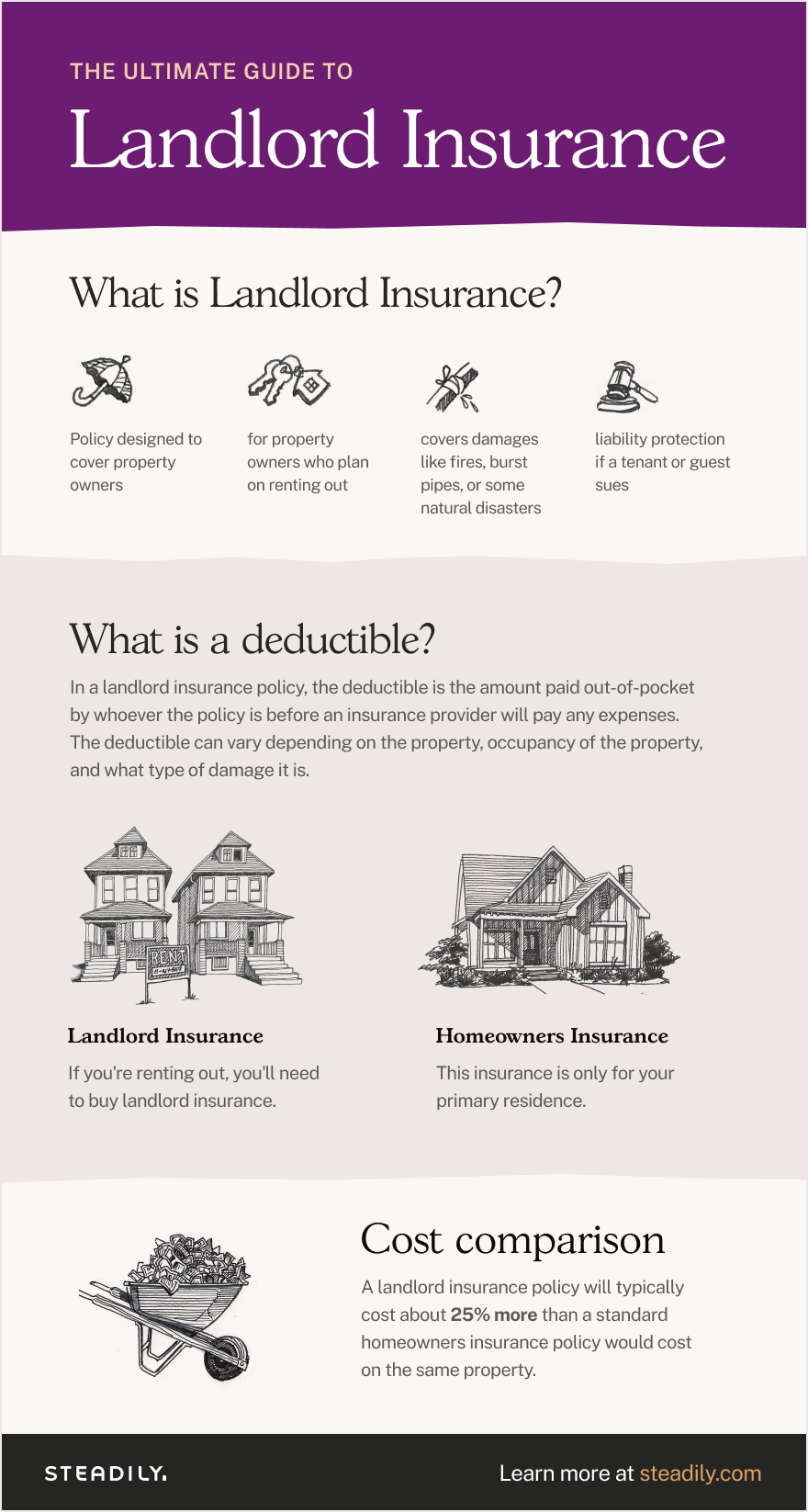
Landlord insurance is an insurance policy designed to cover property owners when there is damage to a property they rent out. What exactly does that mean? Here’s an example:
Annette owns an apartment building she rents out to tenants. One of her tenants accidentally starts a fire in their apartment, resulting in damage to that unit and a few others. Annette’s landlord insurance policy would help pay for the repairs or rebuilding needed to make those units inhabitable again, but would not cover the loss of her tenants’ personal property. If somebody is injured in this fire and wants Annette to pay for the medical fees, her landlord insurance would provide liability coverage for the resulting legal fees and medical expenses.
What’s the difference between homeowner and landlord insurance?
If the property is your primary residence, you’ll need a homeowners insurance policy. Otherwise, if you’re renting it out, you’ll need to buy landlord insurance (sometimes called rental property insurance) from an insurance company.
- Homeowners insurance: Only for your primary residence; it covers the building, your personal property, liability, and a few other things. See also incidental occupancy.
- Landlord insurance: For property owners renting out a family home, apartment, or condo for an extended period; it covers damage from events such as fires, burst pipes, or some natural disasters. It also provides liability protection if a tenant or guest sues and you need to pay for legal fees or medical expenses.
It’s worth understanding the full difference between landlord and homeowners insurance before you choose. Generally, a landlord insurance policy costs about 25% more than a homeowners policy for the same property.
This might sound like a large price increase when compared to homeowner insurance. Is it worth it? This is something that you are going to decide by weighing the pros and the cons.
What is a deductible?
In a landlord insurance policy, the deductible is the amount the policyholder pays out of pocket before the insurance provider covers any expenses. The deductible can vary depending on the property, occupancy of the property, and what type of damage it is.
For example, if Annette’s rental property catches on fire, she would need to cover her deductible before her insurance provider would cover the rest of the damages. If her deductible was $1,000 and the total cost of the damage was $10,000, she would pay for $1,000 out of pocket, and then her insurance would cover the other $9,000.
Do I need to have landlord insurance?
While it’s not required by law, landlord insurance can help save you from catastrophic losses that may happen while managing a property. If a tornado or fire destroys your property, you would have to pay the property’s total cost out of pocket to rebuild it.
With insurance, you would only have to pay a small deductible. Your insurance can even provide additional coverage for other events, such as vandalism or theft if you add it to your policy (Vandalism and theft are known as human perils)
What about when you rent to family?
Yes, it is still wise to have landlord insurance. We have a dedicated post just for this specific situation.
What if I am just renting my room out?
Whether you need landlord insurance or if your homeowner’s insurance will still cover you will depend on your current homeowner’s insurance company and a few additional factors.
What are the different types of landlord insurance?
Your landlord insurance coverage depends on the type of insurance you select. The three most common types of landlord insurance are called “dwelling policies,” and as the numbers increase, the types of coverage expand.
Dwelling policy 1 (DP-1): Very limited coverage
As the coverage is so limited, DP-1 policies are the cheapest choice and the least popular for landlords. DP-1 is a basic policy that lists ten specific causes that are covered. If there is a claim stemming from one of the covered causes, the policy will reimburse the actual cash value (ACV), which is the depreciated rebuild value of the property. This means that the payment amount would be significantly less than the landlord’s cost to repair the damage, and the landlord would have to make up a large difference out of pocket.
The cause of damage or “perils” that the DP-1 covers are: Fire & Lightning, Internal Explosion & External Explosion, Windstorm & Hail, Riot & Civil Commotion, Smoke, Aircraft, Vehicles, Volcanic Explosion, Vandalism & Malicious Mischief.
Dwelling policy 2 (DP-2): Moderate coverage
The biggest difference between this policy and DP-1 is that DP-2 pays out the replacement cost value (RCV) instead of the depreciated cash value (ACV). This means that when the property is damaged, the policy will pay to restore the property to its original condition. This distinction between RCV and ACV is crucial and is often tens of thousands of dollars.
DP-2 policies can include loss of income coverage. If tenants have to move out because of covered damage and the landlord stops earning rent, the policy can pay the landlord for the lost rent until the repairs are completed.
Lastly, DP-2 covers all the perils from DP-1 plus Burglary Damage, Weight of Ice & Snow, Glass Breakage, Accidental Discharge or Overflow of Water or Steam, Falling Objects, Freezing of Pipes, Electrical Damage, Collapse, Tearing Apart, Cracking, Burning, Bulging.
Dwelling policy 3 (DP-3): Comprehensive coverage
This is the most common type of landlord insurance policy. DP-1 and DP-2 both name specific perils and deny any claim from a cause that isn’t explicitly listed. DP-3 flips that model: it’s an “open peril” or “all-risk” policy, so it covers every cause of loss except the ones the policy specifically excludes. That gives it the broadest protection of the three, and like DP-2 it pays replacement cost value and can include loss-of-income coverage when a covered loss forces your tenants out.
How to get the right landlord insurance
Choosing the right landlord insurance can be tricky. Every landlord’s situation is different, so it’s smart to do your due diligence first. Here are the steps to get landlord insurance:
Step 1: Determine what type of insurance you’re eligible for
This will depend on whether you are just renting out a room at the property you occupy or if you’re renting out a property that you do not occupy or live at.
If you’re unsure whether you need landlord insurance, that breakdown covers who does and who doesn’t.
Step 2: Check out your local agent options
You can buy a policy online through us at Steadily, or find an insurance agent who can match you with a carrier that suits your needs.
Step 3: Discuss your property and coverage needs
Have your basic property information ready before you talk through your exact needs with the agent. If you’re not sure how much you need, our guide to how much landlord insurance to buy can help.
Step 4: Wait
After you have contacted the agent, you will need to wait for them to contact insurance carriers who will then generate your landlord insurance quote.
Step 5: Review, sign, and purchase a policy
After you have received your quote then choose the most suitable carrier.
How do homeowners and landlord insurance policies differ?
DP-3 landlord policies and homeowners policies provide similar base coverage:
- Building: Covers the structure itself
- Liability insurance: Covers bodily and personal injury to someone else or damage to their property
- Loss of use/Loss of rental income: Covers extra costs of living if you’re forced out of your home or replaces rental income if tenants are forced out by a loss
- Personal property: Covers items in and around the home
- Medical payments: Covers medical costs if a guest or tenant is injured on the property
- Other structures: Covers unattached structures like sheds, garages, or swimming pool fences
Where homeowners and landlord policies differ, the most is on the amount of personal property coverage. A homeowners policy will typically cover up to 50% of the home’s insured value. A landlord policy will typically not offer any personal property coverage unless an additional premium is paid to cover appliances and furnishings.
Please note landlord insurance personal property coverage does not protect the tenants’ property. They’d need a renters insurance policy for that.
Also, the homeowner’s liability covers you for personal liability that’s non-business related. The landlord’s liability coverage only applies to losses related to the rental (insurers sometimes refer to this as premises liability). You would need separate business insurance for general liability protection.
(If you have a homeowners policy then see Equipment Breakdown Coverage Form)
Cost comparison
Landlord insurance costs about 25% more than a standard homeowners policy on the same property. Why? Renters historically have a higher probability than homeowners of causing damage that leads to a claim, so underwriters price in the added risk.
Cost also depends on whether the rental is long-term or short-term. The average long-term landlord policy runs about $1,070 a year nationwide, while a short-term rental policy averages closer to $1,377. Beyond that, your premium depends on factors like location, property condition, and replacement cost.
Landlord insurance by state
Insurance rules, risks, and prices vary a lot from one state to the next. Steadily writes landlord insurance in all 50 states, and each state page breaks down the coverage requirements, common risks, and typical premiums where your property is located.
More about landlord insurance costs
One of the most common questions asked is “Can I deduct it on my taxes?“
Yes! You are permitted to make a tax deduction for the entire landlord insurance premium for your rental property. The IRS considers this a normal business expense when renting out real estate.
Optional coverage
Depending on the state of your property, the occupancy of it, and the location, you may add some additional coverage to ensure your landlord insurance covers as much as it can. Below are some common coverage options we provide:
- Burglary: Most landlord insurance policies will pay for any damage that occurs to the home during a break-in, such as broken windows, but will not cover the expenses of your stolen personal property. This coverage will cover the cost for stolen items used to maintain your property, such as a lawnmower. It’s important to note that burglary coverage will not protect a tenant’s personal belongings. For that, they’ll need renters insurance.
- Vandalism: Vandalism is considered any intentional damage to your property by a tenant or other person. For example, if a tenant intentionally spray-paints the side of the house, your landlord insurance will consider this to be a covered loss if you’ve added vandalism coverage.
- Under-construction rental property: If you are renovating your unoccupied rental units or building entirely new ones, you can buy additional coverage to protect the properties until they’re occupied. (If you aren’t a landlord: for contractors see Builders Risk Form and for homeowners see Dwelling Under Construction Endorsement)
- Building codes: Occasionally, you must repair or replace parts of your rental. City and county codes may require you to upgrade items such as wiring because the regulations have changed since your property was built. This type of coverage will protect against the costs you may incur from this.
Note: Flood insurance would require a separate policy.
Can I get landlord insurance on a mortgaged property?
The short answer is yes you can. You can rent out your house and get landlord insurance and keep your original home mortgage unchanged, as long as you’ve met your mortgage lender’s 12-month residency requirement.
When should I be hiring a lawyer to represent me as landlord?
Though we are not legal experts if you are experiencing troubles with your tenants in regards to your property then it may be wise to get a lawyer. Here are the common situations that usually require hiring a lawyer:
- Tenants not paying
- If you need to change your business structure
- You need to create a lease agreement
- You need defense against an illness or injury claim
- Defending against a tenant property damage claim
- Dispute over a security deposit
- Eviction
- You suspect illegal activity
Here are more resources on when you should hire a lawyer as a landlord.
Conclusion
We hope that this landlord insurance guide helped you wrap your head around the basics. Do you have any additional questions about what types of optional coverage may be right for you? Talk with one of our insurance agents and get a quote today! Also, if you already have an insurance policy the easiest method to see your policies terms are by checking your declarations page.